Single-Use Vape Ban Bill Sparks Debate in Irish Parliament

Dec.18.2025
Single-Use Vape Ban Bill Sparks Debate in Irish Parliament
A bill seeking to ban the sale of single-use vapes has been introduced to Ireland’s Dáil, with lawmakers citing environmental damage and rising concerns over youth health. Industry representatives have urged full scrutiny of the bill, warning of enforcement challenges and potential loopholes.

Key Points 


  • Ireland introduced the Public Health (Single-Use Vapes) Bill to the Dáil;
  • The bill was presented by a Minister of State on behalf of the Health Minister;
  • A new excise tax on e-liquids took effect on November 1;
  • Lawmakers cited youth health and environmental concerns;
  • Industry groups called for careful scrutiny of the legislation.


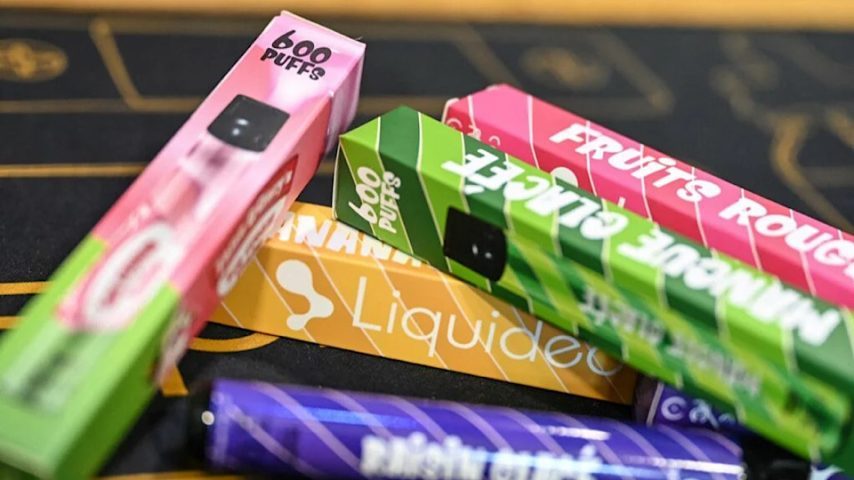
2Firsts, December 18, 2025 – According to gript, a bill seeking to ban the sale of single-use vapes has been introduced to Ireland’s Dáil, with TDs warning of the environmental damage caused by disposable vaping devices.


The first stage of the Public Health (Single-Use Vapes) Bill was introduced on Tuesday by Minister of State at the Department of Health Jennifer Murnane O’Connor on behalf of Health Minister Jennifer Carroll MacNeill. If passed, the legislation could see disposable vapes banned in Ireland.


The move follows the introduction of a new excise duty on e-liquids, which took effect on November 1. Under the measure, e-liquids are subject to an excise duty of €0.50 per millilitre (approximately US$0.55, original currency: euro), in addition to 23% VAT.


Murnane O’Connor told the Dáil that the rate of children using vapes has increased, with growing concern over their impact on children’s health. She also highlighted the environmental issue posed by discarded vapes in towns and villages.


The minister said the bill would remove lower-priced disposable products from shops, making them less attractive and accessible to children, while also addressing environmental damage. She warned that nicotine addiction among young people could lead to cigarette smoking and associated health harms.


Several TDs raised concerns about appealing flavours, pricing, ease of use and product design attracting young people. The bill would restrict available flavours, as well as colours and imagery on packaging.


Responsible Vaping Ireland (RVI), which represents more than 3,300 independent vape retailers, urged TDs to fully scrutinise the bill. The group warned of possible loopholes, citing the UK’s experience where some disposable products were reclassified as reusable following a similar ban. RVI added that vaping remains an important harm-reduction tool for adult smokers seeking to quit cigarettes, and that flavours help adults stay off smoking.


Image source: gript


We welcome news tips, article submissions, interview requests, or comments on this piece.

Please contact us at info@2firsts.com, or reach out to Alan Zhao, CEO of 2Firsts, on LinkedIn


Notice

1.  This article is intended solely for professional research purposes related to industry, technology, and policy. Any references to brands or products are made purely for objective description and do not constitute any form of endorsement, recommendation, or promotion by 2Firsts.

2.  The use of nicotine-containing products — including, but not limited to, cigarettes, e-cigarettes, nicotine pouchand heated tobacco products — carries significant health risks. Users are responsible for complying with all applicable laws and regulations in their respective jurisdictions.

3.  This article is not intended to serve as the basis for any investment decisions or financial advice. 2Firsts assumes no direct or indirect liability for any inaccuracies or errors in the content.

4.  Access to this article is strictly prohibited for individuals below the legal age in their jurisdiction.


Copyright


This article is either an original work created by 2Firsts or a reproduction from third-party sources with proper attribution. All copyrights and usage rights belong to 2Firsts or the original content provider. Unauthorized reproduction, distribution, or any other form of unauthorized use by any individual or organization is strictly prohibited. Violators will be held legally accountable.

For copyright-related inquiries, please contact: info@2firsts.com


AI Assistance Disclaimer


This article may have been enhanced using AI tools to improve translation and editorial efficiency. However, due to technical limitations, inaccuracies may occur. Readers are encouraged to refer to the cited sources for the most accurate information.

We welcome any corrections or feedback. Please contact us at: info@2firsts.com

The Volume Illusion: Measuring the Future of Nicotine with the Tools of the Past
As next-generation nicotine products become economically central rather than marginal, traditional volume-based metrics are increasingly unable to explain consumption, risk, and value. Units designed for a cigarette-based economy struggle to describe systems defined by delivery speed, pharmacokinetics, and adaptive user behavior. Drawing on financial reporting, regulation, and nicotine science, a fundamental question: can the future of nicotine still be measured using the tools of its past?
Feb.09 by Alan Zhao | 2Firsts Perspectives
Australia’s NSW Finds Lower Vaping Rates Among Teenagers Aged 14 to 17
A new report from Cancer Council’s Generation Vape research project shows that fewer teenagers in New South Wales are trying vaping after the state government introduced tougher vaping goods laws. Among surveyed NSW teenagers aged 14 to 17, the proportion who had tried vaping fell from 29.6% in April 2024 to 20.1% in October 2025.
Mar.17 by 2FIRSTS.ai
Special Report|Reynolds’ 337 Patent Case Ends, but a Harsher 337 Compliance Battle Now Targets the Entire Vape Supply Chain
The U.S. International Trade Commission (ITC) has terminated Investigation 337-TA-1410 after invalidating key vape patent claims asserted by R.J. Reynolds Vapor Company, removing the immediate risk of import bans for dozens of companies. However, a new case—337-TA-1486—has already opened a more consequential legal front, shifting the focus from patent disputes to regulatory compliance across the vape supply chain, including PACT Act reporting, tax compliance, and FDA marketing authorization.
BAT
Mar.11
Dalton, Georgia considers new licensing rules and caps for vape shops
Dalton, Georgia is weighing a proposal to require city licenses for vape shops, limit how many can operate within city limits, and impose a 1,000-foot buffer for new shops from schools and other community facilities. City officials say the ordinance would not eliminate existing vape shops outright, though some may be impacted if ownership changes or licenses expire.
Feb.05 by 2FIRSTS.ai
South Korea to regulate synthetic-nicotine e-liquids as tobacco from April 24
South Korea’s Health Ministry says amendments to the Tobacco Business Act will take effect on April 24, bringing synthetic-nicotine e-liquid vapes under the legal definition of tobacco. The shift extends cigarette-style rules to these products, including mandatory graphic warnings, sharply limited advertising channels, stricter vending-machine placement requirements, and a ban on use in smoke-free areas, with enforcement checks slated from late April.
Feb.03 by 2FIRSTS.ai
HB 5437 “Vape Safety Act” advances in House committee, proposing statewide licensing for vape shops
A committee substitute for House Bill 5437, the Vape Safety Act sponsored by Del. David McCormick (David McCormick), was recommended Monday afternoon by the House Health and Human Resources Committee to the full House, with the bill next heading to the House Judiciary Committee. HB 5437 would require specialty shops selling tobacco, tobacco-derived products, alternative nicotine, or vapor products and accessories to obtain a state license from the Alcohol Beverage Control Administration (ABCA)
Feb.26 by 2FIRSTS.ai