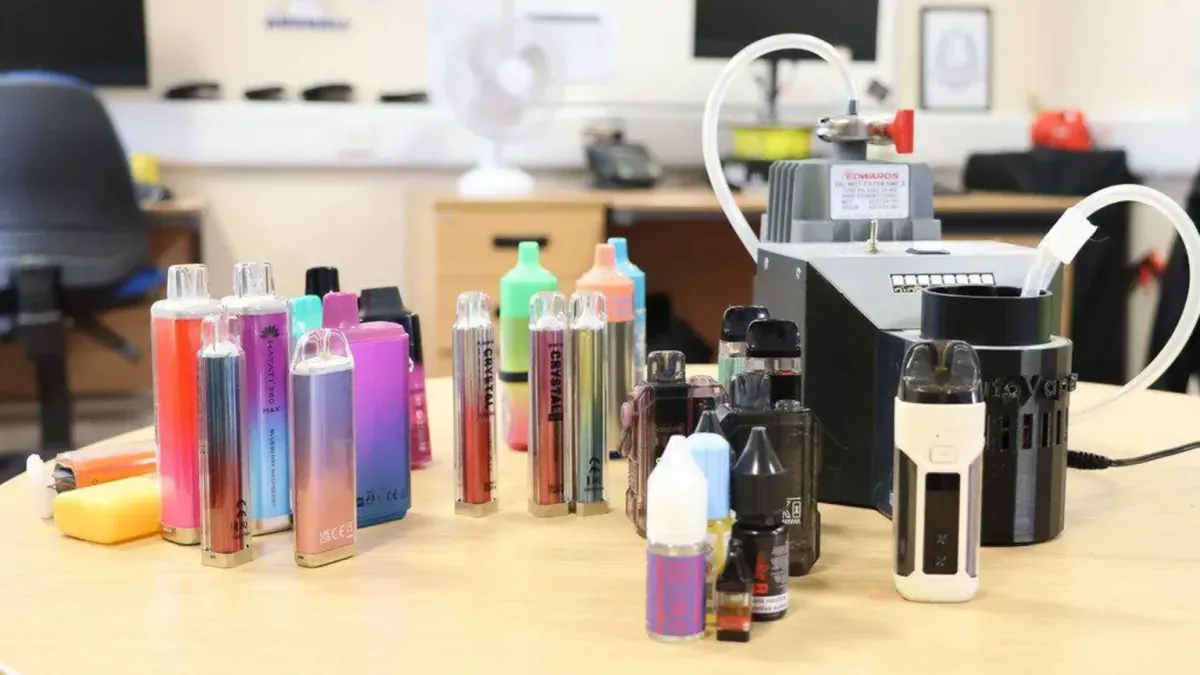
According to a report by the BBC on July 25th, a recent study has found that in e-cigarettes confiscated from minors in schools in England, one in every six devices contained "spice." "Spice" is a generic term for synthetic cannabinoids, which are classified as synthetic street drugs and can cause a range of dangerous side effects, including cardiac arrest. The study tested 596 e-cigarette devices confiscated from 38 schools, revealing the prevalence of this illegal synthetic street drug.
Chris Pudney, a biotechnology expert at the University of Bath, conducted tests using the world's first portable device capable of instantly detecting synthetic drugs. He collaborated with the university and police to test 596 confiscated e-cigarettes. The research revealed that approximately one in every six (16.6%) of the e-cigarettes confiscated from 38 schools in London, West Midlands, Greater Manchester, and South Yorkshire contained "spice," while approximately 1.17% contained THC, the psychoactive component of cannabis.
Greater Manchester Police Chief Laura Bell added that it is important to take a "proactive approach" in engaging with minors and schools.
We encourage parents and guardians to discourage their children from participating in any illegal activities, and to continue reminding them of the potential negative consequences of using drugs.
Currently, areas where schools or police have issued safety warnings include Cornwall, Devon, Kent, Lincolnshire, Lancashire, London, Middlesbrough, Somerset, and West Midlands.
We welcome news tips, article submissions, interview requests, or comments on this piece.
Please contact us at info@2firsts.com, or reach out to Alan Zhao, CEO of 2Firsts, on LinkedIn
Notice
1. This article is intended solely for professional research purposes related to industry, technology, and policy. Any references to brands or products are made purely for objective description and do not constitute any form of endorsement, recommendation, or promotion by 2Firsts.
2. The use of nicotine-containing products — including, but not limited to, cigarettes, e-cigarettes, nicotine pouchand heated tobacco products — carries significant health risks. Users are responsible for complying with all applicable laws and regulations in their respective jurisdictions.
3. This article is not intended to serve as the basis for any investment decisions or financial advice. 2Firsts assumes no direct or indirect liability for any inaccuracies or errors in the content.
4. Access to this article is strictly prohibited for individuals below the legal age in their jurisdiction.
Copyright
This article is either an original work created by 2Firsts or a reproduction from third-party sources with proper attribution. All copyrights and usage rights belong to 2Firsts or the original content provider. Unauthorized reproduction, distribution, or any other form of unauthorized use by any individual or organization is strictly prohibited. Violators will be held legally accountable.
For copyright-related inquiries, please contact: info@2firsts.com
AI Assistance Disclaimer
This article may have been enhanced using AI tools to improve translation and editorial efficiency. However, due to technical limitations, inaccuracies may occur. Readers are encouraged to refer to the cited sources for the most accurate information.
We welcome any corrections or feedback. Please contact us at: info@2firsts.com