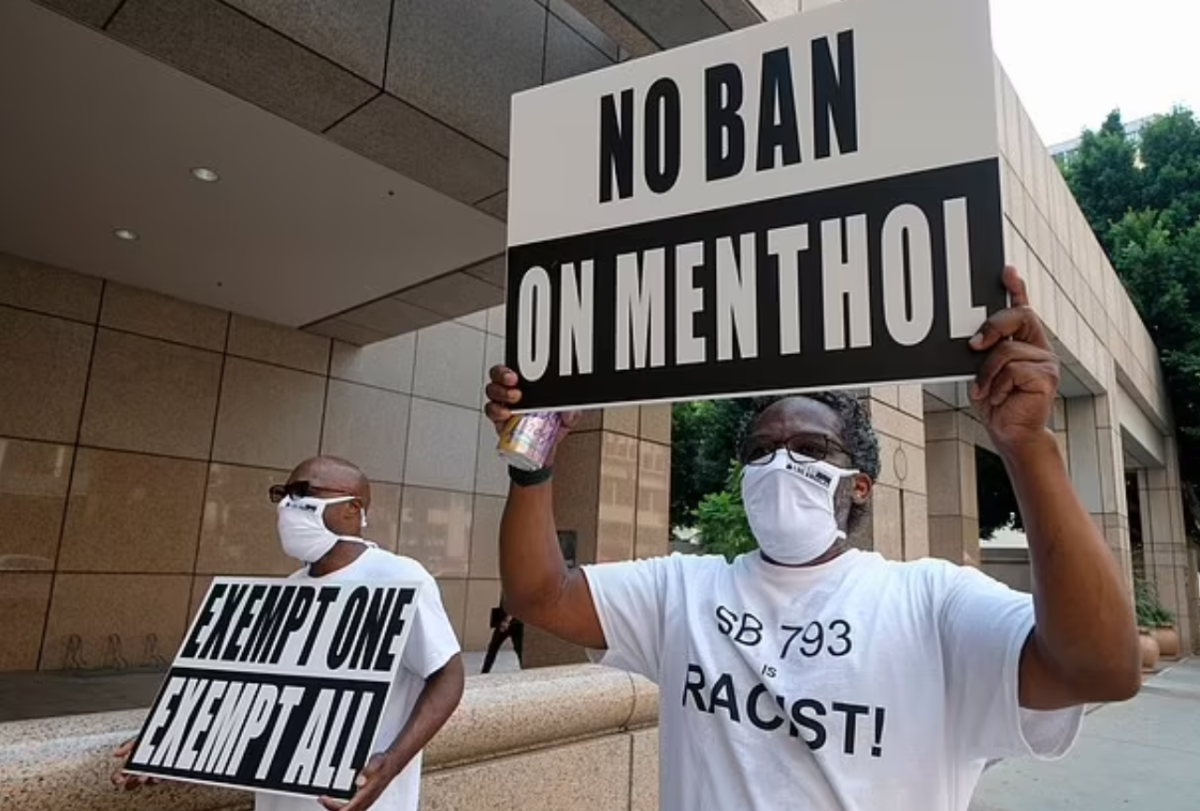
According to an article published on January 8th by DailyMail, the Supreme Court of the United States has rejected the lawsuit filed by Reynolds Tobacco against California's ban on menthol cigarettes. Meanwhile, President Biden's proposed nationwide ban on flavored cigarettes faces uncertain circumstances.
On January 8th, the Supreme Court declined to review a case brought by Reynolds Tobacco, which questioned the ban on flavored cigarettes imposed by the Democratic-led state of California.
In 2020, Governor Gavin Newsom, a Democratic governor, signed the bill in an attempt to curb the use of e-cigarettes and flavored tobacco among teenagers and young Americans. California became the second state in the country, after Massachusetts, to implement such a ban.
Last month, the Biden administration postponed its plans to implement a nationwide ban on menthol cigarettes, as it faced political opposition and warnings that such action might anger the black voters who are gradually distancing themselves from the President.
Recent series of opinion polls indicate that President Biden's proposed ban on menthol cigarettes could potentially have "unintended consequences" on his 2024 re-election prospects.
According to the latest survey obtained by the Daily Mail, over 60% of the national voters believe that the ban on menthol cigarettes will disproportionately harm minority communities, including 63% of Democrats.
The government is expected to announce in March that these regulations will finally come into effect. This will be another delay, as the plan initially scheduled for August has been postponed to January.
The U.S. Food and Drug Administration (FDA) has announced a new standard for a ban on menthol cigarettes in 2022, aimed at addressing the illnesses and deaths initially caused by products targeting African American smokers.
According to data from the Centers for Disease Control and Prevention (CDC), as quoted by The Washington Post, 81% of African American smokers in the United States prefer menthol cigarettes.
This move comes as a series of investigations show that, despite his continued high support among black voters, Joe Biden's competition with former President Donald Trump has become challenging amidst an overall low approval rating. Trump has even gained an advantage, refusing to rule out authoritarian rule.
This regulatory measure has sparked a debate, with one side focusing on the potential health benefits and the other side, represented by the American Civil Liberties Union (ACLU) and other organizations, arguing that it targets a specific group of smokers and may result in black market sales.
Potential unintended consequences could include the shifting of production to China and the risky sale of items in vehicle trunks.
Last month, the Republican Party in the House of Representatives announced that they were launching an investigation into this regulatory initiative.
The Centers for Disease Control and Prevention (CDC) has issued a warning based on scientific research, stating that "the presence of menthol in cigarettes increases the likelihood of experimentation with smoking among adolescents and young adults, and those who start smoking will continue to do so on a regular basis.
Mint makes cigarettes more appealing and easier to smoke," claims the CDC. "Additionally, mint enhances the addictive effects of nicotine in the brain. In recent years, the nicotine content in mint-flavored cigarettes has increased.
According to data cited by the CDC, from 1980 to 2018, there were approximately 10.1 million individuals who started smoking due to menthol cigarettes, leading to an estimated 378,000 premature deaths. The agency calculated the total during this period, resulting in a "potential loss of life expectancy" of 3 million years.
House Majority Whip Tom Emmer told the DailyMail in a statement, "Joe Biden's decision to ban menthol cigarettes is an infuriating overreach of power and an insult to millions of Americans.
Furthermore, law enforcement officials previously informed the Daily Mail that the ban would result in black market smuggling, cartel and gang violence, and unregulated cigarette sales. These cigarettes may potentially contain dangerous substances, including fentanyl.
Furthermore, this will disproportionately affect minority communities as menthol cigarettes are primarily favored by Black and Latinx communities, accounting for over 80% of their tobacco consumption. These remarks were made by retired New York state police officer, Elliot Boyce. The Biden administration has faced criticism for simultaneously pushing for a menthol cigarette ban alongside the decriminalization of marijuana.
However, senior officials in the Biden administration have consistently maintained that criminal sanctions on menthol cigarettes will help Americans gradually reduce their dependence on tobacco.
Health and Public Services Minister Javier Beselar previously stated, "The proposed regulations will help prevent children from becoming the next generation of smokers and assist adult smokers in quitting.
In addition, the proposed regulations represent a significant step towards promoting health equity by substantially reducing health disparities related to tobacco," he continued.
We welcome news tips, article submissions, interview requests, or comments on this piece.
Please contact us at info@2firsts.com, or reach out to Alan Zhao, CEO of 2Firsts, on LinkedIn
Notice
1. This article is intended solely for professional research purposes related to industry, technology, and policy. Any references to brands or products are made purely for objective description and do not constitute any form of endorsement, recommendation, or promotion by 2Firsts.
2. The use of nicotine-containing products — including, but not limited to, cigarettes, e-cigarettes, nicotine pouchand heated tobacco products — carries significant health risks. Users are responsible for complying with all applicable laws and regulations in their respective jurisdictions.
3. This article is not intended to serve as the basis for any investment decisions or financial advice. 2Firsts assumes no direct or indirect liability for any inaccuracies or errors in the content.
4. Access to this article is strictly prohibited for individuals below the legal age in their jurisdiction.
Copyright
This article is either an original work created by 2Firsts or a reproduction from third-party sources with proper attribution. All copyrights and usage rights belong to 2Firsts or the original content provider. Unauthorized reproduction, distribution, or any other form of unauthorized use by any individual or organization is strictly prohibited. Violators will be held legally accountable.
For copyright-related inquiries, please contact: info@2firsts.com
AI Assistance Disclaimer
This article may have been enhanced using AI tools to improve translation and editorial efficiency. However, due to technical limitations, inaccuracies may occur. Readers are encouraged to refer to the cited sources for the most accurate information.
We welcome any corrections or feedback. Please contact us at: info@2firsts.com