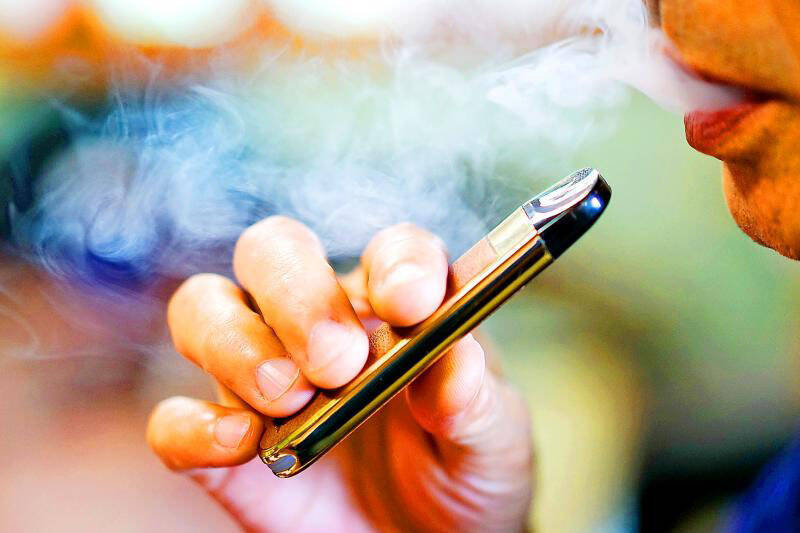
According to the Taiwan Taipei Times on July 26th, Taiwan has currently not approved any e-cigarette products. The Health Promotion Administration (HPA) of the Ministry of Health and Welfare stated that individuals using HNB products and e-cigarettes will be fined.
The Director of the Health Promotion Administration (HPA), Wu Zhaojun, quoted the latest amended Tobacco Hazards Prevention Act, stating that without government approval, new types of tobacco and nicotine products may not be used or distributed. Unauthorized production, import, sales, supply, display or advertising of new tobacco products could result in fines of up to 5 million New Taiwan Dollars ($152,263 USD), and users could face fines of 10,000 New Taiwan Dollars.
Wu Zhaojun stated that since the revised regulation took effect in March last year, the Health Products Authority (HPA) has received 12 authorization applications from commercial entities using HNB products. Of these, 8 companies had their applications rejected, while 2 others were asked to provide additional information to complete the evaluation.
Russell Ying, head of the Tobacco Control Division at the Health Promotion Administration (HPA), stated that the agency has appointed a panel of toxicology, public health, and addiction experts to assess requests for authorization to use specific HNB products. The panel has already held 30 meetings and all applicants can expect a fair evaluation as long as they provide all necessary information.
Russell Ying pointed out that since the primary responsibility of the HPA is to protect the health of children and the public, and strict standards need to be enforced before accepting manufacturer's claims, the evaluation process inevitably takes time. As a result, some companies are required to provide additional data, which typically requires one to three months.
Restrictions on the marketing and sale of new tobacco products, collection of tobacco taxes, and other regulatory matters will be carefully considered after the evaluation of all applications is completed.
We welcome news tips, article submissions, interview requests, or comments on this piece.
Please contact us at info@2firsts.com, or reach out to Alan Zhao, CEO of 2Firsts, on LinkedIn
Notice
1. This article is intended solely for professional research purposes related to industry, technology, and policy. Any references to brands or products are made purely for objective description and do not constitute any form of endorsement, recommendation, or promotion by 2Firsts.
2. The use of nicotine-containing products — including, but not limited to, cigarettes, e-cigarettes, nicotine pouchand heated tobacco products — carries significant health risks. Users are responsible for complying with all applicable laws and regulations in their respective jurisdictions.
3. This article is not intended to serve as the basis for any investment decisions or financial advice. 2Firsts assumes no direct or indirect liability for any inaccuracies or errors in the content.
4. Access to this article is strictly prohibited for individuals below the legal age in their jurisdiction.
Copyright
This article is either an original work created by 2Firsts or a reproduction from third-party sources with proper attribution. All copyrights and usage rights belong to 2Firsts or the original content provider. Unauthorized reproduction, distribution, or any other form of unauthorized use by any individual or organization is strictly prohibited. Violators will be held legally accountable.
For copyright-related inquiries, please contact: info@2firsts.com
AI Assistance Disclaimer
This article may have been enhanced using AI tools to improve translation and editorial efficiency. However, due to technical limitations, inaccuracies may occur. Readers are encouraged to refer to the cited sources for the most accurate information.
We welcome any corrections or feedback. Please contact us at: info@2firsts.com