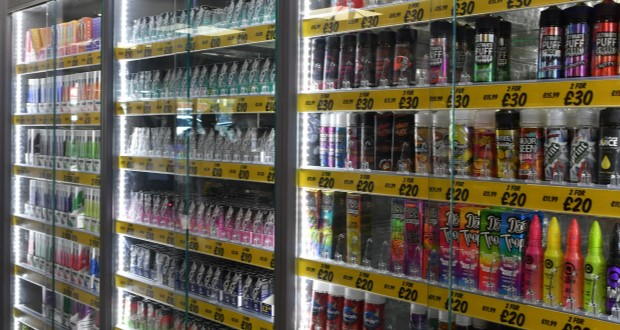
Texas vaping bill to take effect in September, e-cigarettes and consumables with Chinese - made components will be banned

Aug.29.2025
Texas vaping bill to take effect in September, e-cigarettes and consumables with Chinese - made components will be banned
A new Texas law that bans the sale of e-cigarettes containing ingredients manufactured in China will take effect on September 1. U.S. District Judge Keith Ellison rejected a request for a temporary restraining order from industry groups. The law also prohibits the sale of devices or packaging that could appeal to minors and products containing or marketed as containing cannabinoids, alcohol, and other substances. Violators will face up to one year in jail and fines of up to $4,000 per offense.

Key Points:


·Law Takes Effect: Texas' new law banning the sale of e-cigarettes containing Chinese components will take effect on September 1.

·Judicial Ruling: U.S. District Judge Keith Ellison denied the request for a temporary restraining order.

·Market Impact: The law will reshape the e-cigarette market in Texas, affecting supply chains, packaging, and marketing.

·Penalties: Violators will face up to one year in jail and fines of up to $4,000 per offense.


In a report from Nicotine Insider on August 28th, 2025, On Wednesday, a federal judge refused to block a new Texas law banning the sale of e-cigarettes containing ingredients made in China, allowing it to take effect next week as planned. U.S. District Judge Keith Ellison denied a request for a temporary restraining order during an emergency hearing with only two days' notice. He said, "I haven't had any time. It's unfair to give attorneys such little notice."


The ruling means Senate Bill 2024, signed by Gov. Greg Abbott in June, will reshape Texas' vaping market. The law prohibits the sale of e-cigarettes with consumable substances made in China or other countries designated as U.S. foreign adversaries. It also bans devices or packaging that could appeal to minors and products containing or marketed as containing certain substances.


The new bill expands the definition of e-cigarettes to include non-nicotine vapes. Violations will be treated as Class A misdemeanors, punishable by up to one year in county jail and fines of up to $4,000 per offense. The law is expected to trigger rapid changes in supply chains, packaging, and marketing for vape companies in Texas.


Industry groups had argued the measure infringes on federal authority over commerce and sought a temporary halt. Ellison said he hadn't had sufficient time to weigh those arguments, leaving the law in place for now. The statute is scheduled to take effect on Sept. 1 unless higher courts intervene.


We welcome news tips, article submissions, interview requests, or comments on this piece.

Please contact us at info@2firsts.com, or reach out to Alan Zhao, CEO of 2Firsts, on LinkedIn


Notice

1.  This article is intended solely for professional research purposes related to industry, technology, and policy. Any references to brands or products are made purely for objective description and do not constitute any form of endorsement, recommendation, or promotion by 2Firsts.

2.  The use of nicotine-containing products — including, but not limited to, cigarettes, e-cigarettes, nicotine pouchand heated tobacco products — carries significant health risks. Users are responsible for complying with all applicable laws and regulations in their respective jurisdictions.

3.  This article is not intended to serve as the basis for any investment decisions or financial advice. 2Firsts assumes no direct or indirect liability for any inaccuracies or errors in the content.

4.  Access to this article is strictly prohibited for individuals below the legal age in their jurisdiction.


Copyright


This article is either an original work created by 2Firsts or a reproduction from third-party sources with proper attribution. All copyrights and usage rights belong to 2Firsts or the original content provider. Unauthorized reproduction, distribution, or any other form of unauthorized use by any individual or organization is strictly prohibited. Violators will be held legally accountable.

For copyright-related inquiries, please contact: info@2firsts.com


AI Assistance Disclaimer


This article may have been enhanced using AI tools to improve translation and editorial efficiency. However, due to technical limitations, inaccuracies may occur. Readers are encouraged to refer to the cited sources for the most accurate information.

We welcome any corrections or feedback. Please contact us at: info@2firsts.com

Special Report|Reynolds’ 337 Patent Case Ends, but a Harsher 337 Compliance Battle Now Targets the Entire Vape Supply Chain
The U.S. International Trade Commission (ITC) has terminated Investigation 337-TA-1410 after invalidating key vape patent claims asserted by R.J. Reynolds Vapor Company, removing the immediate risk of import bans for dozens of companies. However, a new case—337-TA-1486—has already opened a more consequential legal front, shifting the focus from patent disputes to regulatory compliance across the vape supply chain, including PACT Act reporting, tax compliance, and FDA marketing authorization.
BAT
Mar.11
Special Report | China’s New Five-Year Plan Highlights “Health-First” Strategy, Providing Policy Context for Tobacco Sector
China’s 2026 “Two Sessions” reviewed the draft Outline of the 15th Five-Year Plan, which proposes implementing a health-first development strategy and strengthening the effectiveness of the Patriotic Health Campaign. Although the document does not address specific industries, this public-health governance framework provides a new policy context for observing the future regulation, product strategies, and market development of China’s tobacco and next-generation nicotine sectors.
Industry Insight
Mar.08
Qnovia’s Heat-Free Inhalable Nicotine Replacement Therapy Posts Positive First-in-Human Data, Advances FDA and MHRA Filings as Funding Expands
U.S.-based medical startup Qnovia Inc. reported positive results from its first-in-human clinical trial of RespiRx, an inhalable nicotine replacement therapy (NRT) device designed to support smoking cessation.
Innovation
Feb.24
Fourth Circuit weighs federal preemption challenge to North Carolina’s vape sales restrictions
Vape manufacturers and sellers urged the U.S. Court of Appeals for the Fourth Circuit to find that the federal Food, Drug, and Cosmetic Act (FDCA) preempts North Carolina’s new law restricting the sale of certain e-cigarette/ENDS products.
Feb.03 by 2FIRSTS.ai
UK Court Sentences Shrewsbury Retailer for Illegal Vape and Counterfeit Tobacco Sales
A UK local authority has secured convictions against a Shrewsbury retailer and its former director for selling illegal disposable vapes, counterfeit tobacco and a nicotine vape to a minor, highlighting continued enforcement against non-compliant nicotine products.
Feb.05 by 2FIRSTS.ai
Russia’s Volgograd Police Seize Illicit Nicotine Products Worth Over US$42.9K+
Police in Russia’s Volgograd region say they seized nicotine products lacking mandatory markings valued at more than RUB 3.3 million (about US$42,900+, using RUB 1 = US$0.013). A 43-year-old suspect allegedly stored and sold the products through two retail outlets in Volgograd’s Central and Dzerzhinsky districts. A criminal case has been opened under Article 171.1(6) of the Russian Criminal Code.
Jan.30 by 2FIRSTS.ai