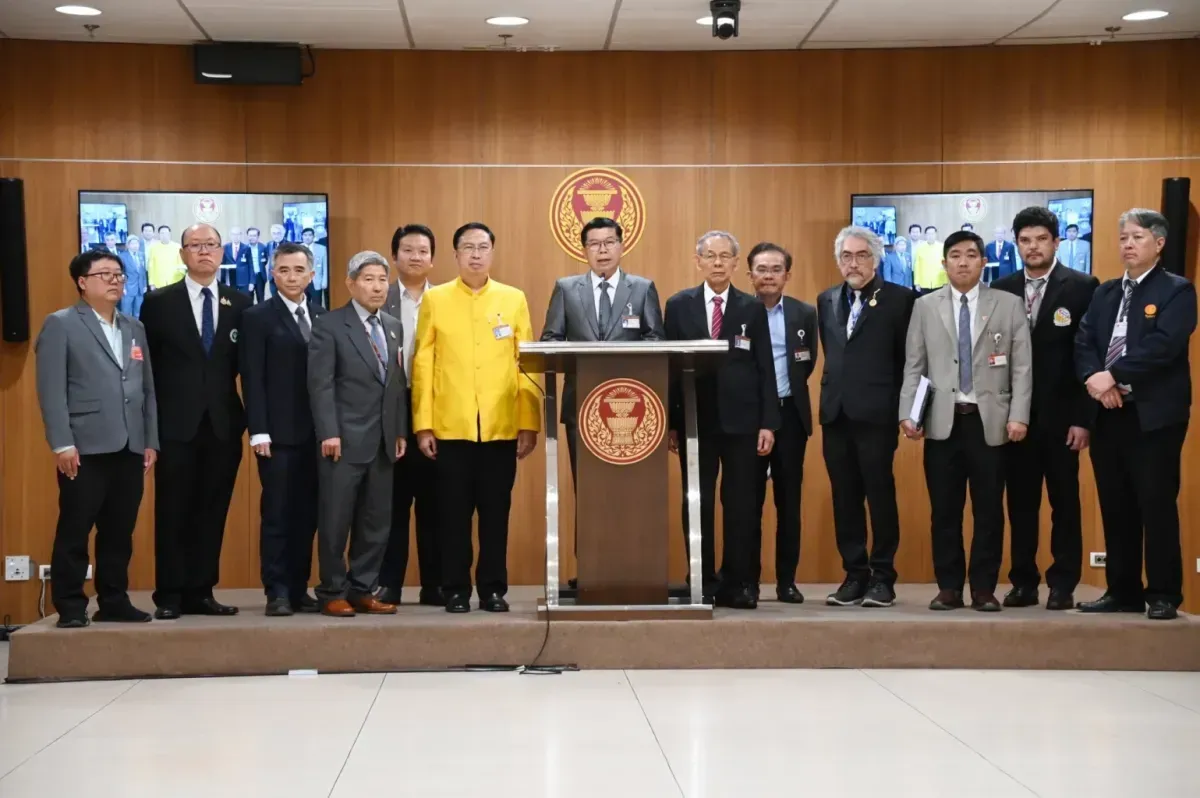
According to Bangkokbiz News on December 26th, Thailand's Palang Pracharath Party MP and Chairman of the special committee on e-cigarette legislation and regulation, Niyom Wiwattanaditkul, along with committee members, presented the research and deliberation results on e-cigarette laws and regulations.
The lawmaker pointed out that the committee began its work on September 27, 2023, and after thorough deliberation, finally completed its report on December 26. Due to the large amount of data and information involved, the deliberation process took a long time. In order to ensure a comprehensive review, the committee specifically established several subcommittees to study ways to improve and enhance e-cigarette regulation laws, and put forward three major recommendations.
E-cigarettes and all heated tobacco products should be considered illegal goods. It is recommended to amend the 2017 Customs Act to explicitly prohibit the import of e-cigarettes into Thailand and stipulate that possessing e-cigarettes is illegal. Furthermore, it is suggested to amend the 2014 Ministry of Commerce announcement to ban the import of e-cigarettes, hookahs, and electronic hookahs, and ensure clarity in the law by defining tariffs. E-cigarette products should be brought under current legal regulations. Amending the 2017 Customs Act and the 2014 Ministry of Commerce announcement will ensure strict control over e-cigarettes and related products. It is also recommended to prohibit the production, sale, and use of e-cigarettes and their liquid supplements in accordance with the Product Safety Commission Order 24/2567 of 2017. A comprehensive law banning e-cigarettes completely should be proposed. A new law should be enacted to illegalize e-cigarettes, covering all aspects of production, import, sale, advertising, marketing, possession, and use.
The committee also recommended utilizing the 2017 Tobacco Control Act to regulate the importation, advertising, and use of e-cigarettes, while also incorporating the Industrial Product Standards Act to control the quality of e-cigarette devices and non-nicotine components.
Neymar concluded that the committee's report is ready to be submitted to Congress, but Congress will only vote on the committee's recommendations, not directly on the content of the report. These recommendations will be presented to the Cabinet for further implementation.
We welcome news tips, article submissions, interview requests, or comments on this piece.
Please contact us at info@2firsts.com, or reach out to Alan Zhao, CEO of 2Firsts, on LinkedIn
Notice
1. This article is intended solely for professional research purposes related to industry, technology, and policy. Any references to brands or products are made purely for objective description and do not constitute any form of endorsement, recommendation, or promotion by 2Firsts.
2. The use of nicotine-containing products — including, but not limited to, cigarettes, e-cigarettes, nicotine pouchand heated tobacco products — carries significant health risks. Users are responsible for complying with all applicable laws and regulations in their respective jurisdictions.
3. This article is not intended to serve as the basis for any investment decisions or financial advice. 2Firsts assumes no direct or indirect liability for any inaccuracies or errors in the content.
4. Access to this article is strictly prohibited for individuals below the legal age in their jurisdiction.
Copyright
This article is either an original work created by 2Firsts or a reproduction from third-party sources with proper attribution. All copyrights and usage rights belong to 2Firsts or the original content provider. Unauthorized reproduction, distribution, or any other form of unauthorized use by any individual or organization is strictly prohibited. Violators will be held legally accountable.
For copyright-related inquiries, please contact: info@2firsts.com
AI Assistance Disclaimer
This article may have been enhanced using AI tools to improve translation and editorial efficiency. However, due to technical limitations, inaccuracies may occur. Readers are encouraged to refer to the cited sources for the most accurate information.
We welcome any corrections or feedback. Please contact us at: info@2firsts.com