Thailand Government Implements Three Measures to Control E-cigarette Spread

Feb.28.2025
Thailand Government Implements Three Measures to Control E-cigarette Spread
Thai government implements 3 measures to control e-cigarette usage, evaluating effectiveness in 30 days for long-term planning.

Key points:


The Thai government has announced three major measures and will evaluate their effectiveness within 30 days before developing a long-term plan.


There are three main strategies being implemented to combat the issue of illicit e-cigarette sales: strengthening border customs enforcement to crack down on illegal imports and strictly regulate domestic sales; raising awareness of the dangers of e-cigarettes through schools and communities; and evaluating relevant laws and increasing enforcement efforts.


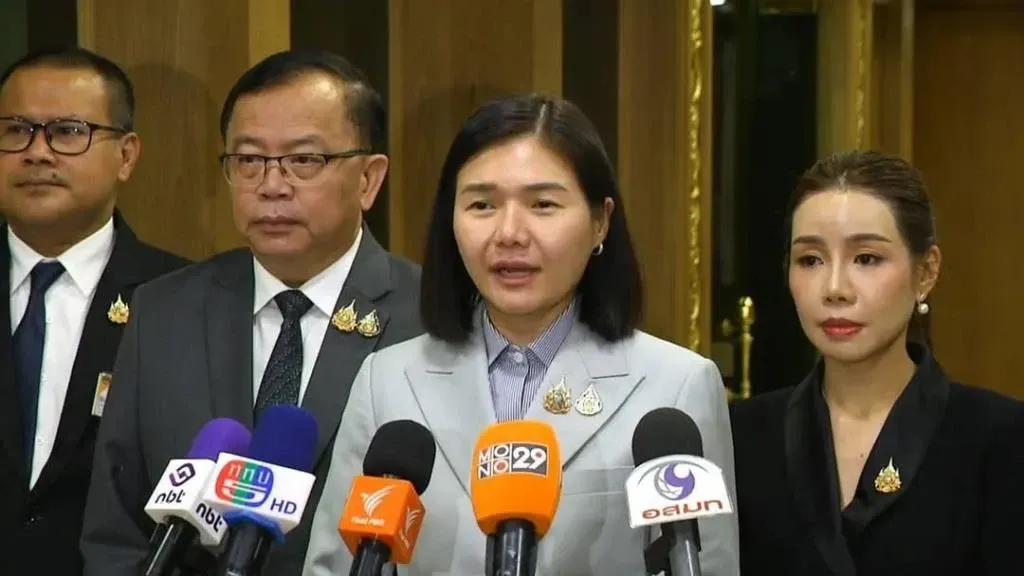
According to a report by Mgronline on February 27th, Thai Prime Minister Paetongtarn Shinawatra has directed the Minister of the Prime Minister's Office, Jiraporn Sinthuprai, to announce three measures to regulate e-cigarettes in order to address the harm they pose to children and teenagers.


The first phase is the emergency phase. This phase requires a crackdown on the import of e-cigarettes, especially in border areas. The customs department will be the main agency responsible for enforcing the law more strictly. If illegal imports are detected, they will not hesitate to take legal action and hand them over to investigative police and anti-money laundering offices for asset seizure. Domestic sales by retailers will also face tough enforcement, as the government will work closely with relevant agencies such as the national police, the Consumer Protection Board (OCPB), and the Ministry of the Interior. Additionally, the public is encouraged to provide a platform for reporting, so that everyone can see the e-cigarette sales situation in each region. Regarding online sales, as young people are increasingly exposed to e-cigarettes, TikTok has been requested to cooperate in strict monitoring. Subsequently, joint discussions will be held with platform operators and transportation operators to monitor and find ways to prevent online sales.


In the second phase, the public awareness of the dangers of e-cigarettes, especially in school environments, will be raised through publicity. The Ministry of Education will collaborate with the Ministry of Social Development and Human Security (MSDHS), the Ministry of Public Health (MOPH), the Department of Public Relations, and the National Broadcasting and Telecommunications Commission (NBTC) to promote knowledge about the dangers of e-cigarettes to students, teachers, and parents.


The third phase of measures involves conducting an assessment of relevant laws to enhance punishment and enforcement efficiency in the future. The Thai National Police have pledged to take immediate action and impose appropriate penalties if law enforcement officials are found to be involved in illegal activities related to e-cigarettes.


The Thai government announced today that it will begin a comprehensive crackdown on e-cigarettes, and will evaluate the effectiveness of the measures within 30 days. Various relevant agencies will reconvene to develop a plan, and will report back to the Prime Minister on the progress and plans for long-term measures in one week.


We welcome news tips, article submissions, interview requests, or comments on this piece.

Please contact us at info@2firsts.com, or reach out to Alan Zhao, CEO of 2Firsts, on LinkedIn


Notice

1.  This article is intended solely for professional research purposes related to industry, technology, and policy. Any references to brands or products are made purely for objective description and do not constitute any form of endorsement, recommendation, or promotion by 2Firsts.

2.  The use of nicotine-containing products — including, but not limited to, cigarettes, e-cigarettes, nicotine pouchand heated tobacco products — carries significant health risks. Users are responsible for complying with all applicable laws and regulations in their respective jurisdictions.

3.  This article is not intended to serve as the basis for any investment decisions or financial advice. 2Firsts assumes no direct or indirect liability for any inaccuracies or errors in the content.

4.  Access to this article is strictly prohibited for individuals below the legal age in their jurisdiction.


Copyright


This article is either an original work created by 2Firsts or a reproduction from third-party sources with proper attribution. All copyrights and usage rights belong to 2Firsts or the original content provider. Unauthorized reproduction, distribution, or any other form of unauthorized use by any individual or organization is strictly prohibited. Violators will be held legally accountable.

For copyright-related inquiries, please contact: info@2firsts.com


AI Assistance Disclaimer


This article may have been enhanced using AI tools to improve translation and editorial efficiency. However, due to technical limitations, inaccuracies may occur. Readers are encouraged to refer to the cited sources for the most accurate information.

We welcome any corrections or feedback. Please contact us at: info@2firsts.com

Pennsylvania Vape Directory Enforcement Starts Oct. 19, Barring Retail Sales of Unlisted Products
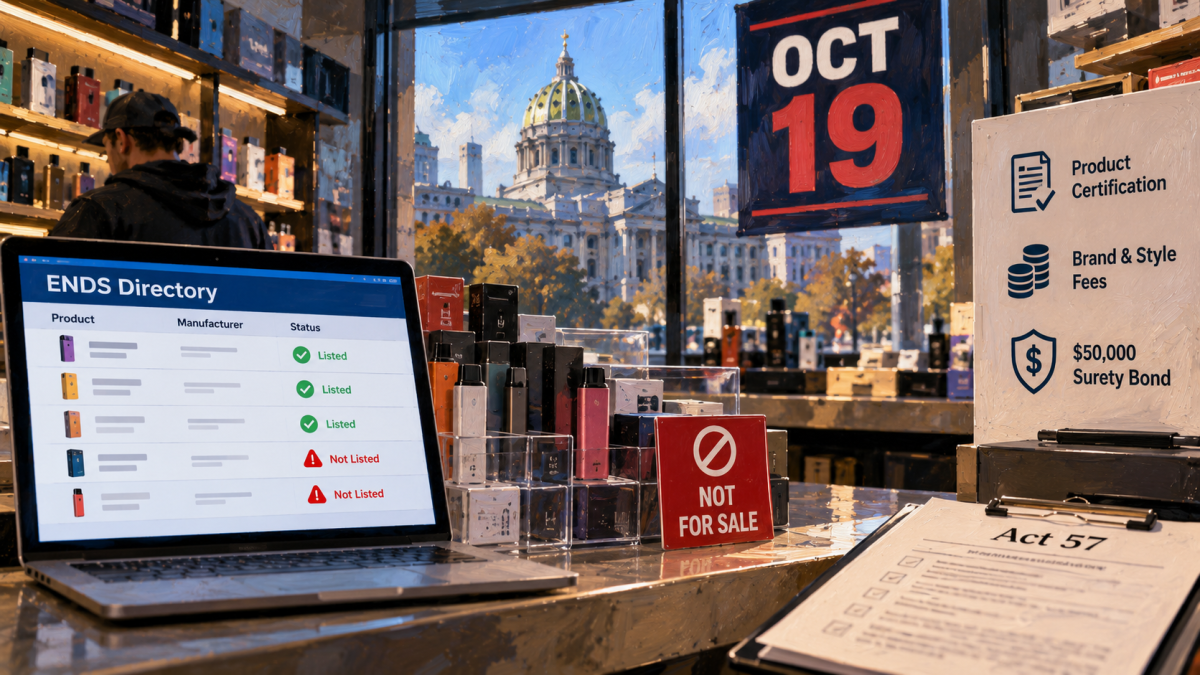
Pennsylvania's Act 57 vape directory regime will reach the end of its 120-day inventory transition period on Oct. 19. Nicotine-containing e-cigarettes intended for retail sale in the state that are not listed on the Attorney General's ENDS directory will then be barred from retail sale and treated as contraband subject to seizure, forfeiture and destruction. Manufacturers face annual product certification, brand- and style-based fees and a minimum $50,000 surety bond, while retailers and wholesalers must source through licensed channels and monitor the directory.
Regulations
Oct.08
China Tobacco Yunnan files patent for cellulose-free nicotine pouch scaffold to replace microcrystalline cellulose
China Tobacco Yunnan Industrial Co., Ltd. has filed a patent application for a cellulose-free scaffold material for nicotine pouches, proposing a combination of bioceramic material, polydextrose and sugar alcohols to replace conventional microcrystalline cellulose and cellulose derivatives. The filing aims to address issues including powdery mouthfeel, residue and limited release control, while also reducing reliance on existing cellulose-based patent portfolios. In patent examples, one fast-release formulation reached a nicotine release rate of 50% at 10 minutes and more than 90% at 20 minutes.
Sep.02
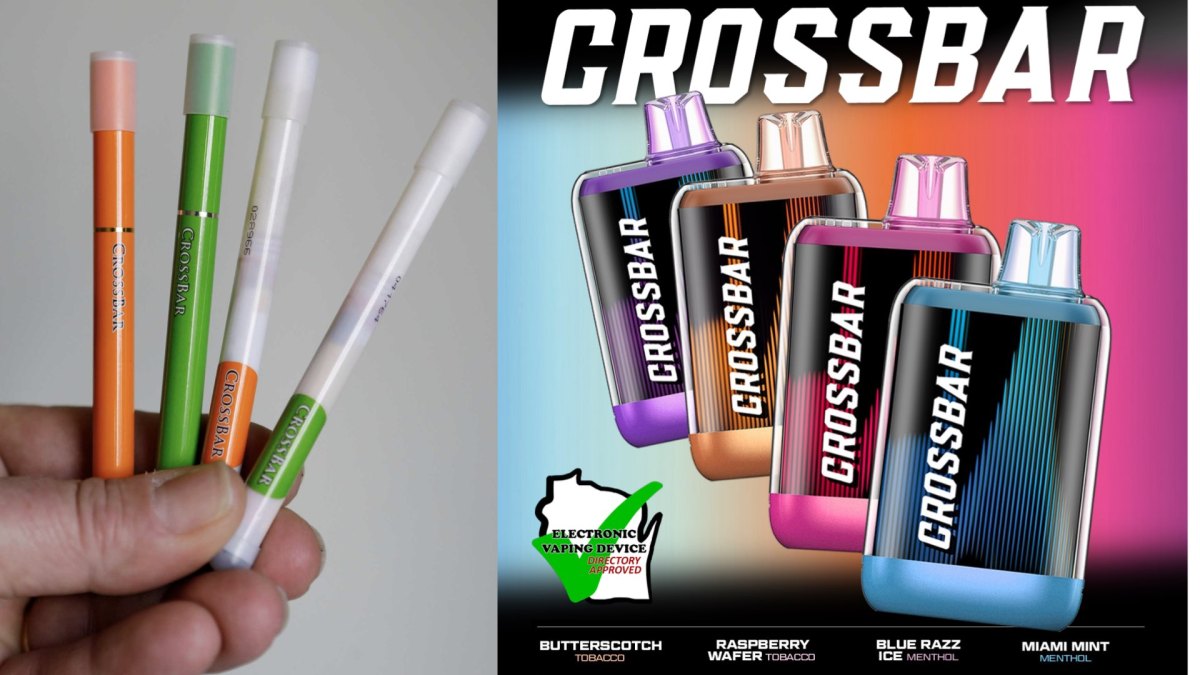
Special Report|CrossBar's High-Puff Vapes Draw Attention on Pennsylvania's 163-Product Directory as Link Between Earlier 1.3mL PMTA Filings and New 13mL Products Remains Unclear
Pennsylvania began enforcing its electronic nicotine delivery system directory restrictions on October 19, 2026. Among 163 product listings recorded before enforcement, four CrossBar 20K disposables stood out with 13mL capacity, advertised puff counts of up to 20,000 and a flattened design distinct from conventional pod systems and compact disposables. Historical records identify earlier 1.3mL CrossBar products associated with Romo LLC, while newer 13mL products appeared in several state directories beginning in 2025 under entities including Blue Nine LLC. PMTA compliance expert Mr. K identified amendments and application ownership transfers as possible regulatory mechanisms, although neither has been confirmed in this case. Separately, Reynolds' $7.5 million acquisition of 16 PACHA products and related assets illustrates the commercial value of products linked to historic PMTA submissions.
Special Report
Oct.22
HG Innovation, linked to IMiracle and ELFBAR, wins China patent for 6-methylnicotine salts covering vaping and oral products
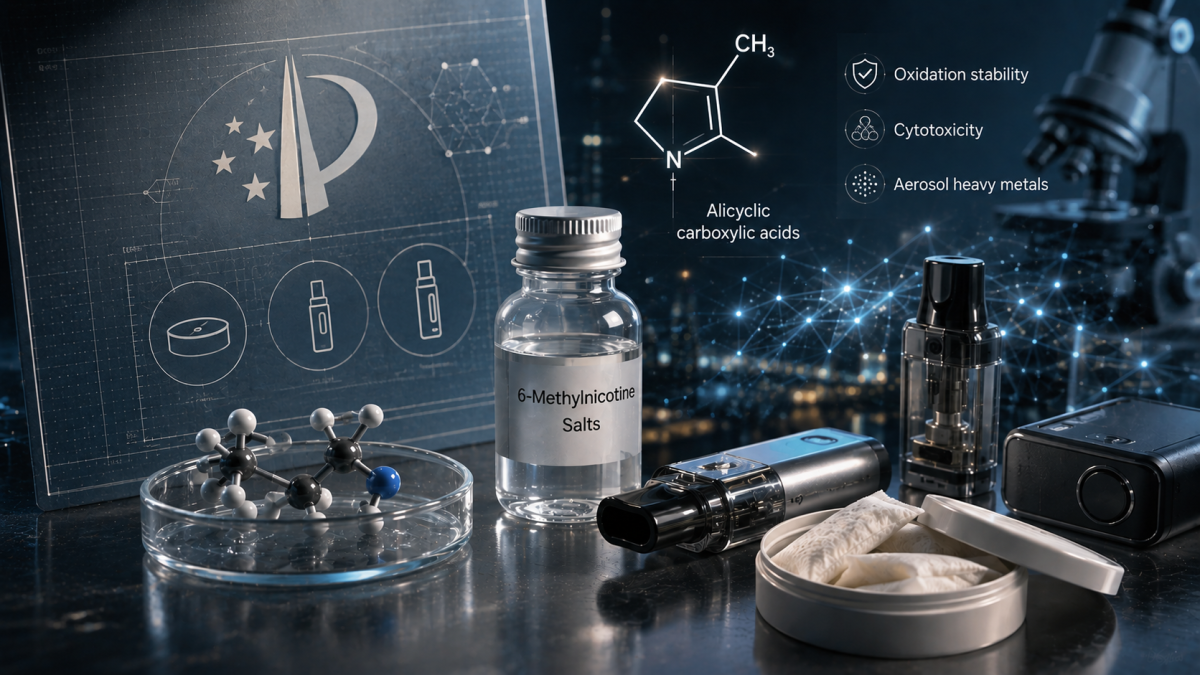
HG Innovation Limited has been granted a Chinese invention patent covering 6-methylnicotine salt formulations and their use in oral and vaping products. The technology forms salts between 6-methylnicotine and alicyclic carboxylic acids, with granted claims extending to oral products, atomization substrates and electronic atomization devices. Applicant-generated tests reported differences in oxidation stability, in-vitro cytotoxicity and aerosol heavy-metal performance compared with selected benzoate or lactate controls. HG Innovation is directly linked to the broader IMiracle and ELFBAR business network.
Sep.04
Malaysia Liquid Nicotine Returns to Poisons List, Leaving Vape Retail and RM354 Million Tax Collection in Legal Uncertainty
Malaysia’s withdrawal of its appeal in a landmark liquid-nicotine case has left a High Court ruling that struck down the 2023 nicotine exemption in force, bringing liquid and gel nicotine used in vaping products back under the Poisons Act 1952. At the same time, the Control of Smoking Products for Public Health Act 2024 continues to provide a regulatory framework for vaping products, creating uncertainty over retail sales, taxation and existing inventory. MPs are calling for nicotine vape sales and excise collection to stop, including refunds of more than RM354 million collected since 2023, while industry and consumer groups are asking the government to clarify the current legal position.
Sep.04
China Tobacco Hubei explores staged nicotine pouch delivery, using dynamic membranes to slow early release and gradient particles to sustain later delivery
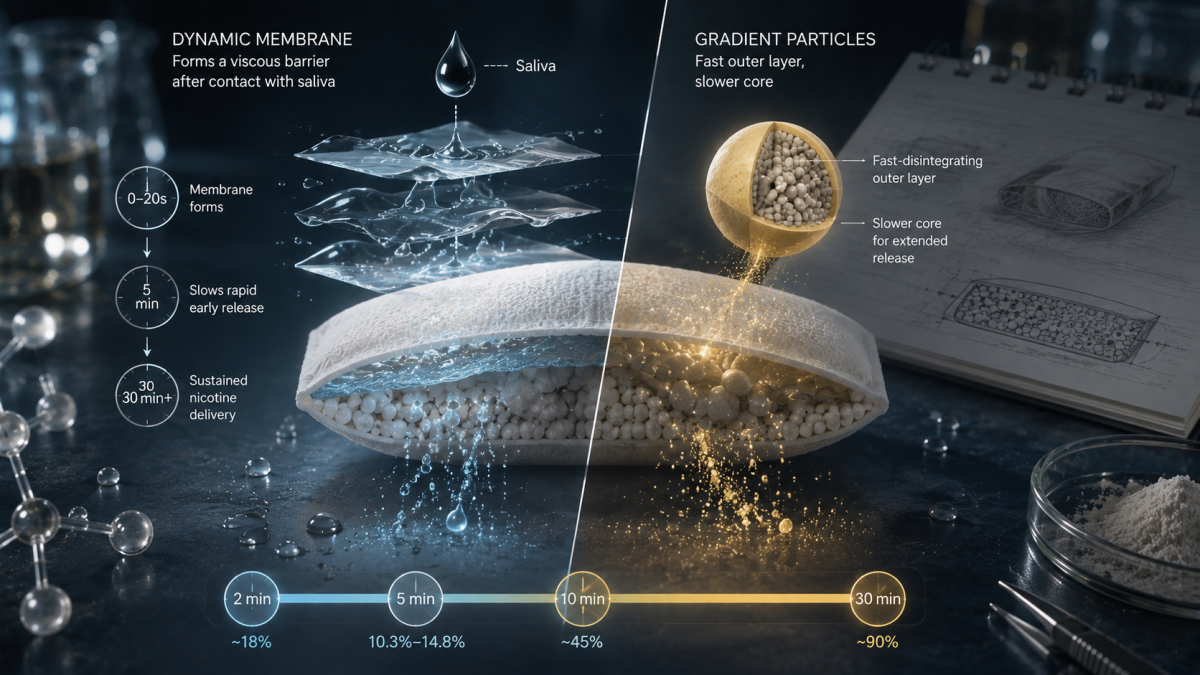
China Tobacco Hubei Industrial Co., Ltd. disclosed several oral nicotine-related patent applications in August 2026, including two that approach staged nicotine release from different directions. One uses a high-viscosity membrane that forms inside the pouch after contact with saliva to slow rapid early release, while the other uses gradient particles with a faster-disintegrating outer layer and a slower core to create a fast-to-sustained release profile. Together, the filings explore how nicotine pouches could balance initial delivery with release later in use.
Sep.03