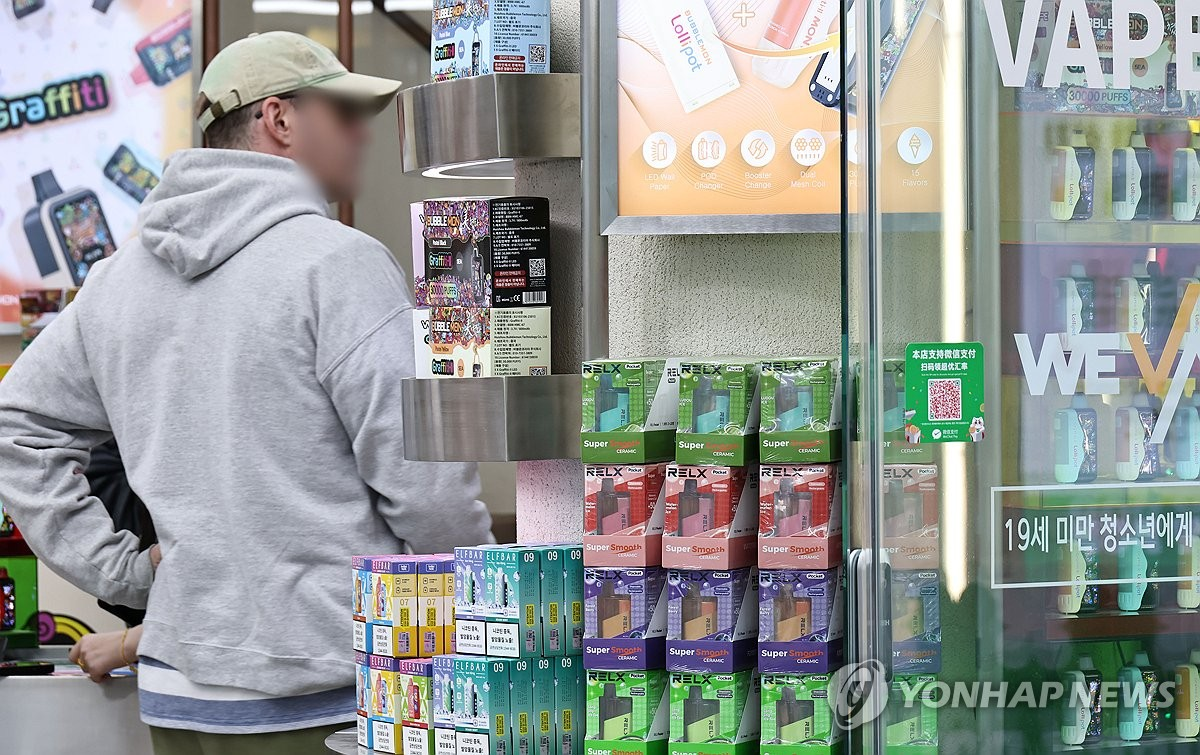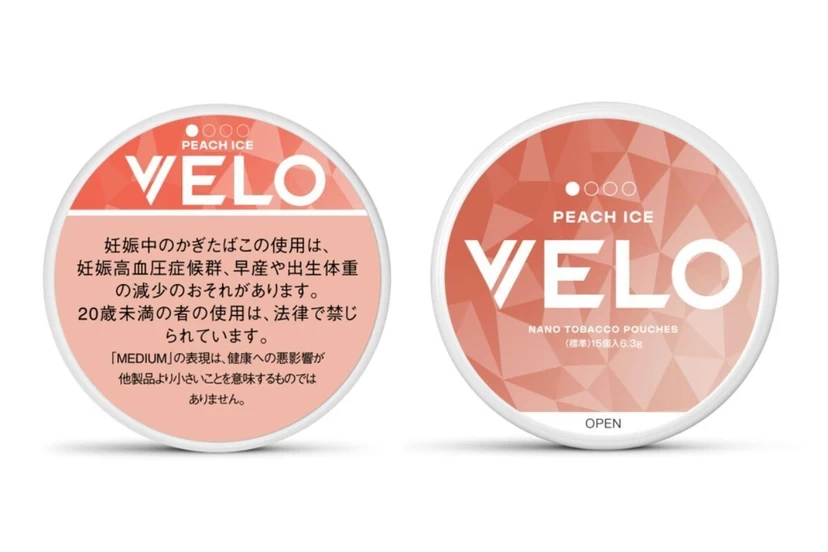
The definition of tobacco under South Korea's Tobacco Industry Act's Article 2 states that it is made in a state suitable for smoking, sucking, inhaling steam, chewing or smelling tobacco leaves as the entire or partial raw material. This rule is far from reality, as liquid electronic cigarettes that fall into a legal grey area are invading the market among smokers. It has been pointed out that the Tobacco Industry Act urgently needs to be revised, as these alternative products cannot be considered "similar to cigarettes" and require proper regulation.
Currently, the government only officially counts two types of cigarette sales: traditional cigarettes and heated electronic cigarettes. According to market data from the first half of the year released by the Ministry of Strategy and Finance on June 29th, only 1.52 billion packs of traditional cigarettes and 260 million packs of heated electronic cigarettes were sold. The explanation given was that the sales of closed-system vaporizer (CSV) and solid-state electronic cigarettes, which were discontinued last year, are no longer being calculated.
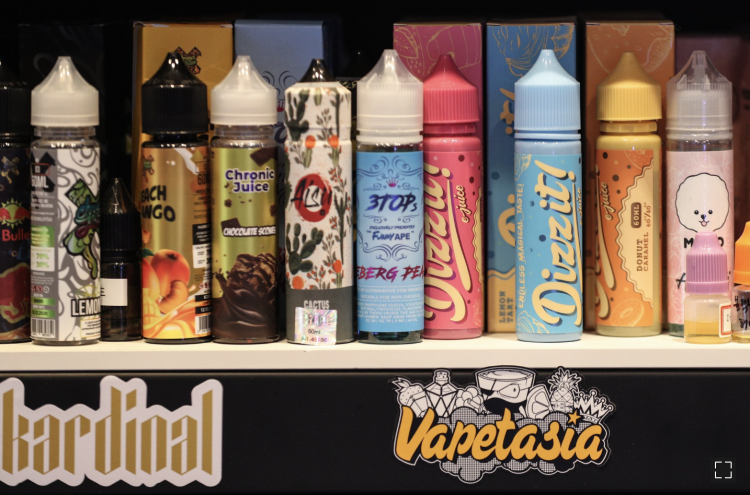
However, there are several e-cigarette products that have escaped the law due to loopholes. If you search on internet portals, you will find liquid e-cigarettes that use nicotine extracted from plant stems and roots, rather than tobacco or chemically synthesized nicotine. It is common to see smokers using these products on the streets. They fall into a category known as "tobacco-like" but are not included in the legal definition of tobacco.
However, I cannot confirm how much they have actually sold. Lee Seong-ki, Director of the Korean Center for Tobacco Control Research and Education, stated that "According to estimates, this cigarette-like product accounts for 30-40% of all electronic cigarette products in South Korea." Government market data only tracks cigarettes and heated tobacco products, and does not fully represent the current state of the tobacco industry in South Korea.
Disclaimer: 1. The content of this article is compiled from third-party information and is only intended for exchange and learning within the industry. 2. This article does not represent the views of 2FIRSTS and 2FIRSTS cannot confirm the truthfulness or accuracy of the content. The compilation of this article is only for industry exchange and research purposes. 3. Due to limitations in the compilation level, the compiled article may not fully reflect the original text. Please refer to the original text for accuracy. 4. Regarding any domestic, Hong Kong, Macau, Taiwan, or foreign expression and stance, 2FIRSTS fully aligns with the Chinese government. 5. The copyright of the compiled information belongs to the original media and author. If there is any infringement, please contact us for deletion.
Disclaimer
This article is provided solely for professional research, industry discussion, and informational purposes. Any references to brands, companies, products, technologies, or policies are made for factual reporting and analytical purposes only, and do not constitute endorsement, recommendation, promotion, or advertising by 2Firsts.
Nicotine-containing products, including but not limited to cigarettes, e-cigarettes, heated tobacco products, and nicotine pouches, carry significant health risks. Readers are responsible for complying with all applicable laws and regulations in their respective jurisdictions, including age restrictions and access limitations.
The information contained in this article should not be regarded as investment, legal, medical, regulatory, or commercial advice. While 2Firsts strives to ensure the accuracy and reliability of its content, it does not assume liability for any direct or indirect loss arising from errors, omissions, inaccuracies, or reliance on the information contained herein.
This article is not intended for individuals below the legal age for accessing tobacco or nicotine-related information in their jurisdiction.
Copyright Notice
This article is either original content produced by 2Firsts or content reproduced, translated, summarized, or adapted from third-party sources with attribution where applicable. The intellectual property rights of the original content remain with 2Firsts or the respective original rights holders.
No individual or organization may copy, reproduce, distribute, republish, modify, translate, or otherwise use this content without prior authorization. Any unauthorized use may result in legal action.
For copyright-related inquiries, corrections, or removal requests, please contact: info@2firsts.com.
AI-Assisted Translation and Editing Notice
Portions of this article may have been translated, edited, or reviewed with the assistance of artificial intelligence tools to improve efficiency and readability. Due to the limitations of AI-assisted translation and editing, discrepancies, omissions, or inaccuracies may exist when compared with the original source.
Where applicable, readers are advised to refer to the original source for the most complete and accurate information. If you identify any errors or believe that any content infringes upon your rights, please contact us at info@2firsts.com, and we will review and address the matter promptly.