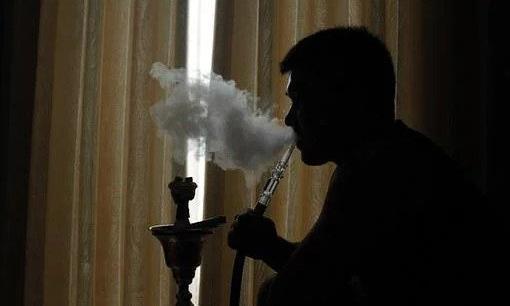
Numerous studies indicate that many of the chemicals found in cigarette smoke are also present in hookah smoke.
Evidence suggests that the oily liquid used in electronic cigarettes can cause other lung diseases such as lipoid pneumonia and bronchitis.
Like smoking, hookah contains addictive nicotine.
Lung cancer is becoming a major healthcare challenge in India, with over 10,000 new cases expected in the next five years. It is more prevalent in males (accounting for around 70% of cases) but the incidence rate among females has been steadily increasing over the past decade.
Lung cancer has several risk factors, with the main one being smoking, which accounts for 90% of lung cancer cases. However, some people believe that smoking hookah is a safer and more social alternative to smoking, and does not pose any health risks. Dr. Vishesh Gumdal, an oncologist consultant at the LB Nagar Hyderabad American Cancer Society, has debunked this myth and highlighted some significant health risks associated with it.
Chemicals found in cigarette smoke are also present in waterpipes.
Dr. Gumdal explains that a hookah is a type of smoking device that uses a mixture of tobacco and various flavors to produce smoke. The mixture is heated with charcoal and the smoke is then filtered through a water-filled container before being inhaled by the user through a hose with a mouthpiece.
Although some may believe that the toxicity of hookah smoking is less harmful than traditional cigarette smoking, numerous studies have shown that many chemicals found in cigarette smoke are also present in hookah smoke. More than 50 known carcinogens have been found in hookah smoke. Like cigarettes, hookah contains addicting nicotine. In summary, hookah smoking is just as detrimental as traditional smoking.
The oily liquid used when vaping e-cigarettes can lead to other lung diseases.
Apart from hookah, other smoking technologies such as e-cigarettes can also lead to severe lung diseases. Dr. Gumdal explains that vapor involves the process of heating substances and inhaling the resulting smoke. Devices such as "e-cigarette pens" or "mods" are typically used to heat substances in liquid form until smoke is produced.
He added, "Many of these liquid mixtures contain a variety of flavorings, fragrances, nicotine, and cannabis derivatives. These mixtures are often dissolved in oily alkaline substances. Toxic chemicals such as formaldehyde, acrylonitrile and diacetyl are also inhaled. Many of these chemicals are carcinogenic.
However, there is little scientific evidence linking electronic cigarettes to lung cancer. Part of the reason may be that even in Western countries, these habits are relatively new for people, and it would take decades of research and follow-up on people addicted to this practice to establish a causal relationship between e-cigarettes and lung cancer.
He said that considering the presence of toxic chemicals in the liquids used in e-cigarettes, in his view, over time, more scientific data may link these practices to lung cancer. There is evidence that the oily liquids used in e-cigarettes can cause other lung diseases such as lipoid pneumonia, bronchitis (or popcorn lung), and spontaneous pneumothorax. Therefore, it is best to be safe and avoid addiction to these practices until further research is completed.
Shisha usage is prevalent among young people.
Electronic cigarettes have been completely banned in India since 2019. However, there is currently no national law prohibiting water pipes, which is especially concerning given more scientific evidence linking them to lung disease and lung cancer.
Experts claim that the younger generation is increasingly using hookah due to Western influence on our culture. Commercial establishments offering hookah services seem to be particularly concentrated around many urban educational institutions.
Of particular concern is the widespread use of hookah among young people in India. While there have been some recent improvements in regulations around hookah, parents and guardians must remain vigilant in monitoring their children's use. Schools and other educational institutions should also be encouraged to place a greater emphasis on educating students about the harmful effects of hookah.
Statement:
This article is compiled from third-party information and is intended solely for industry exchange and learning.
This article does not represent the views of 2FIRSTS and we cannot confirm the truthfulness or accuracy of the content. The translation of this article is intended solely for industry exchange and research.
Due to limited translation skills, the translated article may not fully express the original meaning. Please refer to the original text for accuracy.
2FIRSTS maintains complete alignment with the Chinese government in all domestic, Hong Kong/Macau/Taiwan-related, and foreign-related statements and positions.
The copyright of the compiled information belongs to the original media and author. If there is any infringement, please contact us for removal.
Disclaimer
This article is provided solely for professional research, industry discussion, and informational purposes. Any references to brands, companies, products, technologies, or policies are made for factual reporting and analytical purposes only, and do not constitute endorsement, recommendation, promotion, or advertising by 2Firsts.
Nicotine-containing products, including but not limited to cigarettes, e-cigarettes, heated tobacco products, and nicotine pouches, carry significant health risks. Readers are responsible for complying with all applicable laws and regulations in their respective jurisdictions, including age restrictions and access limitations.
The information contained in this article should not be regarded as investment, legal, medical, regulatory, or commercial advice. While 2Firsts strives to ensure the accuracy and reliability of its content, it does not assume liability for any direct or indirect loss arising from errors, omissions, inaccuracies, or reliance on the information contained herein.
This article is not intended for individuals below the legal age for accessing tobacco or nicotine-related information in their jurisdiction.
Copyright Notice
This article is either original content produced by 2Firsts or content reproduced, translated, summarized, or adapted from third-party sources with attribution where applicable. The intellectual property rights of the original content remain with 2Firsts or the respective original rights holders.
No individual or organization may copy, reproduce, distribute, republish, modify, translate, or otherwise use this content without prior authorization. Any unauthorized use may result in legal action.
For copyright-related inquiries, corrections, or removal requests, please contact: info@2firsts.com.
AI-Assisted Translation and Editing Notice
Portions of this article may have been translated, edited, or reviewed with the assistance of artificial intelligence tools to improve efficiency and readability. Due to the limitations of AI-assisted translation and editing, discrepancies, omissions, or inaccuracies may exist when compared with the original source.
Where applicable, readers are advised to refer to the original source for the most complete and accurate information. If you identify any errors or believe that any content infringes upon your rights, please contact us at info@2firsts.com, and we will review and address the matter promptly.