Russia has a population of 130 million people, of which 32% are smokers. Among these smokers, approximately 20 million are 28 years of age or above, accounting for 94% of all smokers. This large base of smokers makes Russia an important consumer market for tobacco and electronic cigarette products. While Chinese brands and electronic cigarette products dominate the Russian market, local distributors have reported the emergence of domestically-produced brands. While still limited in number, the development of a domestic electronic cigarette industry in Russia may pose a challenge to Chinese companies due to factors such as transportation costs, tariffs, and business models.
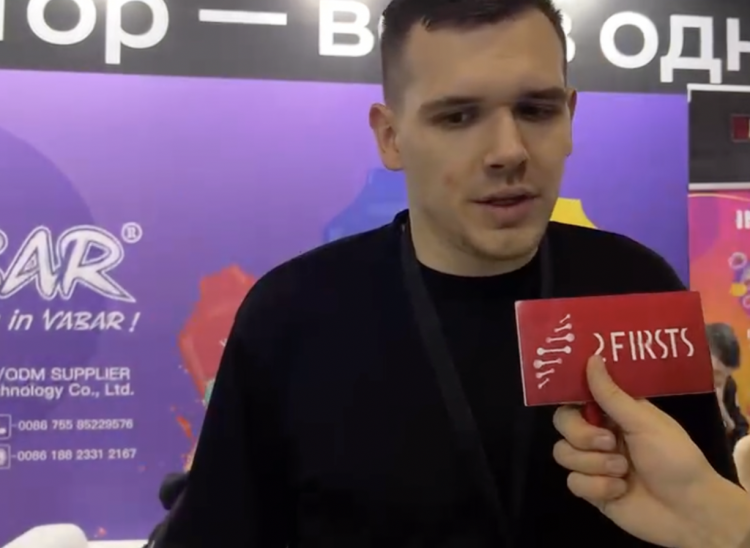
During the VAPE CLUB SHOW, an electronic cigarette exhibition in Russia, JIJA, self-proclaimed as one of the largest electronic cigarette distributors in Russia, gave an interview to 2FIRSTS regarding the aforementioned topic. The following is a translated transcript of the interview provided by 2FIRSTS.
Sales manager of Russian distributor Jija (Image source: 2FIRSTS)
Interviewee: Jija Sales Manager
Jija Distributes 90% of Chinese Brands in Russia.
Jija's distribution network now covers the entirety of Russia, offering a range of products including refillable and disposable e-cigarettes, e-liquids, and hookahs. As a wholesale supplier, Jija has over 3,000 trading points and has become one of the largest distributors in Russia. They are able to provide a variety of products and services to retailers, including transportation of goods to stores in any location via delivery companies.
Jija has two standards for collaboration: First, high-quality products at reasonable prices, and second, products packaged professionally to gain consumer trust.
Jija's sales manager stated that they prefer to work with large Chinese companies that offer brands with competitive market appeal and meet designated quality standards, such as Vabar, Inflave, and Cool Play. Chinese e-cigarette product information is translated into Russian and sold successfully in Russia, with 90% of Chinese brands being sold through Jija. For instance, the ELFBAR brand sells out quickly once it hits retail stores. In addition to promoting high-quality brands, Jija also attempts to increase brand recognition for lesser-known brands. They are currently working to promote the Lost Mary brand to enhance its visibility.
Russia to achieve self-sufficiency in production and sales, faces challenges from China in the Russian market.
In the field of e-cigarettes, such as nicotine salts and alkaline liquids, there are numerous domestic manufacturers in Russia. However, Jija still chose to partner with Chinese brands. According to Jija's sales manager, while the profit margins are not high for importing e-cigarettes from China, it would still be more expensive to establish a separate production line for electronic cigarette technology equipment using Russian domestic e-cigarettes. Therefore, Jija has decided to reduce the middleman and purchase e-cigarette products directly from China.
Jija stated that they will soon achieve autonomous production of disposable electronic cigarettes under Russian brands such as VVS and Soak. The entire production process for these electronic cigarettes will take place entirely within Russia.
Currently, some Russian e-cigarette brands are attempting to compete with Chinese brands. Russian products are priced more affordably, and if Russian brand companies establish a complete e-cigarette production chain and introduce cashless payments (which can be utilized in integrated distribution channels), they will have a competitive advantage in the market. Chinese companies exporting to Russia must pay customs consumption tax, prohibiting them from covering the entire Russian market with cashless payments. However, this is highly advantageous for Russian local manufacturers who do not need this step to easily and legally enter the Russian market.
Jija emphasized that competition is necessary for the market to thrive. Some brands emerge victorious while others are forced to leave. Brands must make sufficient investments in marketing. Some choose to work with Jija, who assists them in remaining in the market and encourages Russian stores to sell their products. Brands that are willing to invest in marketing experience rapid growth, while those unwilling to invest choose to exit the market.
2FIRSTS will continue to provide coverage of the Russian exhibition, with updated content available on the "2FIRSTS APP". Scan the QR code below to download the app.
Disclaimer
This article is provided solely for professional research, industry discussion, and informational purposes. Any references to brands, companies, products, technologies, or policies are made for factual reporting and analytical purposes only, and do not constitute endorsement, recommendation, promotion, or advertising by 2Firsts.
Nicotine-containing products, including but not limited to cigarettes, e-cigarettes, heated tobacco products, and nicotine pouches, carry significant health risks. Readers are responsible for complying with all applicable laws and regulations in their respective jurisdictions, including age restrictions and access limitations.
The information contained in this article should not be regarded as investment, legal, medical, regulatory, or commercial advice. While 2Firsts strives to ensure the accuracy and reliability of its content, it does not assume liability for any direct or indirect loss arising from errors, omissions, inaccuracies, or reliance on the information contained herein.
This article is not intended for individuals below the legal age for accessing tobacco or nicotine-related information in their jurisdiction.
Copyright Notice
This article is either original content produced by 2Firsts or content reproduced, translated, summarized, or adapted from third-party sources with attribution where applicable. The intellectual property rights of the original content remain with 2Firsts or the respective original rights holders.
No individual or organization may copy, reproduce, distribute, republish, modify, translate, or otherwise use this content without prior authorization. Any unauthorized use may result in legal action.
For copyright-related inquiries, corrections, or removal requests, please contact: info@2firsts.com.
AI-Assisted Translation and Editing Notice
Portions of this article may have been translated, edited, or reviewed with the assistance of artificial intelligence tools to improve efficiency and readability. Due to the limitations of AI-assisted translation and editing, discrepancies, omissions, or inaccuracies may exist when compared with the original source.
Where applicable, readers are advised to refer to the original source for the most complete and accurate information. If you identify any errors or believe that any content infringes upon your rights, please contact us at info@2firsts.com, and we will review and address the matter promptly.