Rising Trend of E-Cigarette Use among Youth in Minnesota

Regulations by 2FIRSTS.ai
Nov.30.2023
Rising Trend of E-Cigarette Use among Youth in Minnesota
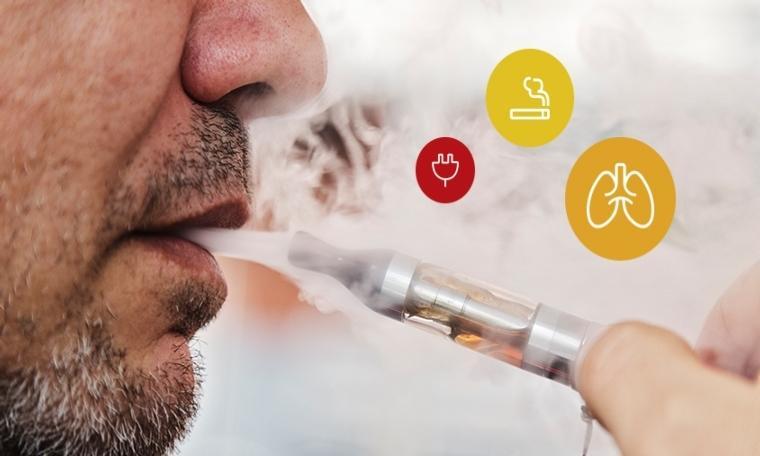
Teen and young adult e-cigarette use on the rise in Minnesota, with a 75% increase in 2018. Low-income teens more affected.

Recently, according to a news release by the Minnesota Department of Health in the United States, despite a significant decline in cigarette smoking rates, there has been a sharp increase in the proportion of teenagers and young adults suffering from e-cigarette usage.


A study has found that teenagers from low-income families have a higher proportion of e-cigarette and traditional cigarette use.


In 2018, the e-cigarette usage rate among teenagers in Minnesota has increased by 75%, with one in four high school students reporting e-cigarette use in the past month. This trend suggests that e-cigarettes are becoming a substitute for traditional cigarettes.


The reason why e-cigarettes are popular among teenagers is because they are perceived to be healthier than traditional cigarettes. Additionally, certain flavors of e-cigarettes are gaining increasing popularity, which can explain the trend of teenagers smoking e-cigarettes.


We welcome news tips, article submissions, interview requests, or comments on this piece.

Please contact us at info@2firsts.com, or reach out to Alan Zhao, CEO of 2Firsts, on LinkedIn


Notice

1.  This article is intended solely for professional research purposes related to industry, technology, and policy. Any references to brands or products are made purely for objective description and do not constitute any form of endorsement, recommendation, or promotion by 2Firsts.

2.  The use of nicotine-containing products — including, but not limited to, cigarettes, e-cigarettes, nicotine pouchand heated tobacco products — carries significant health risks. Users are responsible for complying with all applicable laws and regulations in their respective jurisdictions.

3.  This article is not intended to serve as the basis for any investment decisions or financial advice. 2Firsts assumes no direct or indirect liability for any inaccuracies or errors in the content.

4.  Access to this article is strictly prohibited for individuals below the legal age in their jurisdiction.


Copyright


This article is either an original work created by 2Firsts or a reproduction from third-party sources with proper attribution. All copyrights and usage rights belong to 2Firsts or the original content provider. Unauthorized reproduction, distribution, or any other form of unauthorized use by any individual or organization is strictly prohibited. Violators will be held legally accountable.

For copyright-related inquiries, please contact: info@2firsts.com


AI Assistance Disclaimer


This article may have been enhanced using AI tools to improve translation and editorial efficiency. However, due to technical limitations, inaccuracies may occur. Readers are encouraged to refer to the cited sources for the most accurate information.

We welcome any corrections or feedback. Please contact us at: info@2firsts.com

Russia’s Rostov Region Eyes Full Vape Sales Ban, Signals Tighter Tobacco Retail Rules
Russia’s Rostov region is preparing to pursue a region-wide ban on vape sales and is also signaling support for broader regional powers to tighten tobacco retail rules. A regional lawmaker said the initiative aligns with a State Duma bill that would allow regions to impose vape sales bans—an initiative he said has presidential backing.
Jan.28 by 2FIRSTS.ai
TGA Sets 2026–2027 Compliance Principles, Flags Vaping Goods as a 2026 Priority
The Therapeutic Goods Administration (TGA) has released its Compliance Principles for 2026 and 2027.Among 12 therapeutic goods categories identified for priority compliance and enforcement activity, TGA includes vaping goods, and it plans a further review of these priorities in March 2026.
Jan.23 by 2FIRSTS.ai
U.S. FDA Unveils Next-Generation Agentic AI Tool to Boost Review and Regulatory Efficiency
The U.S. FDA has announced the agency-wide deployment of new agentic AI capabilities, providing all employees with an optional multi-step task automation tool. Building on the broad adoption of its earlier large-language-model system, Elsa, the FDA aims to use this next-generation AI workflow to accelerate product review, regulatory oversight, and internal operations, while maintaining strict human supervision and data security.
Dec.02 by 2FIRSTS.ai
India’s NUSRL Hosts National Consultation on Protection from Emerging Tobacco and Nicotine Products
The National University of Study and Research in Law (NUSRL) in Ranchi, together with national and international public health experts, held a consultation focused on youth protection, enforcement capacity, and the regulatory landscape for emerging nicotine products. State Health Minister Irfan Ansari called for stronger policies and coordinated efforts to prevent addiction.
Dec.02
Altria CEO Billy Gifford to Retire; Sal Mancuso Named Successor
Altria Group, Inc. (NYSE: MO) announced that CEO Billy Gifford will retire at the conclusion of the 2026 Annual Meeting of Shareholders on May 14, 2026, after more than 30 years with the company. The Board of Directors has elected Salvatore (Sal) Mancuso, Altria’s current Executive Vice President and CFO, to succeed him as CEO.
Dec.12 by 2FIRSTS.ai
Special Report|Russia scales back anti-vaping drive, limits ban to single-region trial
After months of debate, Russian lawmakers have retreated from plans for a nationwide vaping ban, opting instead for a single-region pilot. The shift reflects pressure from business groups and fiscal authorities, amid warnings that sweeping prohibitions could fuel illegal trade while undermining efforts to regulate the market.
Jan.22