The Risk of Lung Cancer in Dual Users: A Study

Aug.05.2024
The Risk of Lung Cancer in Dual Users: A Study
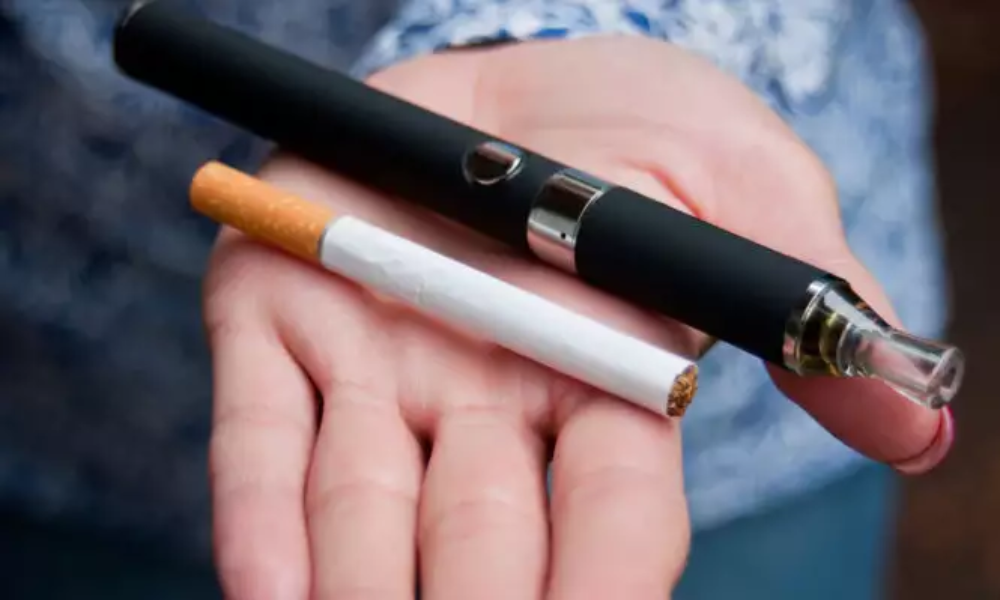
A recent study reported by Patrisnews shows that dual use of traditional tobacco and e-cigarettes may significantly increase lung cancer risk.

According to a report by Patrisnews, a recent study has shown that using traditional tobacco and e-cigarettes together may significantly increase the risk of lung cancer.


From a public health perspective, we are concerned about the dual use of traditional cigarettes and e-cigarettes.


The lead author of this study, Marisa Bittoni, stated.


She is a researcher in oncology at Ohio State University.


Bìtōngní bǔchōng dào: Bìtōngní added:


This study clearly demonstrates that using e-cigarettes while smoking increases the risk of developing lung cancer.


Her research team tracked the e-cigarette and traditional cigarette usage of nearly 5,000 individuals diagnosed with lung cancer in the Columbus area, and compared it with a control group of approximately 27,300 individuals without cancer.


The results showed that people who smoke both types of cigarettes are eight times more likely to develop lung cancer compared to those who do not have cancer.


In addition, the team led by Bithony found that people who smoke both types of cigarettes are four times more likely to develop lung cancer compared to those who only smoke traditional cigarettes.


The research results have recently been published in the Journal of Oncology Research and Therapy.


We welcome news tips, article submissions, interview requests, or comments on this piece.

Please contact us at info@2firsts.com, or reach out to Alan Zhao, CEO of 2Firsts, on LinkedIn


Notice

1.  This article is intended solely for professional research purposes related to industry, technology, and policy. Any references to brands or products are made purely for objective description and do not constitute any form of endorsement, recommendation, or promotion by 2Firsts.

2.  The use of nicotine-containing products — including, but not limited to, cigarettes, e-cigarettes, nicotine pouchand heated tobacco products — carries significant health risks. Users are responsible for complying with all applicable laws and regulations in their respective jurisdictions.

3.  This article is not intended to serve as the basis for any investment decisions or financial advice. 2Firsts assumes no direct or indirect liability for any inaccuracies or errors in the content.

4.  Access to this article is strictly prohibited for individuals below the legal age in their jurisdiction.


Copyright


This article is either an original work created by 2Firsts or a reproduction from third-party sources with proper attribution. All copyrights and usage rights belong to 2Firsts or the original content provider. Unauthorized reproduction, distribution, or any other form of unauthorized use by any individual or organization is strictly prohibited. Violators will be held legally accountable.

For copyright-related inquiries, please contact: info@2firsts.com


AI Assistance Disclaimer


This article may have been enhanced using AI tools to improve translation and editorial efficiency. However, due to technical limitations, inaccuracies may occur. Readers are encouraged to refer to the cited sources for the most accurate information.

We welcome any corrections or feedback. Please contact us at: info@2firsts.com

Sesh Launches 200-Pouch Refill Bag, Expanding Retail Unit Size in U.S. Nicotine Pouch Market
According to a LinkedIn post published by Sesh CMO Josh Metz on February 25, 2026, Sesh Products has introduced a 200-pouch nicotine pouch refill bag sold with a reusable metal can. In a U.S. MO market dominated by 20-pouch plastic cans, the product offers a larger retail unit size. The company lists a standard price of USD 49.99, with a uniform 15% discount currently applied, bringing the price to USD 42.49.
Innovation
Feb.25
Haypp Voluntarily Sets a 20 mg Nicotine-Strength Cap for Nicotine Pouches and Urges the UK to Establish a Regulatory Limit
Online nicotine pouch retailer Haypp said it has voluntarily adopted a 20 mg per pouch nicotine-strength cap across its e-commerce platforms and is urging the UK government to formalize that cap as the limit as it develops a regulatory framework. Haypp said proportionate limits would protect consumers while preserving nicotine pouches as a viable reduced-risk alternative to cigarettes.
Feb.26 by 2FIRSTS.ai
BAT FY2025 Results Review Series by 2Firsts
Feb.12
Russia’s Volgograd fines retailer 300,000 rubles for unlabelled nicotine products, orders confiscation and destruction
Volgograd, Russia say a retailer was caught selling unlabelled nicotine products, including electronic nicotine delivery devices flagged in the national “Honest Sign” tracking system as already withdrawn from circulation. A local court fined the entrepreneur 300,000 rubles and ordered 41 confiscated items to be destroyed, with the decision now in effect.
Feb.05 by 2FIRSTS.ai
Federal Register notice: FDA seeks comments on “Warning Plans for Certain Tobacco Products”
The U.S. Food and Drug Administration (FDA) issued a notice stating it has submitted a proposed information collection to the Office of Management and Budget (OMB) for review under the Paperwork Reduction Act.
Jan.16 by 2FIRSTS.ai
Special Report | China’s New Five-Year Plan Highlights “Health-First” Strategy, Providing Policy Context for Tobacco Sector
China’s 2026 “Two Sessions” reviewed the draft Outline of the 15th Five-Year Plan, which proposes implementing a health-first development strategy and strengthening the effectiveness of the Patriotic Health Campaign. Although the document does not address specific industries, this public-health governance framework provides a new policy context for observing the future regulation, product strategies, and market development of China’s tobacco and next-generation nicotine sectors.
Industry Insight
Mar.08