You don’t have to look far in modern Britain to find a group of teenagers exhaling clouds of coloured, scented, flavoured vapour, insouciantly sucking on plastic tubes. Close by, you will probably find clusters of alarmed parents, worrying about their children’s new habit – vaping – but unsure what to do.
For while, in the UK, it is illegal for under-18s to buy e-cigarettes, the market is being flooded with unsafe, dessert-flavoured disposable devices aimed at children, according to Trading Standards in England and Wales, who say they are currently receiving hundreds of complaints per month. Last week, a YouGov survey for Action on Smoking and Health (ASH) found that a quarter of the products purchased did not meet the standards required to be sold on UK shelves.
And the trade seems unstoppable. Vaping has almost doubled among 11 to 17-year-olds to seven per cent, with use of disposable e-cigarettes rising in popularity sevenfold.
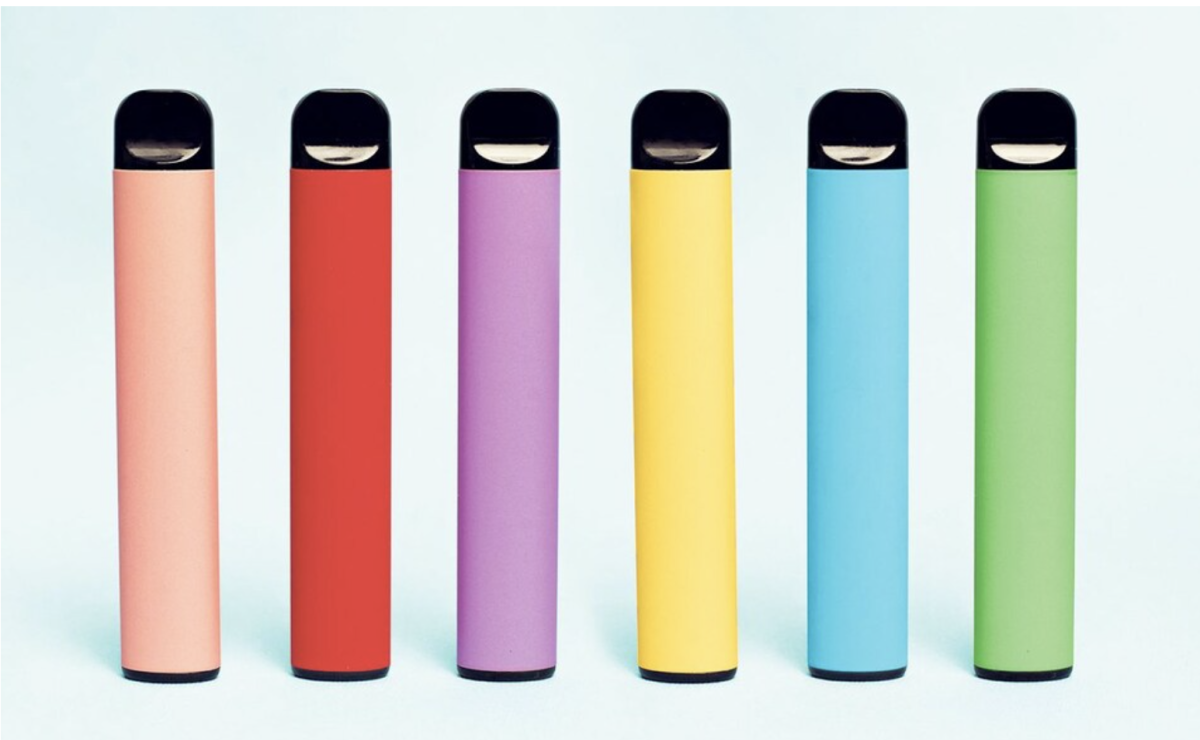
While the NHS recommends vaping as a suitable alternative to smoking tobacco cigarettes, what of those who balk at the idea of a ciggie, but have been lured in by the endless shops featuring brightly coloured nicotine pens for a couple of pounds a pop?
The average cigarette contains around 12mg of nicotine. Elf Bars – among the most commonly used in the UK – contain 20mg of nicotine per 2ml of liquid, equating to around 40-50 cigarettes’ worth in fewer than 600 puffs. The amount consumed by vapers is hard to calculate, as cartridges come in different sizes and many users begin inhaling at the outset of the day, and don’t stop.
UK restrictions on what is now a £15 billion industry limit vape cartridge capacity to no more than 2ml, and the volume and strength of nicotine-containing liquid to 10ml and 20mg/ml respectively. These guidelines are among the more relaxed globally: in Australia, vapes can only be purchased by over-18s with a prescription, while they are banned from sale in San Francisco (rules vary state-to-state across the US). In countries from Japan to Brazil, India to Hong Kong, it is illegal to sell e-cigarettes.

A big part of the UK’s stance is formed by the Government’s encouragement of vaping as a means to wean people off cigarettes, not to encourage them to vape per se – and its pledge to make Britain smoke-free by 2030 (currently 14.5 per cent of over-16s smoke).
“If we’re just replacing one bad with another bad, are we really tackling the issue?” asks dentist Anna Middleton. She has seen a rise in young patients coming into her Chelsea clinic presenting with bleeding gums – brought on by the nicotine in e-cigarettes, which “is a vasoconstrictor, and therefore affects blood supply. It’s a recipe for gum disease, because the bad bacteria is just thriving in that toxic environment.” Those risks aren’t communicated to would-be vapers, she adds.
A 2018 report from the National Academies of Science, Engineering and Medicine also found that e-cigarettes “contain and emit numerous potentially toxic substances,” and exacerbated asthma and wheezing among adolescent users.
The Medicines and Healthcare products Regulatory Agency says it seeks to create “an environment that protects children from starting to use these products”. Yet ASH’s research found that almost half of under-18s surveyed bought their e-cigarettes from shops whose purveyors were clearly unbothered by their customers being underage. Though the cost is comparatively small – from £1.99 for a 600-puff Elf Bar, compared with around £12 for a packet of cigarettes – the industry is predicted to grow 30 per cent year-on-year.
One “very concerned” parent of an 18-year-old says her daughter’s friends “order vape juice online with no problem” – and that while they consider cigarette smokers “disgusting”, they “don’t feel vaping is the same”. Others report that they believe vaping can be a gateway to cigarettes themselves.
Josh, an A-level student from Nottingham, had never smoked before being handed an Elf Bar at school last year, aged 17. E-cigarettes then began popping up in social settings so often, he was soon using them frequently – within a few months becoming so used to the nicotine hit, he switched to tobacco cigarettes. “I had no intention of more than one try for fun,” he says. But “with more and more people using them, I felt I needed to own one”; he didn’t want to seem “uncool or boring”.
Vaping is now something of a status symbol for teenagers, adds Josh. “Middle class teens and students opt for Elf Bars, Geek Bars or other smaller disposable vapes.” At festivals, they are often handed out for free by vape companies.

Image is a huge part of the appeal, says Dr Sandro Demaio, CEO of VicHealth in Australia. “The packaging looks like make-up or products that are very alluring to young people.” While Australia’s e-cigarette laws are far more stringent than the UK’s, he is calling for tighter restrictions on an industry “targeting teenagers, tweens and very young people” who are “breathing highly toxic, highly addictive products deep into their lungs as their bodies, minds and identities are still developing”.
He adds: “We urgently need to do all we can to protect young people to ensure that we don’t end up with another entire generation addicted, for life, to nicotine.”
Dr Demaio says that in the past week, he has met children as young as 10 addicted to vaping – and that a black market for illegal vapes is thriving on the likes of TikTok.
“The glamorous promotion of vaping on social media is completely inappropriate and social media platforms should take responsibility,” agrees Deborah Arnott, chief executive of ASH. The Khan review that produced the 2030 no-smoking benchmark also suggested that £15 million should be invested in enforcement, but “online platforms like TikTok don’t need to wait, they must act now”, Arnott says.
Skirmishes between companies and consumers continue, with little action. In the US, one family sued Juul, another e-cigarette brand, after their 15-year-old became addicted, resulting in seizures. And last month, the company received a ban on sales from the Food and Drug Administration – which was then revoked last week.
Part of the issue for governments considering further restrictions is how useful the devices are as a proxy for tobacco cigarette smokers. “Smoking is still the leading cause of premature death [worldwide],” Arnott points out. “That’s what’s killing people; not vaping.”
The challenge remains the new cohort. “I do believe that vaping products are used as the new cigarette ,” Josh says, adding that it is “now a large part of youth culture and identity in the UK”. There is data to show relative safety, compared with tobacco cigarettes – but nothing that goes beyond around the 15-year mark.
“We have no long-term data on health implications and the concentration of nicotine varies,” the mother of the 18-year-old says. “They think no health problems will pop up in their future.”
Gillian Golden, CEO of the Independent Vape Trade Association, comments: “It is illegal to sell vape products to anyone under 18, so young people should not be able to access them.
“E-cigarettes are meant for adult smokers who are looking to quit, or looking for a far safer alternative to cigarettes. The IBVTA would like to see more funding for enforcement and stiffer penalties for those who break the law.”
The content excerpted or reproduced in this article comes from a third-party, and the copyright belongs to the original media and author. If any infringement is found, please contact us to delete it. Any entity or individual wishing to forward the information, please contact the author and refrain from forwarding directly from here.