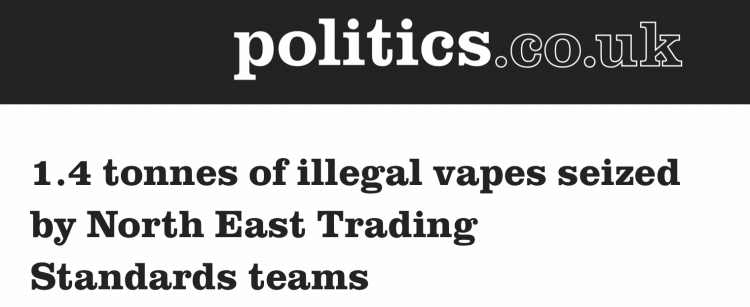
The Trading Standards in the northeast of England, in cooperation with the Northeast Trade Standard Association, have taken thousands of non-compliant electronic cigarette products off the shelves. Over the past six months, a total of 1.4 tons of illegal disposable electronic cigarette products seized from retailers were sent for disposal.
All tobacco products, electronic cigarettes, and vaping devices must comply with strict tobacco control laws, including restrictions on nicotine content and container size. Some confiscated products had canisters that exceeded the legal limit by seven times, incorrect labeling, and devices lacking important health warnings, detailed batch information, and danger alerts.
Electronic cigarette devices must also display detailed information of the UK manufacturer or importer, who can be contacted in case of safety issues. A large number of unauthorized disposable electronic cigarettes have been seized for sale in the UK.
The majority of the work carried out by the Northeast England Trading Standards Association has been in response to concerns from consumers about children purchasing e-cigarette devices. In a test purchase operation conducted in March of this year on 32 retailers, 44% of them sold an e-cigarette device to an underage volunteer.
Ian Harrison, representing the Northeast England Trading Standards Association, has stated that electronic cigarettes pose a small portion of the risks associated with smoking, which have been found to cause two-thirds of lifelong smokers’ deaths. However, the number of electronic cigarette devices seized by trading standards suggests a significant market for non-compliant products. Consumers should be cautious when purchasing electronic cigarette products, and those interested in using them should opt for reputable e-cigarette shops.
John Herriman, CEO of the Accredited Standards Institute, expressed concern over the growing number of illegal activities surrounding the sale of electronic cigarettes. While acknowledging their potential as a smoking cessation tool, he also pointed out that many of these products are being sold to children, raising public concerns.
The trade standards team is undertaking important work in cracking down on unscrupulous retailers who sell these products to young people without the legally required age verification checks. It is crucial that e-cigarette products adhere to regulations put in place to protect public health and ultimately do not end up in the hands of children.
Ailsa Rutter OBE, Director of Fresh and Balance, stated that the best advice for smokers is to switch to e-cigarettes. However, non-smokers should not start smoking. E-cigarettes are much less harmful for smokers who want to quit, but it is important to ensure that the products being sold comply with UK regulations.
Ailsa Rutter OBE continued, "Smoking is still our biggest killer, with approximately 5,000 deaths due to addiction in our region every year, all of which are entirely preventable. We encourage any smokers considering quitting to try vaping, which can lower their risk of smoking-related diseases and premature death.
Electronic cigarette devices and electronic cigarettes must obtain approval from the Medicines and Healthcare products Regulatory Agency (MHRA) before they can be sold. Disposable electronic cigarettes that meet the requirements must have a maximum tank size of 2ml and a maximum nicotine strength of 20mg/ml or 2%. Electronic cigarette devices are age-restricted products and selling them to individuals under the age of 18 is illegal.
Disclaimer
This article is provided solely for professional research, industry discussion, and informational purposes. Any references to brands, companies, products, technologies, or policies are made for factual reporting and analytical purposes only, and do not constitute endorsement, recommendation, promotion, or advertising by 2Firsts.
Nicotine-containing products, including but not limited to cigarettes, e-cigarettes, heated tobacco products, and nicotine pouches, carry significant health risks. Readers are responsible for complying with all applicable laws and regulations in their respective jurisdictions, including age restrictions and access limitations.
The information contained in this article should not be regarded as investment, legal, medical, regulatory, or commercial advice. While 2Firsts strives to ensure the accuracy and reliability of its content, it does not assume liability for any direct or indirect loss arising from errors, omissions, inaccuracies, or reliance on the information contained herein.
This article is not intended for individuals below the legal age for accessing tobacco or nicotine-related information in their jurisdiction.
Copyright Notice
This article is either original content produced by 2Firsts or content reproduced, translated, summarized, or adapted from third-party sources with attribution where applicable. The intellectual property rights of the original content remain with 2Firsts or the respective original rights holders.
No individual or organization may copy, reproduce, distribute, republish, modify, translate, or otherwise use this content without prior authorization. Any unauthorized use may result in legal action.
For copyright-related inquiries, corrections, or removal requests, please contact: info@2firsts.com.
AI-Assisted Translation and Editing Notice
Portions of this article may have been translated, edited, or reviewed with the assistance of artificial intelligence tools to improve efficiency and readability. Due to the limitations of AI-assisted translation and editing, discrepancies, omissions, or inaccuracies may exist when compared with the original source.
Where applicable, readers are advised to refer to the original source for the most complete and accurate information. If you identify any errors or believe that any content infringes upon your rights, please contact us at info@2firsts.com, and we will review and address the matter promptly.