Tragic Death: Brazilian Man Electrocuted While Using E-Cigarette

Regulations by 2FIRSTS.ai
Mar.13.2024
Tragic Death: Brazilian Man Electrocuted While Using E-Cigarette
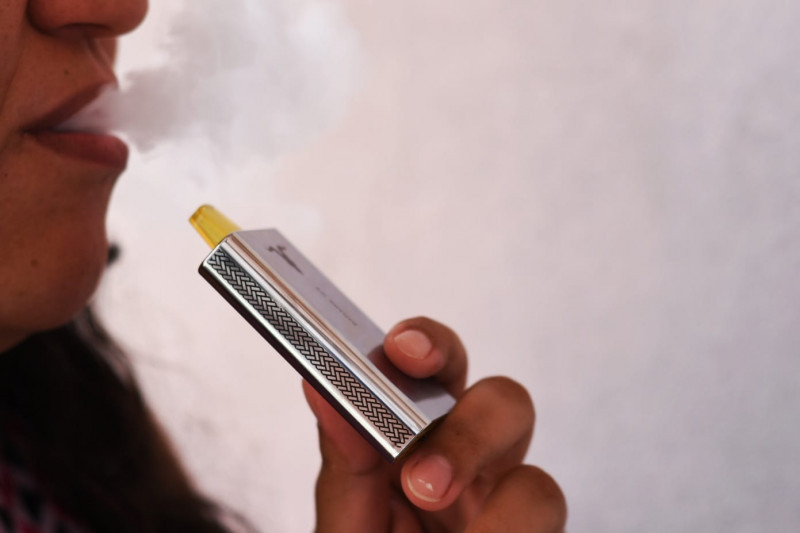
A 20-year-old man in Betolínia City, Brazil tragically died from an electric shock while using a charging e-cigarette.

According to Brazilian media portalodia, a 20-year-old man living in the city of Belterolândia died from electric shock last Sunday (March 10) while using a charging e-cigarette.


According to the Forensic Medical Institute (IML), the young man's death occurred instantly. At the time, he was in his room using an e-cigarette when the charging outlet experienced a power short circuit, ultimately resulting in his unfortunate death from electrocution.


The e-cigarette currently being used by the young person has also been confiscated and will undergo technical examination.


We welcome news tips, article submissions, interview requests, or comments on this piece.

Please contact us at info@2firsts.com, or reach out to Alan Zhao, CEO of 2Firsts, on LinkedIn


Notice

1.  This article is intended solely for professional research purposes related to industry, technology, and policy. Any references to brands or products are made purely for objective description and do not constitute any form of endorsement, recommendation, or promotion by 2Firsts.

2.  The use of nicotine-containing products — including, but not limited to, cigarettes, e-cigarettes, nicotine pouchand heated tobacco products — carries significant health risks. Users are responsible for complying with all applicable laws and regulations in their respective jurisdictions.

3.  This article is not intended to serve as the basis for any investment decisions or financial advice. 2Firsts assumes no direct or indirect liability for any inaccuracies or errors in the content.

4.  Access to this article is strictly prohibited for individuals below the legal age in their jurisdiction.


Copyright


This article is either an original work created by 2Firsts or a reproduction from third-party sources with proper attribution. All copyrights and usage rights belong to 2Firsts or the original content provider. Unauthorized reproduction, distribution, or any other form of unauthorized use by any individual or organization is strictly prohibited. Violators will be held legally accountable.

For copyright-related inquiries, please contact: info@2firsts.com


AI Assistance Disclaimer


This article may have been enhanced using AI tools to improve translation and editorial efficiency. However, due to technical limitations, inaccuracies may occur. Readers are encouraged to refer to the cited sources for the most accurate information.

We welcome any corrections or feedback. Please contact us at: info@2firsts.com

How AI Is Rewriting the Talent Playbook for the Nicotine Industry: JTI’s Case
AI is moving from a back-office tool to a core organizational capability in the nicotine industry. Based on JTI’s responses, this 2Firsts feature examines how AI is reshaping talent strategy, internal mobility, decision-making and human accountability as global tobacco companies compete in the shift toward new nicotine categories.
Jun.17
Special Report|South Korean Lawmaker Queries China Tobacco Regulator Over Synthetic Nicotine as Export-Rule Gaps Emerge
A South Korean lawmaker has asked China’s tobacco regulator to clarify rules for e-cigarettes containing synthetic nicotine amid questions over product declarations and possible tax losses. The dispute exposes gaps between Chinese export requirements and destination-market rules, while underscoring the global impact of China’s licensing and traceability policies.
Jul.10
Chinese Disposable Brands OXBAR, LYCO Challenge Vuse and JUUL: Pennsylvania’s Pending List Offers a Glimpse of the Future Legal Vape Market
Pennsylvania’s June 26 ENDS Pending Certifications list previews the state’s future legal vape market, placing Vuse, JUUL and Logic alongside Chinese-linked disposable brands OXBAR and LYCO. Shaped by PMTA eligibility and state rules, the list shows competition shifting from market share to market access.
Special Report
Jul.06
South Korea’s New Vape Rules Raise Bar for E-Liquid Makers and China-Linked Supply Chains, Expert Says
South Korea’s new vape regulations are reshaping the e-liquid market, raising compliance requirements for manufacturers, retailers and overseas suppliers. In an interview with 2Firsts, Korean nicotine products specialist Sam Kim discusses licensing barriers, inventory impacts, China-linked supply chains, and emerging regulatory challenges around nicotine analogues, nicotine-free products and DIY mixing. The Korean case may offer broader insights as governments worldwide adapt to rapidly evolving nicotine products.
Jul.16
South Korea’s Cigarette Smoking Rate Falls to 17.9%, E-Cigarette Use Continues to Rise
Data released by the Korea Disease Control and Prevention Agency (KDCA) showed South Korea’s conventional cigarette smoking rate fell to 17.9% in 2025, while heated tobacco and liquid e-cigarette use continued to rise, particularly among young adults and women.
Jun.01
PMI Oral Products Chief Says Lack of Rules May Push Nicotine Pouch Market Into Illicit Trade
Nick Ricketts, President of Oral Products at Philip Morris International (PMI), told Logos Press that nicotine pouches should be brought under clear regulatory frameworks covering nicotine limits, flavor rules, age verification, sales controls and marketing standards, arguing that the absence of clear rules or blanket bans may push consumer demand into illegal or semi-legal channels.
Jul.06