Key Points:
·Market size and challenges from the black market: The e-cigarette black market in the UAE is accounting for nearly 50% of sales. Disposable products make up 75-80% of the market share.
·Law enforcement strengthened, compliance market growth: the government has increased enforcement efforts, with legal market share rising from 40% to 60%, but the severe disparity between high taxes and black market prices persists.
·Emerging category and membership program: Nicotine pouch sales are rapidly increasing in 2024, with My Vapery's membership program serving 215,000 users and enhancing customer loyalty.
·Business Strategy and Market Outlook: Focusing on compliance and product optimization, My Vapery predicts that disposable products may face bans and has positioned itself in various product categories to mitigate risks.
·Call for Chinese manufacturers to focus on quality: A call for Chinese manufacturers to pay attention to the optimization of basic functions and quality stability, rather than excessively pursuing aesthetic innovation.
【By 2Firsts】In the United Arab Emirates, the e-cigarette market is facing fierce competition and a constantly changing regulatory environment. As one of the well-known e-cigarette distribution brands in the UAE, Lucy Halushka, the booth manager of My Vapery shared insights on the current status, challenges, and future trends of the e-cigarette market in the UAE during an interview with 2Firsts at the Dubai e-cigarette exhibition.
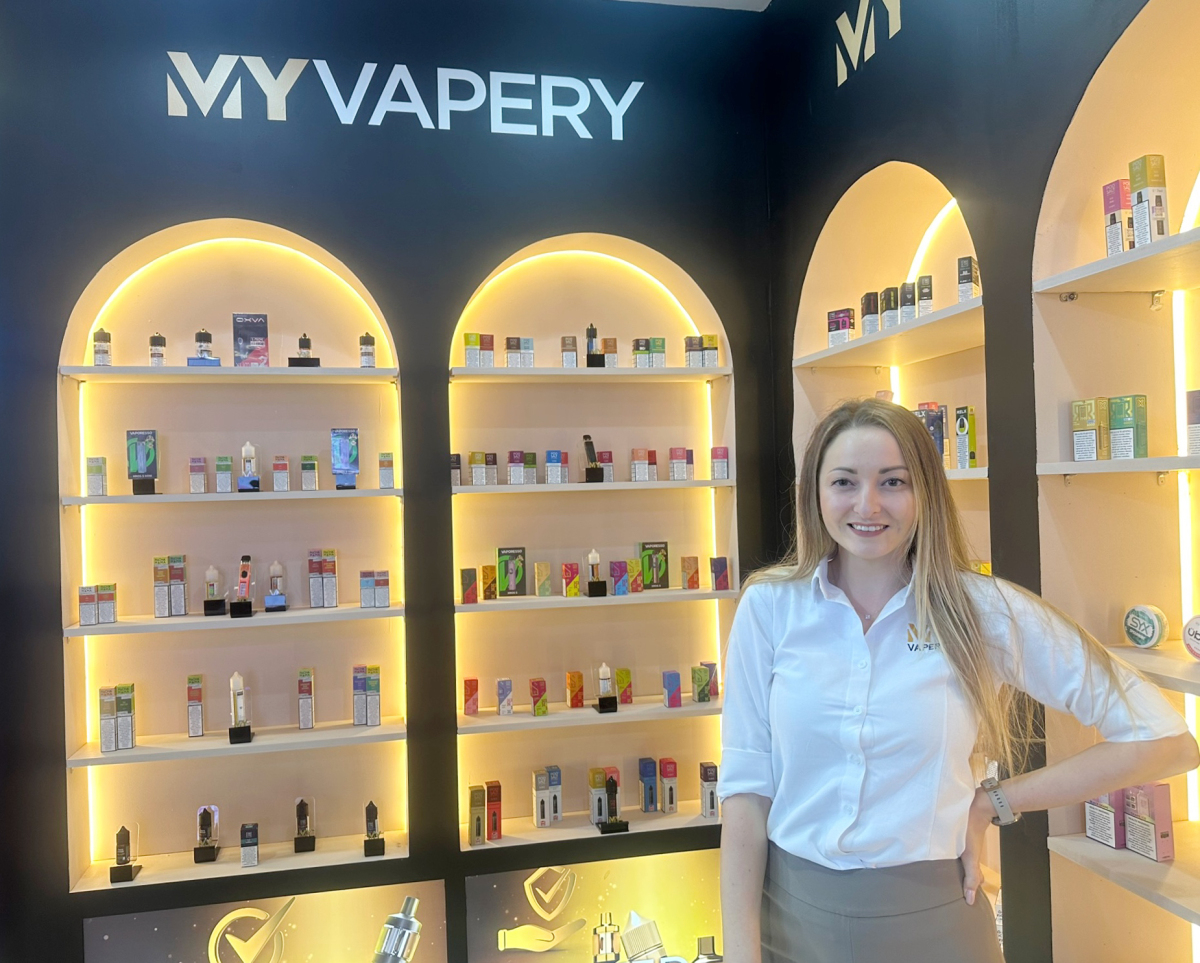
Here are the core viewpoints of Lucy.
UAE Vape Black Market Holds Nearly 50% Share
Currently, the e-cigarette market in the UAE is estimated to be around 560 million dirhams. However, despite the market growing rapidly, legal channels only hold a market share of 40% to 50%, with the black market still occupying over half of the market share. Lucy stated that the presence of the black market puts immense pressure on the legal market, especially in terms of pricing.
In terms of product categories, disposable e-cigarette products occupy 75% to 80% of the market share. The fast-paced lifestyle in the local area has prompted consumers to have a strong demand for "disposable, single-use" products. The person in charge of the booth pointed out, "Consumers generally seek convenience and are unwilling to invest too much time and energy in cleaning and maintaining equipment.
In terms of flavor, fruit flavors (especially watermelon) are the best-selling, while tobacco flavor is only chosen in specific scenarios.
Stronger Enforcement Boosts Legal Market Share to 60%
Legal enterprises in the United Arab Emirates are facing formidable challenges in terms of taxation. Legal markets must bear a 100% comprehensive tax rate, including customs duties and consumption taxes, resulting in final prices being more than four times higher than the cost. In contrast, prices for black market products are more than 50% lower than those in the legal market, leading to a significant price disparity.
Furthermore, the UAE government's restrictions on nicotine content have also presented challenges for the market. The maximum nicotine content has been set at 20mg/ml, limiting the taste and appeal of products.
However, in recent years, the municipal government has strengthened law enforcement on legal markets, increasing their market share from 40% to 60%. This change has provided some relief for legal businesses, but the challenges from the black market remain severe.
In addition, the booth manager stated that in 2024, nicotine pouches were successfully launched as a new product category, and sales in this category have shown significant growth.
Increasing User Loyalty through a Points System
In terms of sales channels, e-cigarette distributors in the UAE have adopted a strategy that combines both online and offline methods. The ratio of online to offline sales channels is approximately 1:1, with physical stores relying on professional sales staff during the selling process. Lucy mentioned that about 95% of store employees in this industry have more than three years of experience, allowing them to provide consumers with in-depth product experiences and expert guidance.
Furthermore, My Vapery distributor's membership program has already reached 215,000 users, enhancing customer loyalty through a points system and other reward measures.
Calls for Chinese Brands to Focus on Functionality Over Flashy Designs
My Vapery currently focuses on distributing 50 brands, with 10 of them being exclusive agents, covering 200 fast-moving consumer goods channels and 600 traditional retail stores. When selecting partners, the company mainly focuses on three major criteria: compliance awareness, long-term investment willingness, and rationality of product engineering. Especially in terms of product design, the company explicitly states its opposition to "ostentatious high-priced design" and places more emphasis on optimizing practical functionality and stability.
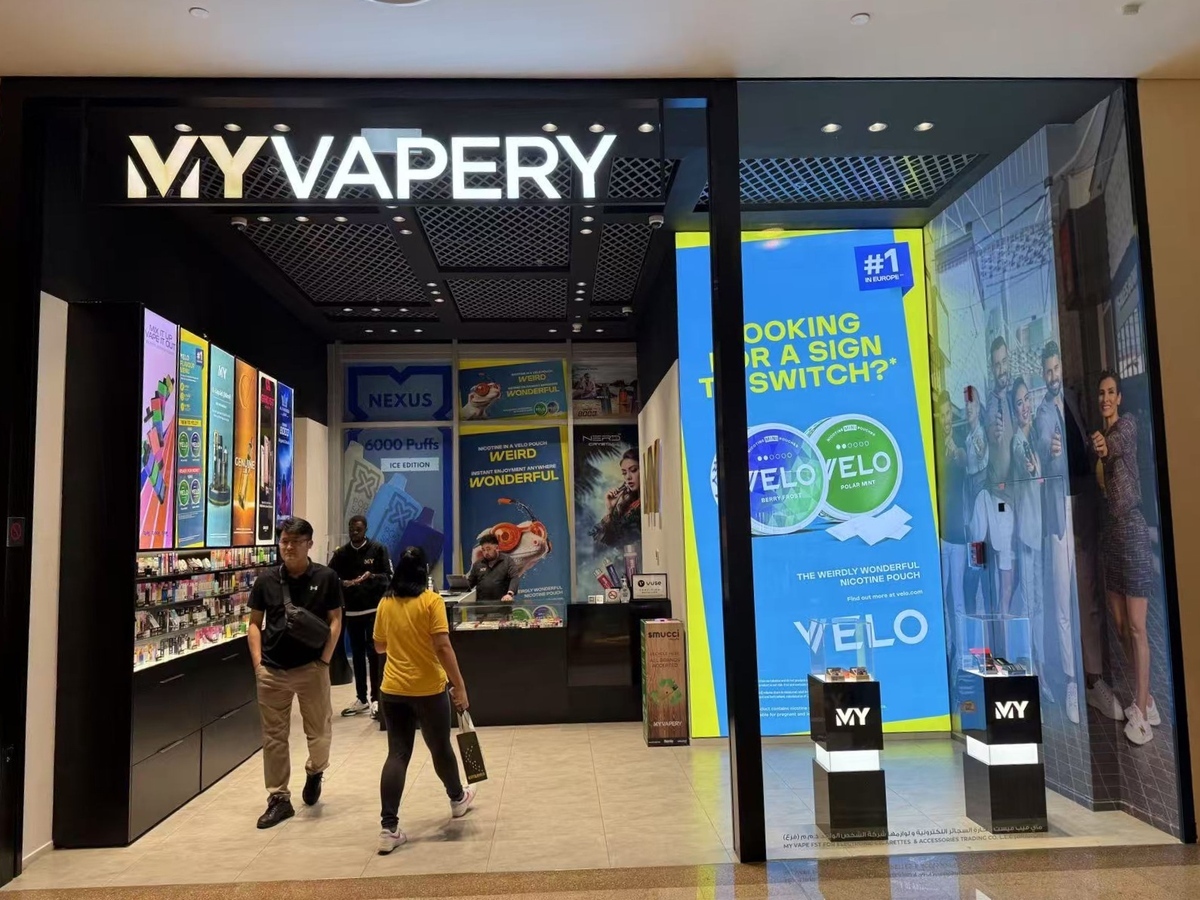
Looking ahead, Lucy predicts that disposable e-cigarette products may face the risk of future bans. Therefore, the company has been expanding its product categories in order to address this potential market shift. The booth manager stated, "While the market demand for disposable products is currently strong, we must consider possible policy changes in the future.
She also called on Chinese manufacturers to focus more on optimizing the basic functions and quality stability of e-cigarette products, rather than overly pursuing aesthetic innovation. She believes that in the current market environment, the practicality and durability of products will become key factors in future competition.
Click the image below to access the special report.

We welcome news tips, article submissions, interview requests, or comments on this piece.
Please contact us at info@2firsts.com, or reach out to Alan Zhao, CEO of 2Firsts, on LinkedIn
Notice
1. This article is intended solely for professional research purposes related to industry, technology, and policy. Any references to brands or products are made purely for objective description and do not constitute any form of endorsement, recommendation, or promotion by 2Firsts.
2. The use of nicotine-containing products — including, but not limited to, cigarettes, e-cigarettes, nicotine pouchand heated tobacco products — carries significant health risks. Users are responsible for complying with all applicable laws and regulations in their respective jurisdictions.
3. This article is not intended to serve as the basis for any investment decisions or financial advice. 2Firsts assumes no direct or indirect liability for any inaccuracies or errors in the content.
4. Access to this article is strictly prohibited for individuals below the legal age in their jurisdiction.
Copyright
This article is either an original work created by 2Firsts or a reproduction from third-party sources with proper attribution. All copyrights and usage rights belong to 2Firsts or the original content provider. Unauthorized reproduction, distribution, or any other form of unauthorized use by any individual or organization is strictly prohibited. Violators will be held legally accountable.
For copyright-related inquiries, please contact: info@2firsts.com
AI Assistance Disclaimer
This article may have been enhanced using AI tools to improve translation and editorial efficiency. However, due to technical limitations, inaccuracies may occur. Readers are encouraged to refer to the cited sources for the most accurate information.
We welcome any corrections or feedback. Please contact us at: info@2firsts.com