The UK Vaping Industry Association (UKVIA) forum recently discussed the challenges facing the electronic cigarette industry, including issues with adolescent usage, environmental impacts, and counterfeit products. Attendees were informed that electronic cigarettes are now being considered as a part of the healthcare industry, under the umbrella of "helping to save lives and reduce harm.
The recent British e-cigarette industry forum held in Westminster, London, discussed the urgent challenges facing the British e-cigarette industry.
The hot topics of "environmental problems caused by young people using electronic cigarettes and disposable products" and "how the industry should deal with counterfeit and illegal products" were thoroughly debated.
Adam Afriyie, Vice Chairman of the All-Party Parliamentary Group (APPG) on e-cigarettes, has stated that the e-cigarette industry plays a crucial role in helping the government achieve its ambitious goal of becoming smoke-free by 2030, and in promoting measures related to smoking cessation.
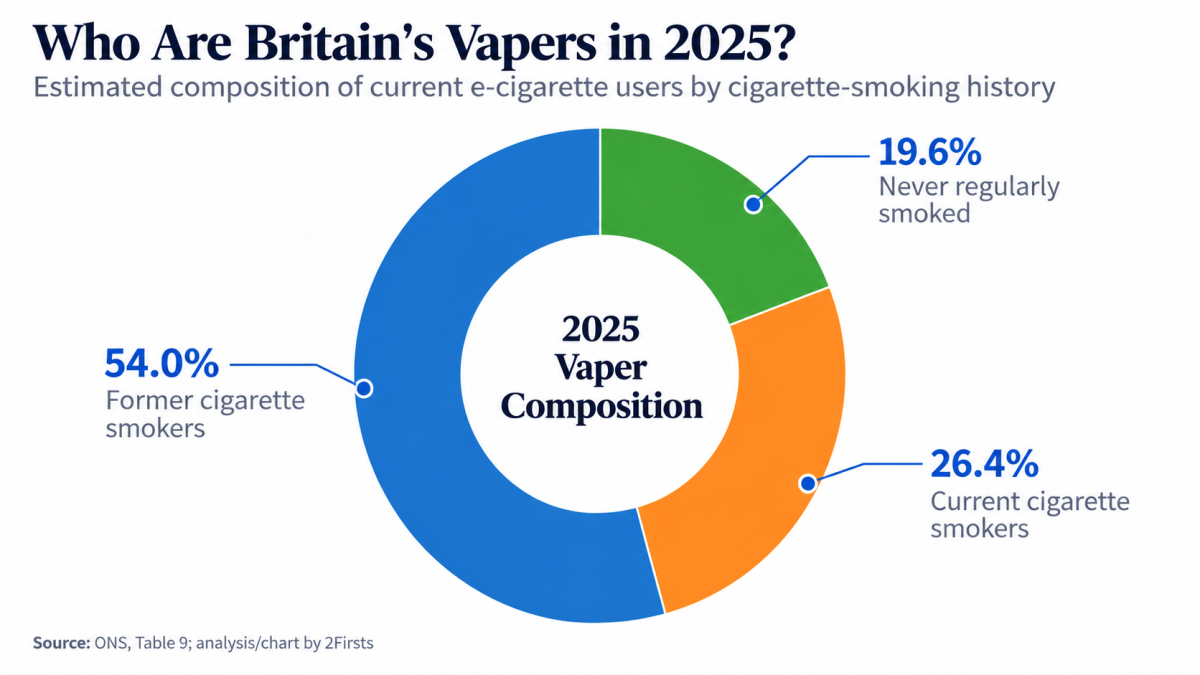
Conservative MPs in Windsor have stated that e-cigarettes have experienced a rapid increase in popularity over the past decade, with an estimated 4.3 million people now using them in the UK - a significant increase from the 800,000 users a decade ago. This has been described as a revolution in the smoking habits of the nation, with the potential to greatly improve both public health and financial well-being.
The UKVIA has commissioned the Centre for Economics and Business Research (Cebr) to produce the first-ever report detailing the economic contribution made by the e-cigarette industry at national and regional levels.
Highlights of the economic impact assessment of e-cigarettes include: With smokers turning to e-cigarettes, the total revenue of the e-cigarette industry last year was 2.8 billion pounds (about 23.8 billion yuan). The industry provides nearly 18,000 full-time equivalent positions in retail, manufacturing, and supply chains.
It is estimated that in 2019 alone, smokers saved the NHS over £300 million in costs.
In 2021, the UK e-cigarette industry contributed £350 million (approximately RMB 2.97 billion) in revenue to the government through taxes.
2FIRSTS will continue to track and report on this topic. Further updates will be available on the "2FIRSTSAPP". Scan the QR code below to download the app.
Disclaimer
This article is provided solely for professional research, industry discussion, and informational purposes. Any references to brands, companies, products, technologies, or policies are made for factual reporting and analytical purposes only, and do not constitute endorsement, recommendation, promotion, or advertising by 2Firsts.
Nicotine-containing products, including but not limited to cigarettes, e-cigarettes, heated tobacco products, and nicotine pouches, carry significant health risks. Readers are responsible for complying with all applicable laws and regulations in their respective jurisdictions, including age restrictions and access limitations.
The information contained in this article should not be regarded as investment, legal, medical, regulatory, or commercial advice. While 2Firsts strives to ensure the accuracy and reliability of its content, it does not assume liability for any direct or indirect loss arising from errors, omissions, inaccuracies, or reliance on the information contained herein.
This article is not intended for individuals below the legal age for accessing tobacco or nicotine-related information in their jurisdiction.
Copyright Notice
This article is either original content produced by 2Firsts or content reproduced, translated, summarized, or adapted from third-party sources with attribution where applicable. The intellectual property rights of the original content remain with 2Firsts or the respective original rights holders.
No individual or organization may copy, reproduce, distribute, republish, modify, translate, or otherwise use this content without prior authorization. Any unauthorized use may result in legal action.
For copyright-related inquiries, corrections, or removal requests, please contact: info@2firsts.com.
AI-Assisted Translation and Editing Notice
Portions of this article may have been translated, edited, or reviewed with the assistance of artificial intelligence tools to improve efficiency and readability. Due to the limitations of AI-assisted translation and editing, discrepancies, omissions, or inaccuracies may exist when compared with the original source.
Where applicable, readers are advised to refer to the original source for the most complete and accurate information. If you identify any errors or believe that any content infringes upon your rights, please contact us at info@2firsts.com, and we will review and address the matter promptly.