On June 23rd, the United States Food and Drug Administration (FDA) announced on its official website that it has officially issued a market refusal order to the electronic cigarette company JUUL Labs Inc. (referred to as "JUUL").
According to the directive, JUUL must halt all sales of its products in the US, including its vaping devices and four pods (containing 3% and 5% nicotine and tobacco and mint flavors). In addition to refraining from selling these products themselves, JUUL must also ensure that its distributors and retailers do not sell them, or risk facing legal penalties.
In order to avoid being removed from the US consumer market, JUUL has stated that while they respect the FDA's investigation results and decisions, they do not agree with them and will attempt to appeal or explore alternative solutions.
JUUL goes from market share of 72% to facing "a crackdown
According to data, JUUL, an American electronic cigarette brand, was founded in 2015 and was once a subsidiary of Pax Labs, another American electronic cigarette company. In July 2017, JUUL became an independent brand. At that time, JUUL had already captured over one-third of the US electronic cigarette market share.
Later in late 2018, US tobacco giant Altria purchased a 35% stake in JUUL for $12.8 billion. At the time, JUUL was valued at $38 billion, surpassing even SpaceX in value. Its market share in the US reached an overwhelming 72%, with annual sales of $2 billion.
JUUL's rapid revenue growth can be attributed to their marketing strategy, which focuses on fashion, youth, and trendiness. To promote the JUUL brand, Hollywood celebrities and social media influencers were enlisted and their promotion was spread through social media, attracting the attention of younger audiences.
JUUL, while attracting adult smokers, also gained widespread popularity among American teenagers with its early releases of e-cigarette flavors such as milk pudding, cucumber, and mango. As a result, JUUL has faced numerous investigations and lawsuits from the FDA, state governments, and parents of students since 2018.
As a result of consecutive regulatory crackdowns and competition from peers, JUUL's revenue has fallen from its peak. By 2020, due to regulatory pressures, Juul was only allowed to sell products with mint and tobacco flavors.
According to Nielsen data, as of the end of April 2022, JUUL's market share in the United States has fallen to 34.3%. Meanwhile, its main competitor Vuse has surpassed JUUL with a market share of 34.8%, making it the top electronic cigarette brand in the United States.
The FDA has disclosed that it issued a refusal order to JUUL as it could not prove the safety of its products.
However, during media interviews, officials from the FDA stated that they reviewed various top electronic cigarette brands in the United States and found that many of them had played a role in attracting youth to use e-cigarettes. This may have been a significant factor in the brand's failure to obtain market approval, in combination with JUUL's previous aggressive marketing towards young people and resulting legal allegations.
According to the 2021 US Youth Tobacco Survey report released by the FDA, among students who are currently using electronic cigarettes, 26.8% use Puff Bar, 10.5% use Vuse, 8.6% use SMOK, and 6.8% use JUUL.
Public information shows that Puff Bar bypassed regulations by selling non-tobacco nicotine products; Vuse has several e-cigarette products that have been approved by the FDA; and SMOK from Shenzhen is still awaiting FDA approval, but has also expanded into the US market. Meanwhile, JUUL, which currently has a lower market share, has been banned from sale, leading some observers to describe it as a "scapegoat".
On the other hand, JUUL has struggled to expand into overseas markets beyond the United States. Being primarily focused on attracting young consumers, the company has faced regulatory obstacles when attempting to enter markets such as China, India, South Korea, and Thailand. If JUUL is unsuccessful in securing sales approval in the United States, the brand could face significant damage and even possible bankruptcy due to a potential rupture in their funding chain.
As of the end of March 2022, JUUL's valuation had dropped to $1.6 billion, and the company recorded a total revenue of $1.3 billion in 2021 with a loss of $259 million.
Is it a good thing for domestic suppliers to go international?
The market had a premonition and reacted accordingly. On June 23rd, Altria Group, a major shareholder in JUUL, saw its stock price plummet at the opening bell, ultimately falling by over 9%. On June 24th, the stock price rebounded, experiencing an increase of 2.09%.
In the Hong Kong stock market, on June 23rd-24th, Smoore International, a major supplier and competitor of JUUL, saw its stock price rapidly increase, with a total increase of 13.9% over the two days, reaching a new high since March 15th of this year. Other e-cigarette concepts, China Tobacco Hong Kong and EVE Energy, also showed significant increases in their stock prices.
According to research firm GrandViewReserch, the electronic cigarette market in the United States was worth $7.3 billion in 2021, representing a 20% increase from the previous year and making it the world's largest market for electronic cigarette consumption. The market is projected to maintain an annual compound growth rate of 29.2% until 2030.
According to the Blue Book on the 2022 Electronic Cigarette Industry Export, China's total electronic cigarette exports are expected to reach 186.7 billion yuan, a year-on-year increase of 35%. In 2021, there were over 1,500 domestic electronic cigarette manufacturers and brand enterprises, as well as nearly 100,000 electronic cigarette supply chain and peripheral service enterprises.
Overseas remains the primary market for electronic cigarettes with the global electronic cigarette market estimated to surpass $108 billion by 2022 with a growth rate of 35%.
Chinese manufacturers have already made adjustments to comply with the flavor control requirements of electronic cigarettes that are of great concern to American regulatory agencies. Among them, Fanhao Technology, which has become a supplier of 20% of electronic cigarette brands in the world, has up to 250 flavors that meet FDA requirements.
Public information shows that some electronic cigarette products of SMOORE International's American clients, such as Vuse, Njoy, and Logic, have successfully obtained FDA approval for listing. Analysts at China Merchants Securities say that as the FDA speeds up its approval of electronic cigarette products, more clients of SMOORE International are likely to obtain sales licenses, which will help expand the company's market share.
According to an analysis report from Zheshang Securities, Juul's exit could provide a 52% increase in business orders for Smoore International in the US. Furthermore, Vuse's market share has increased by 3% over the past year, causing a squeeze on the market spaces of other small and medium-sized brands in the US. This has boosted the competitive edge of leading brands over smaller players.
Meanwhile, SMIC's 2021 financial report revealed that the company's annual revenue reached 13.755 billion yuan, with 12.2% and 27.5% of its income coming from the United States and Hong Kong, China, respectively. Notably, 90.6% of products sold to Hong Kong customers were sent to the United States. According to a research report, if SMIC's American clients gain market growth, it is predicted that the company's overall growth could increase by 19%.
In a previous interview with the New Consumer Daily, Platinum Guild stated that by the end of 2021, it had over 30,000 retail points in the United States. Additionally, in May, Yueke, a subsidiary of Fogcore Technology, announced its expansion into overseas markets.
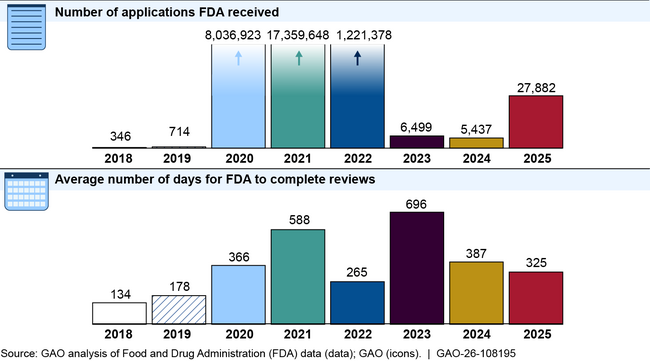
Many Chinese e-cigarette brands have submitted applications for review, but as of now, none have received approval from the FDA for market listing.
According to Zheng Zhi, founder of Zi Yuan Technology and a PMTA certification expert, in a media interview, the FDA approves applications in a chronological order. Juul had already submitted its tobacco market application in July 2020, while Chinese companies started submitting theirs only in August 2020.
Earlier, Plod revealed that they had submitted an application to the FDA in September 2020. Zheng Zhi speculated that partial domestic e-cigarette brands' review results are expected to be announced by the FDA before the end of this year.
On the other hand, with the introduction of China's "Electronic Cigarette Management Measures" and mandatory national standards for electronic cigarettes, corresponding regulations have been put in place for the export of electronic cigarettes, which also require obtaining a final operating license. Currently, Runto Group and Jincheng Medicine have announced that their wholly-owned subsidiaries have obtained production permits, while other brands still need to wait patiently for the results of their audits.
Disclaimer
This article is provided solely for professional research, industry discussion, and informational purposes. Any references to brands, companies, products, technologies, or policies are made for factual reporting and analytical purposes only, and do not constitute endorsement, recommendation, promotion, or advertising by 2Firsts.
Nicotine-containing products, including but not limited to cigarettes, e-cigarettes, heated tobacco products, and nicotine pouches, carry significant health risks. Readers are responsible for complying with all applicable laws and regulations in their respective jurisdictions, including age restrictions and access limitations.
The information contained in this article should not be regarded as investment, legal, medical, regulatory, or commercial advice. While 2Firsts strives to ensure the accuracy and reliability of its content, it does not assume liability for any direct or indirect loss arising from errors, omissions, inaccuracies, or reliance on the information contained herein.
This article is not intended for individuals below the legal age for accessing tobacco or nicotine-related information in their jurisdiction.
Copyright Notice
This article is either original content produced by 2Firsts or content reproduced, translated, summarized, or adapted from third-party sources with attribution where applicable. The intellectual property rights of the original content remain with 2Firsts or the respective original rights holders.
No individual or organization may copy, reproduce, distribute, republish, modify, translate, or otherwise use this content without prior authorization. Any unauthorized use may result in legal action.
For copyright-related inquiries, corrections, or removal requests, please contact: info@2firsts.com.
AI-Assisted Translation and Editing Notice
Portions of this article may have been translated, edited, or reviewed with the assistance of artificial intelligence tools to improve efficiency and readability. Due to the limitations of AI-assisted translation and editing, discrepancies, omissions, or inaccuracies may exist when compared with the original source.
Where applicable, readers are advised to refer to the original source for the most complete and accurate information. If you identify any errors or believe that any content infringes upon your rights, please contact us at info@2firsts.com, and we will review and address the matter promptly.