Vietnam Plans to Implement Special Consumption Tax on E-cigarettes

Aug.09.2024
Vietnam Plans to Implement Special Consumption Tax on E-cigarettes
Vietnam plans to impose a special consumption tax on e-cigarettes in the draft amendment to the Special Consumption Tax Law.

According to a report from Phapluat on August 8, Vietnam is planning to impose a special consumption tax on e-cigarettes in the draft revision of the "Special Consumption Tax Law".


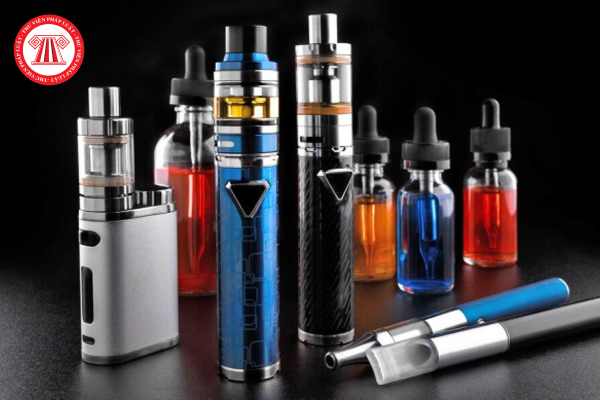
According to previous legislation, specifically the 2008 Special Consumption Tax Law (amended by the 2014 Special Consumption Tax Amendment Act, Article 1, Section 1), Article 2 specifies that the taxable items include cigarettes, cigars, and other tobacco products used for smoking, sniffing, chewing, smelling, or holding. The proposed draft also includes new tobacco products and their equipment, components, and e-liquids in the scope of taxation.


It is expected that at the 9th session scheduled for May 2025, the Vietnamese National Assembly will pass 12 laws and 1 resolution.


The Amendment to the Special Consumption Tax Law will become one of the 12 bills passed by Congress in May 2025.


We welcome news tips, article submissions, interview requests, or comments on this piece.

Please contact us at info@2firsts.com, or reach out to Alan Zhao, CEO of 2Firsts, on LinkedIn


Notice

1.  This article is intended solely for professional research purposes related to industry, technology, and policy. Any references to brands or products are made purely for objective description and do not constitute any form of endorsement, recommendation, or promotion by 2Firsts.

2.  The use of nicotine-containing products — including, but not limited to, cigarettes, e-cigarettes, nicotine pouchand heated tobacco products — carries significant health risks. Users are responsible for complying with all applicable laws and regulations in their respective jurisdictions.

3.  This article is not intended to serve as the basis for any investment decisions or financial advice. 2Firsts assumes no direct or indirect liability for any inaccuracies or errors in the content.

4.  Access to this article is strictly prohibited for individuals below the legal age in their jurisdiction.


Copyright


This article is either an original work created by 2Firsts or a reproduction from third-party sources with proper attribution. All copyrights and usage rights belong to 2Firsts or the original content provider. Unauthorized reproduction, distribution, or any other form of unauthorized use by any individual or organization is strictly prohibited. Violators will be held legally accountable.

For copyright-related inquiries, please contact: info@2firsts.com


AI Assistance Disclaimer


This article may have been enhanced using AI tools to improve translation and editorial efficiency. However, due to technical limitations, inaccuracies may occur. Readers are encouraged to refer to the cited sources for the most accurate information.

We welcome any corrections or feedback. Please contact us at: info@2firsts.com

Uruguay Weighs Ban on Nicotine Pouches as Health Ministry Warns of Growing Use
Nicotine pouches, promoted as flavored, smoke-free alternatives, are spreading in Uruguay despite the absence of a formal market. The Ministry of Public Health is considering banning them by decree and has raised the issue within Mercosur and at COP11. Health Minister Cristina Lustemberg warns that the industry is pushing new nicotine products to normalize consumption among youth.
Nov.20 by 2FIRSTS.ai
VCU Tests Nearly 1,300 School-Confiscated Vapes, Finding Mislabeling, Mixed Cannabinoids and Contamination
New research from Virginia Commonwealth University (VCU) found microbial contamination — including coliform, a bacteria indicating fecal exposure — in some vaping devices confiscated from U.S. schools. However, researchers stressed that newly purchased, unopened vapes showed no such contamination. The findings point to risks linked to unregulated products and improper storage conditions, reinforcing the importance of regulated supply chains and product authentication.
News
Dec.01
Azerbaijan Considers Comprehensive Ban on E-cigarettes
Azerbaijan is advancing legislative amendments to prohibit the circulation of electronic cigarettes and their components. The proposed changes, discussed at a joint meeting of several parliamentary committees, aim to ban the import, export, production, storage, wholesale and retail sale, and use of e-cigarettes.
Dec.17 by 2FIRSTS.ai
South Korea Implements Law Requiring Full Disclosure of Tobacco Harmful Substances
South Korea has enacted the Tobacco Harm Management Act, effective November 1, 2025, requiring tobacco manufacturers and importers to test and report harmful substances in their products every two years. Results for all tobacco types—including combustible cigarettes, heated tobacco, and e-cigarettes—will be publicly available from mid-2026.
Nov.04 by 2FIRSTS.ai
Russian State Duma Passes Ban on Tobacco and Vape Sales at Public Transport Stops
Russia’s State Duma has approved, in its third reading, a law banning the sale of cigarettes and electronic cigarettes at public transport stops. The measure expands existing restrictions on tobacco sales at transport infrastructure facilities and aims to reduce accessibility, particularly among young people. The law includes an exemption for small settlements where such kiosks are the only sales points and will take effect on September 1, 2026.
Dec.18 by 2FIRSTS.ai
5th Circuit Reviews FDA’s Compliance on Small-Business Impact of Vape Rule
A Fifth Circuit panel expressed doubts about whether the U.S. Food and Drug Administration complied with the Regulatory Flexibility Act when issuing its 2021 final rule on premarket tobacco product applications. Vape companies argued the FDA relied on outdated and inaccurate economic data, while the government said the challenged requirements stem from the Tobacco Control Act.
Dec.03 by 2FIRSTS.ai