Warning from PDEA: Public Urged to Avoid Cannabis Oil E-cigarettes

Regulations by 2FIRSTS.ai
Apr.24.2024
Warning from PDEA: Public Urged to Avoid Cannabis Oil E-cigarettes
PDEA warns against illegal e-cigarette pods containing cannabis oil in the Philippines, crackdown underway on illegal drug trade.

According to a report from Gov.ph on April 22, the Philippine Drug Enforcement Agency (PDEA) has warned the public against using e-cigarettes containing cannabis oil.


The director of the Soksalgen region, Aileen Lovitos, emphasized that the use of cannabis oil e-cigarette products violates Articles 5 (illegal sale of dangerous drugs) and 11 (possession of dangerous drugs) of Republic Act No. 9165, also known as the Comprehensive Dangerous Drugs Act of 2002. Anyone found selling or possessing such products will face corresponding legal consequences.


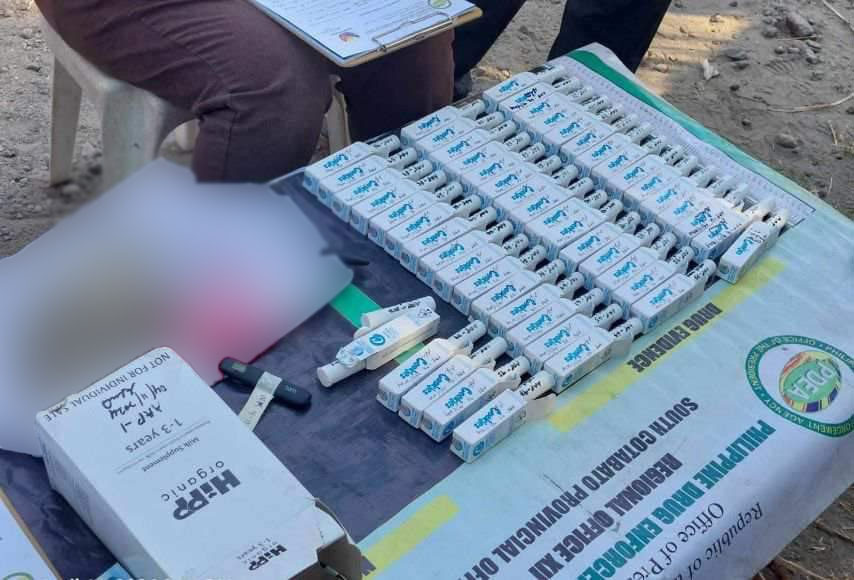
Recently, the department seized 51 e-cigarette pods containing suspicious marijuana oil from three suspects in a crackdown operation. The estimated value of the illegal products seized was as high as 178,500 Philippine pesos ($3,101.39), with each e-cigarette pod selling for up to 3,500 Philippine pesos ($60.81).


Currently, the bureau is collaborating with various law enforcement agencies and national government departments to monitor physical and online e-cigarette stores. According to Lovitos, illegal traders often conduct transactions through the "kaliwaan" scheme or online platforms, using private vehicles, packages, drug dens, cheap motels or hotels for delivery, and sell illegal drugs online using social media or courier services.


According to a report by the agency, in the first quarter of this year, Philippine law enforcement agencies seized illegal drugs worth approximately 2.5 million Philippine pesos ($43,436.85 USD). From January to March, a total of 375.6643 grams of methamphetamine and 11.884 grams of dried marijuana leaves were confiscated in 25 anti-drug operations, resulting in the successful apprehension of 30 individuals involved in drug-related activities.


We welcome news tips, article submissions, interview requests, or comments on this piece.

Please contact us at info@2firsts.com, or reach out to Alan Zhao, CEO of 2Firsts, on LinkedIn


Notice

1.  This article is intended solely for professional research purposes related to industry, technology, and policy. Any references to brands or products are made purely for objective description and do not constitute any form of endorsement, recommendation, or promotion by 2Firsts.

2.  The use of nicotine-containing products — including, but not limited to, cigarettes, e-cigarettes, nicotine pouchand heated tobacco products — carries significant health risks. Users are responsible for complying with all applicable laws and regulations in their respective jurisdictions.

3.  This article is not intended to serve as the basis for any investment decisions or financial advice. 2Firsts assumes no direct or indirect liability for any inaccuracies or errors in the content.

4.  Access to this article is strictly prohibited for individuals below the legal age in their jurisdiction.


Copyright


This article is either an original work created by 2Firsts or a reproduction from third-party sources with proper attribution. All copyrights and usage rights belong to 2Firsts or the original content provider. Unauthorized reproduction, distribution, or any other form of unauthorized use by any individual or organization is strictly prohibited. Violators will be held legally accountable.

For copyright-related inquiries, please contact: info@2firsts.com


AI Assistance Disclaimer


This article may have been enhanced using AI tools to improve translation and editorial efficiency. However, due to technical limitations, inaccuracies may occur. Readers are encouraged to refer to the cited sources for the most accurate information.

We welcome any corrections or feedback. Please contact us at: info@2firsts.com

The new regulations on nicotine in Argentina are creating caution, expectations, and doubts about the market, according to a local reference in harm reduction for smoking.
The new Argentine framework for tobacco and nicotine marks a shift from prohibition towards registration, traceability, and health surveillance. Juan Facundo Teme told 2Firsts that adult consumers and some of the commercial sector are cautiously optimistic, although concerns remain about flavors, registration costs, and market access.
May.11
Thailand’s Bangkok Port Customs Reports E-Cigarette and Nitrous Oxide Seizure Worth More Than THB 27 Million
Bangkok Port Customs on April 28 announced the seizure of 52,000 complete e-cigarettes, 100 gallons of e-liquid and 126,226 canisters of nitrous oxide, with total economic damage exceeding THB 27 million, or about USD 831,178 based on an April 28 USD/THB rate of 32.484. The e-cigarette and e-liquid shipment was valued at THB 5.56 million, or about USD 171,161, while the nitrous oxide shipment was valued at THB 21.27 million, or about USD 654,784.
Apr.29 by 2FIRSTS.ai
Australia’s Tasmania Tables New Bill to Strengthen Crackdown on Illicit Tobacco and Vapes
The Tasmanian government has tabled the Public Health Amendment (Prohibited Tobacco and Other Products) Bill 2026 in Parliament, proposing new offences, higher penalties and stronger enforcement powers to crack down on illicit tobacco and vaping products.
Mar.25 by 2FIRSTS.ai
Namibia Moves to Tighten Laws on E-Cigarettes and Emerging Nicotine Products
Namibia is moving to tighten regulation of e-cigarettes and other emerging nicotine products as part of broader tobacco control efforts. Deputy health minister Susan Ndjaleka said the government is reviewing the Tobacco Products Control Act to close regulatory gaps and address emerging tobacco products. Namibia is also working toward joining the Protocol to Eliminate Illicit Trade in Tobacco Products in order to curb the black market and protect public revenue.
Apr.17 by 2FIRSTS.ai
Philip Morris Says Its Smoke-Free Transition in Spain Now Has Economic Impact Above EUR 3.3 Billion
Philip Morris said it is accelerating its transition toward smoke-free products in Spain and claimed that the related economic impact now exceeds EUR 3.3 billion. Philip Morris also said that more than 90% of nicotine consumption in Spain still comes from conventional cigarettes, leaving room for growth in smoke-free categories, while regulation and taxation remain major obstacles in its view.
Apr.21 by 2FIRSTS.ai
Philip Morris International Says Part of Owensboro ZYN Output Is Exceeding Market Demand
Philip Morris International said its Swedish Match facility in Owensboro will adjust part of its production schedule this summer in response to changing market conditions. According to a notice the company gave union leadership and employees on April 22, parts of ZYN production will shift from a 24/7 schedule back to a 24/5 schedule. The ZYN Flagship department will return to a five-day, three-shift operation.
Apr.23 by 2FIRSTS.ai