According to a report by sb.by, Belarusian media, experts are warning that students in Belarus are increasingly starting to use e-cigarette devices at a younger age.
Even though it is strictly prohibited in this country to sell such items to minors, businesses are mandated to take full responsibility. However, many adolescents are not purchasing e-cigarettes from established retail outlets but rather at flea markets. Consequently, it is quite challenging to locate these illicit sales. Law enforcement has initiated efforts to eliminate the allure of e-cigarettes among children.
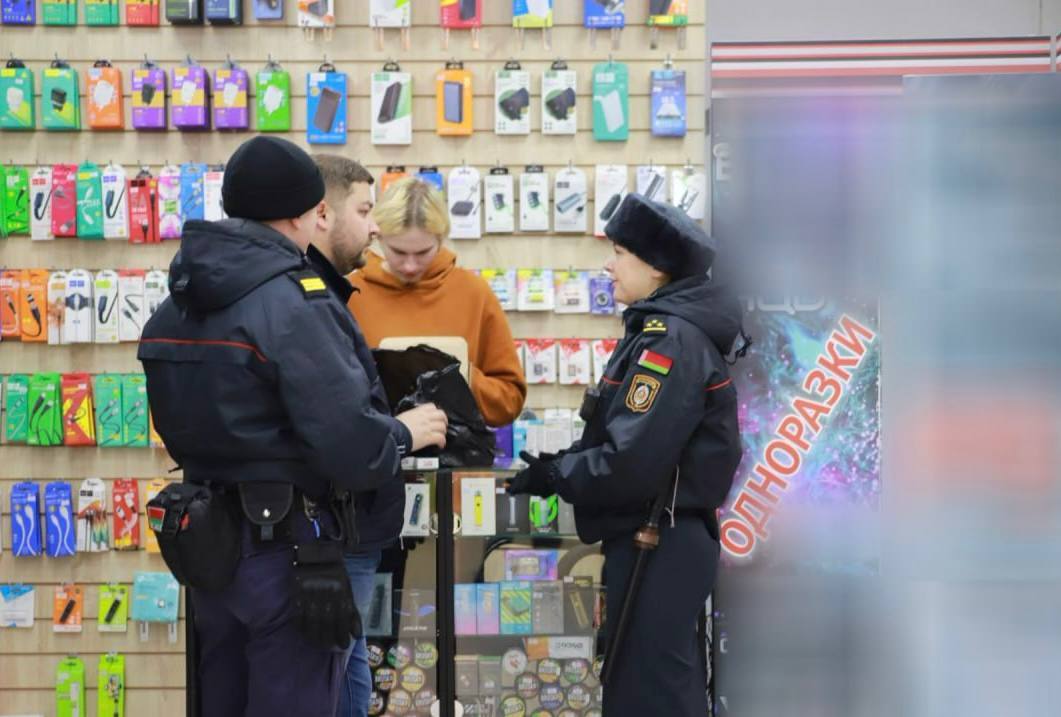
Regular law enforcement personnel will conduct surprise inspections to check whether there are individuals selling e-cigarettes to minors, as well as the e-liquid required for e-cigarettes.
Police officer Elena Kupraenok expressed, "Some businesses simply rely on their own judgment to assess the age of customers. They think that if a young person looks like a student, there's no need to ask for their identification. However, we must not forget that modern minors often appear quite mature." Nevertheless, law enforcers must also consider fairness in order to adhere to relevant regulations and codes of conduct.
Law enforcement officials have issued a warning reminding the public that selling e-liquids to minors is strictly prohibited. According to the provisions outlined in the Administrative Offenses Act of the Republic of Belarus, offenders will face fines (up to a maximum of 20 [currency]). This measure not only serves as a preventive measure but also as an educational tool, primarily aimed at safeguarding the health of children and adolescents. The reason being that these tobacco products contain nicotine, which is particularly harmful to developing children and teenagers.
The chief of the local police department, Larisa Palachanskaya, stated that the age at which teenagers start using e-cigarette devices is significantly declining.
It is important to note that selling e-cigarettes and e-liquids to minors is illegal and can potentially cause serious harm to the health of children and adolescents.
Parachaniskaya shared some concerning observations, stating, "Some children are starting to use e-cigarettes in elementary school. Adolescents experimenting with e-cigarettes, the effects of tobacco on their bodies, and the potential consequences of this remain unknown at present.
The police also mentioned some cases of e-cigarette theft. Teenagers who cannot afford e-cigarettes will find another teenager of similar age who sells e-cigarettes at flea markets and arrange to meet up. They will claim to be checking the authenticity of the e-cigarettes but will run away after receiving the products, hoping that the other child will not report them to the authorities.
The situation has been classified as a robbery," warned Larisa Parachaniskaya. She emphasized that, according to the law, a 14-year-old child can be held criminally responsible and may face a maximum sentence of 8 years.
We welcome news tips, article submissions, interview requests, or comments on this piece.
Please contact us at info@2firsts.com, or reach out to Alan Zhao, CEO of 2Firsts, on LinkedIn
Notice
1. This article is intended solely for professional research purposes related to industry, technology, and policy. Any references to brands or products are made purely for objective description and do not constitute any form of endorsement, recommendation, or promotion by 2Firsts.
2. The use of nicotine-containing products — including, but not limited to, cigarettes, e-cigarettes, nicotine pouchand heated tobacco products — carries significant health risks. Users are responsible for complying with all applicable laws and regulations in their respective jurisdictions.
3. This article is not intended to serve as the basis for any investment decisions or financial advice. 2Firsts assumes no direct or indirect liability for any inaccuracies or errors in the content.
4. Access to this article is strictly prohibited for individuals below the legal age in their jurisdiction.
Copyright
This article is either an original work created by 2Firsts or a reproduction from third-party sources with proper attribution. All copyrights and usage rights belong to 2Firsts or the original content provider. Unauthorized reproduction, distribution, or any other form of unauthorized use by any individual or organization is strictly prohibited. Violators will be held legally accountable.
For copyright-related inquiries, please contact: info@2firsts.com
AI Assistance Disclaimer
This article may have been enhanced using AI tools to improve translation and editorial efficiency. However, due to technical limitations, inaccuracies may occur. Readers are encouraged to refer to the cited sources for the most accurate information.
We welcome any corrections or feedback. Please contact us at: info@2firsts.com