2023 French Cigarette Prices to Rise Due to Inflation

Dec.30.2022
2023 French Cigarette Prices to Rise Due to Inflation
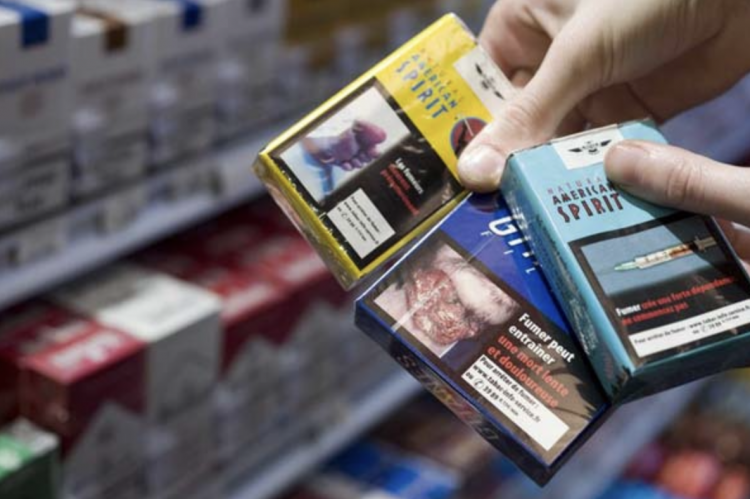
French cigarette prices will rise due to inflation in 2023, according to the Prime Minster Elizabeth Borne.

Over the past two years, cigarette prices in France have remained largely stable. However, in 2023, prices are set to increase due to inflation. Earlier, French Prime Minister Elizabeth Borne revealed this information in an interview with BFMTV.


Following the approval of a cigarette price hike, according to the French Social Security Financing Act (PLFSS), it is expected that by 2023, the price of each pack of cigarettes in France will increase by 50 euro cents (approximately 3.44 Chinese yuan), and by 35 euro cents (approximately 2.4 Chinese yuan) in 2024, bringing the minimum price per pack to 11 euros (approximately 75.6 Chinese yuan).


Disclaimer

This article is provided solely for professional research, industry discussion, and informational purposes. Any references to brands, companies, products, technologies, or policies are made for factual reporting and analytical purposes only, and do not constitute endorsement, recommendation, promotion, or advertising by 2Firsts.

Nicotine-containing products, including but not limited to cigarettes, e-cigarettes, heated tobacco products, and nicotine pouches, carry significant health risks. Readers are responsible for complying with all applicable laws and regulations in their respective jurisdictions, including age restrictions and access limitations.

The information contained in this article should not be regarded as investment, legal, medical, regulatory, or commercial advice. While 2Firsts strives to ensure the accuracy and reliability of its content, it does not assume liability for any direct or indirect loss arising from errors, omissions, inaccuracies, or reliance on the information contained herein.

This article is not intended for individuals below the legal age for accessing tobacco or nicotine-related information in their jurisdiction.


Copyright Notice

This article is either original content produced by 2Firsts or content reproduced, translated, summarized, or adapted from third-party sources with attribution where applicable. The intellectual property rights of the original content remain with 2Firsts or the respective original rights holders.

No individual or organization may copy, reproduce, distribute, republish, modify, translate, or otherwise use this content without prior authorization. Any unauthorized use may result in legal action.

For copyright-related inquiries, corrections, or removal requests, please contact: info@2firsts.com.


AI-Assisted Translation and Editing Notice

Portions of this article may have been translated, edited, or reviewed with the assistance of artificial intelligence tools to improve efficiency and readability. Due to the limitations of AI-assisted translation and editing, discrepancies, omissions, or inaccuracies may exist when compared with the original source.

Where applicable, readers are advised to refer to the original source for the most complete and accurate information. If you identify any errors or believe that any content infringes upon your rights, please contact us at info@2firsts.com, and we will review and address the matter promptly.


JAMA Issues First U.S. Clinical Guidance on Vaping for Smoking Cessation, Urging Complete Switch From Cigarettes
JAMA has published a Special Communication offering systematic recommendations for U.S.-based clinicians on the use of nicotine e-cigarettes in adult smoking cessation. Developed by the Harm Reduction Workgroup of the Society for Research on Nicotine and Tobacco’s Treatment Research Network, the paper recommends including e-cigarettes alongside FDA-approved cessation medications in risk-benefit discussions. It cites high-certainty evidence that nicotine e-cigarettes achieve higher quit rates than nicotine replacement therapy and evidence suggesting efficacy comparable to highly effective medications such as varenicline and cytisine. For adults who choose vaping to quit, the authors recommend FDA-authorized products, sufficient nicotine delivery and a rapid, complete transition away from cigarettes rather than prolonged dual use.
Aug.13
Product | PMI Japan Expands ZYN by IQOS Strength Portfolio With Strong Series, Increasing Lineup to 12 Products
Philip Morris Japan (PMJ) has expanded the ZYN by IQOS oral tobacco pouch portfolio in Japan with four new ZYN Strong products, adding a third intensity level alongside the existing Low and Medium ranges. The Strong series first entered selected duty-free channels in Japan on July 1, 2026, before expanding to IQOS stores, the ZYN Online Store and selected tobacco retailers from August 18. The expansion increases the Japanese ZYN by IQOS lineup from eight to 12 products.
Aug.20
Product | PMI Japan Launches SENTIA Passion Fruit Capsule, Expanding the IQOS ILUMA Flavor Portfolio
Philip Morris Japan (PM Japan) has introduced SENTIA Passion Fruit Capsule, a new tobacco stick designed for the IQOS ILUMA heated tobacco platform. Featuring a crush-activated capsule, the product combines menthol with passion fruit flavor to provide an additional flavor experience. The product launched in Japan from August 3, 2026, through IQOS official channels, convenience stores and tobacco retailers.
Aug.04
R.J. Reynolds Vapor Company Launches Flavored Vuse Pro Pods in U.S. Without FDA Marketing Authorization
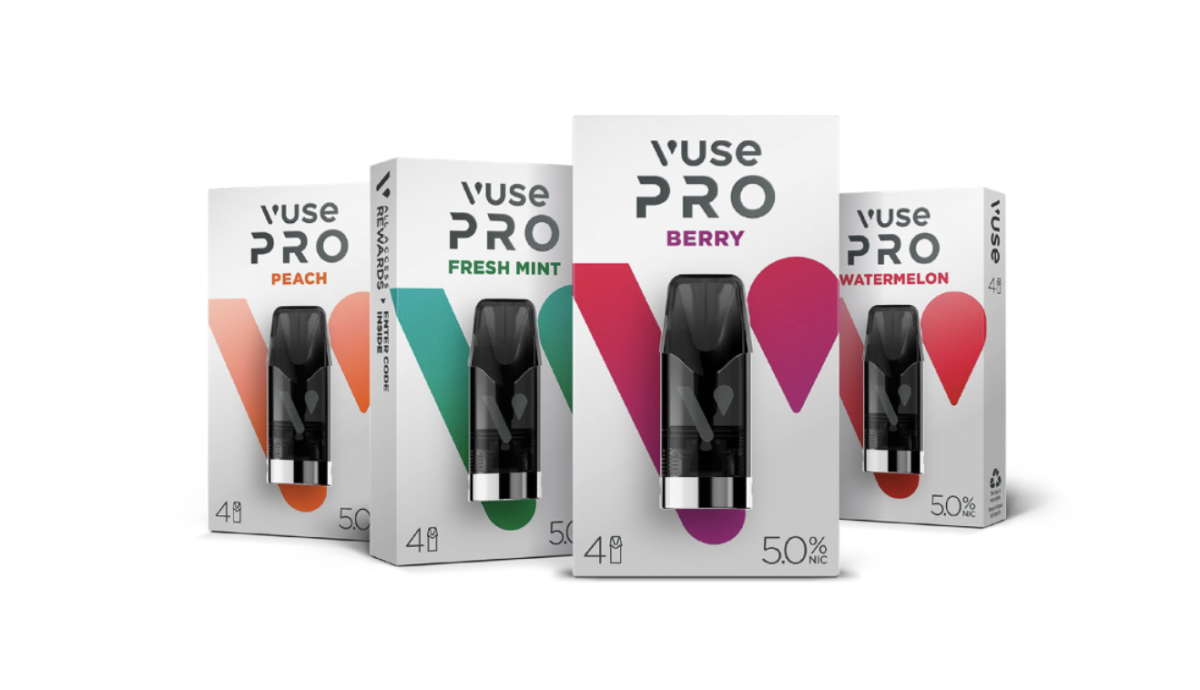
R.J. Reynolds Vapor Company has begun selling four flavored Vuse Pro pods — Peach, Berry, Watermelon and Fresh Mint — in Ohio and selected other U.S. markets. According to the Vuse U.S. FAQ, Vuse Pro contains approximately 5.0% nicotine by weight, and Vuse Pro pre-filled pods are intended for use with Vuse Alto devices. Reynolds told 2Firsts that product labeling lists an e-liquid capacity of 2.0 mL per pod. The Vuse Alto Power Unit received FDA marketing authorization in 2024, while the new Vuse Pro pods themselves have not received marketing granted orders. The rollout follows the FDA’s May 2026 revision of enforcement priorities for certain unauthorized vaping products with qualifying pending applications.
BAT
Sep.10
From a 2017 Launch to 48% of South Korea’s Heated Tobacco Market, KT&G Looks Back on a Decade of lil
KT&G announced on Aug. 13, 2026, that it has opened “lil Archive,” a brand exhibition space in Seoul showcasing the evolution, technology platforms and future direction of its heated tobacco brand lil since its launch in 2017. KT&G said lil now spans three major platforms — lil SOLID, lil HYBRID and lil AIBLE — with more than 30 dedicated consumables, and held a 48% share of South Korea's heated tobacco market in the second quarter of 2026. The opening comes as lil enters its 10th year, with KT&G continuing to position the brand for expansion beyond its domestic market.
Aug.14
GSTHR Estimates 200 Million People Use Non-Combustible Nicotine Products as 28 Countries Show Rising Use Alongside Falling Smoking Rates
The Global State of Tobacco Harm Reduction, a project operated by Knowledge·Action·Change, estimates that about 200 million people worldwide use non-combustible nicotine products including vapes, heated tobacco, nicotine pouches and snus. Its 2026 report says use of these products rose alongside declining smoking rates in 28 countries it analyzed. The data do not establish that all 200 million users have quit smoking, nor do they prove a direct causal relationship. GSTHR also says regulatory restrictions on the products continue to expand in many markets.
Sep.10