2ONE Labs Announces PMTA Submission Update, Nicotine Pouch Products Receive FDA 'Acceptance' Again

Dec.05.2024
2ONE Labs Announces PMTA Submission Update, Nicotine Pouch Products Receive FDA 'Acceptance' Again
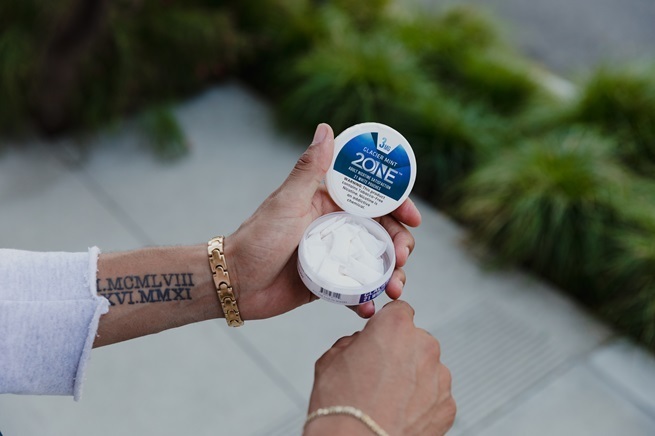
Nicotine pouch brand 2ONE Labs Inc. has announced that it has received an 'Acceptance' notification from FDA for its second Pre-market Tobacco Application (PMTA) submission for the 2ONE® nicotine-flavored products.

LAKE TAHOE, Nev., Dec. 03, 2024-- 2ONE Labs Inc., is pleased to have received 'Acceptance' of a second Premarket Tobacco Product Application (PMTA) for additional flavored 2ONE® nicotine product styles submitted to the U.S. Food and Drug Administration (FDA).


Welcoming receipt of this additional FDA 'Acceptance' notification, Vincent Schuman, CEO of 2ONE Labs, said: "Our strategy has always been to maintain a steady flow of supportable and responsible PMTA submissions for the 2ONE® nicotine pouch brand that reflect current adult consumer product demands. Our timely PMTA filings with the FDA reflect our company's commitment to remaining at the forefront of product innovation in the nicotine pouch marketplace."


"As with our previously 'Accepted' 2ONE® PMTA submission, this application will move forward to the next stage of FDA review. 2ONE Labs aims to fund these submissions to a successful 'Authorization' by FDA. Our wholesale, retail and sponsorship partners should take confidence in this additional ‘Acceptance’ as a reflection of our ability to manage and navigate the complex PMTA process, and of our commitment to supporting the 2ONE® brand in the US market."


Schuman added: "2ONE® Tobacco-Free nicotine pouches are for adult users (21+), who want to switch from cigarettes, cigars or traditional oral tobacco chewing products."


Source: GLOBE NEWSWIRE

We welcome news tips, article submissions, interview requests, or comments on this piece.

Please contact us at info@2firsts.com, or reach out to Alan Zhao, CEO of 2Firsts, on LinkedIn


Notice

1.  This article is intended solely for professional research purposes related to industry, technology, and policy. Any references to brands or products are made purely for objective description and do not constitute any form of endorsement, recommendation, or promotion by 2Firsts.

2.  The use of nicotine-containing products — including, but not limited to, cigarettes, e-cigarettes, nicotine pouchand heated tobacco products — carries significant health risks. Users are responsible for complying with all applicable laws and regulations in their respective jurisdictions.

3.  This article is not intended to serve as the basis for any investment decisions or financial advice. 2Firsts assumes no direct or indirect liability for any inaccuracies or errors in the content.

4.  Access to this article is strictly prohibited for individuals below the legal age in their jurisdiction.


Copyright


This article is either an original work created by 2Firsts or a reproduction from third-party sources with proper attribution. All copyrights and usage rights belong to 2Firsts or the original content provider. Unauthorized reproduction, distribution, or any other form of unauthorized use by any individual or organization is strictly prohibited. Violators will be held legally accountable.

For copyright-related inquiries, please contact: info@2firsts.com


AI Assistance Disclaimer


This article may have been enhanced using AI tools to improve translation and editorial efficiency. However, due to technical limitations, inaccuracies may occur. Readers are encouraged to refer to the cited sources for the most accurate information.

We welcome any corrections or feedback. Please contact us at: info@2firsts.com

Philippines Weighs Unified Vape Tax as Lawmakers Back Risk-Based Rates and Government Seeks to Fill ₱66 Billion Revenue Gap
Philippine lawmakers are considering an overhaul of the country's vape excise-tax regime to eliminate the wide gap between taxes on nicotine salt and freebase nicotine liquids and reduce incentives for misdeclaration. House Bill 5364, filed by Rep. Rufus Rodriguez and Rep. Maximo Rodriguez Jr., would impose a unified ₱10-per-milliliter tax on vapor products, with 5% annual increases beginning in 2027. Rodriguez says the proposal could generate an average ₱6 billion in annual collections from 2027 through 2030. The debate comes as the Philippine government considers tobacco, vape and other health-tax reforms to help offset around ₱66 billion in revenue expected to be forgone under a proposed tax-relief package.
Aug.18
Malaysia Police Plan Saliva Tests at Roadblocks to Detect Synthetic Drugs Mixed Into Vape Liquids
Malaysian police plan to use saliva test kits at roadblocks to detect drivers using synthetic liquid drugs marketed as “Piu Piu” and “Magic Mushroom,” substances that authorities say are mixed into vape liquids and inhaled through e-cigarette devices, raising road-safety concerns and adding pressure on vape regulation.
Jun.29
BAT New Categories Revenue Rises 18% in H1 2026 as Broad Portfolio Offers More Ways to Win—and Lose
British American Tobacco’s New Category revenue rose 18% at constant rates in the first half of 2026. Nicotine-pouch brand Velo expanded rapidly, while Vuse recovered as U.S. enforcement against illicit e-vapor products strengthened. Heated-tobacco platform glo remained under pressure, and cigarettes continued to provide most of the group’s profit and cash. Compared with PMI and JT, BAT has more routes to growth—but also greater regulatory, investment and execution risks across its broader portfolio.
BAT
Jul.30
2Firsts Data | China’s U.S. Vape Exports Have Yet to Regain Previous Growth Momentum in H1 2026, but Hardware Grew 15.2% and 6-Methyl Nicotine-Related Products Rose 234.7%
China’s vape exports to the U.S. reached approximately $1.58 billion in the first half of 2026, remaining broadly stable from a year earlier but still below previous growth momentum. 2Firsts’ analysis of China Customs data shows that the U.S. market has not simply returned to its previous trajectory after the enforcement shock and inventory-driven swings of 2025. Instead, export momentum is shifting across product categories. Vaping devices and atomization hardware increased 15.2% year over year, while 6-methyl nicotine-related and other nicotine substitute products surged 234.7%. Meanwhile, traditional nicotine-containing vaping products continued to face pressure.
Jul.22
Pennsylvania Updates ENDS Certification List as Chinese-Linked Manufacturers Enter State Review
Pennsylvania’s June 26 Pending ENDS Certifications list includes 23 manufacturers under review, including Shenzhen Smoore, Shenzhen IVPS, YME Technology and China-linked Boulder International. The list shows state-level vape regulation moving beyond retail brands toward manufacturer-based market access alongside FDA oversight.
Regulations
Jul.06 by 2Firsts Perspectives
South Korean Lawmaker Jeong Jin-wook Pushes Synthetic Nicotine Vape Probe, Highlighting Supply Chain and Tax Concerns
South Korean lawmaker Jeong Jin-wook has again called for stronger government action against liquid synthetic nicotine vape manufacturers and sellers, alleging that some businesses may have avoided regulation through product labeling changes and corporate restructuring. According to Newsworks, JNILBO and other Korean reports, Jeong has held his third press conference on the issue, calling for a government-wide investigation. The dispute involves whether synthetic nicotine products should fall under tobacco regulations, tax implications and supply-chain transparency. South Korean government agencies have previously said some estimates of potential tax losses cannot be verified due to limited sales data.
Jul.27