Key points
- Authorities seized 3,200 electronic pods suspected to contain 11.2 liters of liquid ketamine, along with 48 packets of ecstasy powder.
- The estimated value of the drugs is RM970,000 (approximately USD$240,000), along with RM136,850 (approximately USD$34,212.50) in cash and a vehicle.
- The operation involved using residences as storage and delivering drugs through drop points. Each pod containing 3.4ml of ketamine was sold for RM300 (approximately USD$75), with police stating it could supply up to 6,400 users.
- The case is being investigated under Section 39B of the Dangerous Drugs Act 1952, with a possible sentence of the death penalty or life imprisonment with a minimum of 12 strokes of the cane upon conviction.
2Firsts, Feb 4, 2026
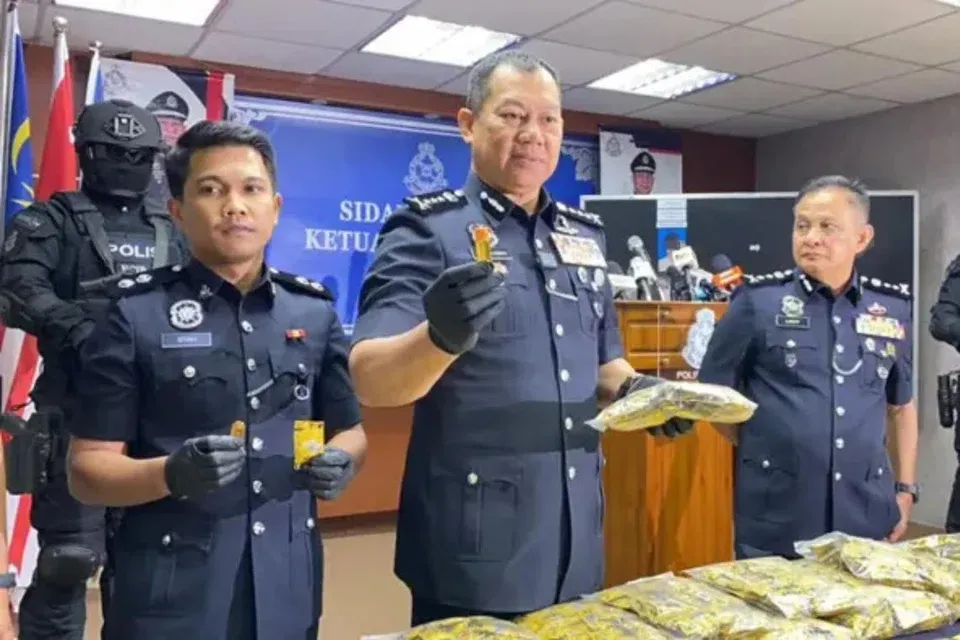
According to The Straits Times, police in Johor Bahru, Malaysia dismantled a syndicate allegedly distributing drug-laced vape cartridges using a “drop point” method, arresting two men aged 25 and 38 in two separate raids.
Johor police chief Ab Rahaman Arsad said the first suspect, a local man, was arrested at about 1.35am on Jan 29 in front of a bank in Taman Mount Austin. A subsequent search at a house in Taman Setia Indah led to the seizure of 3,200 vape cartridges suspected of containing 11.2 litres of ketamine liquid, along with 48 packets of Ecstasy powder. Police valued the drugs at RM970,000 (about USD242,500).
In a second raid in Taman Molek, a Singaporean man was detained, though no illegal items were found on him at the scene. Police also seized a car and RM136,850 in cash (about USD34,212.50). Both suspects were remanded for seven days until Feb 4 to assist investigations. They tested negative for drugs and reportedly have no prior criminal records. Police believe the first suspect acted as a distributor, while the second handled the syndicate’s finances.
Police said the syndicate has likely been active since December 2025, using a house as a storage location and employing runners who relied on drop points for customers or agents to collect the drugs. Each vape cartridge containing 3.4ml of ketamine was allegedly sold for RM300 (about USD75). Authorities estimated the total quantity seized could supply up to 6,400 addicts.
The case is being investigated under Section 39B of the Dangerous Drugs Act 1952. If convicted, offenders face the death penalty or life imprisonment, and no fewer than 12 strokes of the cane. Police warned that drug-laced vape liquids are a growing concern, particularly if marketed to teenagers.
Image source: THE STAR/ASIA NEWS NETWORK
We welcome news tips, article submissions, interview requests, or comments on this piece.
Please contact us at info@2firsts.com, or reach out to Alan Zhao, CEO of 2Firsts, on LinkedIn
Notice
1. This article is intended solely for professional research purposes related to industry, technology, and policy. Any references to brands or products are made purely for objective description and do not constitute any form of endorsement, recommendation, or promotion by 2Firsts.
2. The use of nicotine-containing products — including, but not limited to, cigarettes, e-cigarettes, nicotine pouchand heated tobacco products — carries significant health risks. Users are responsible for complying with all applicable laws and regulations in their respective jurisdictions.
3. This article is not intended to serve as the basis for any investment decisions or financial advice. 2Firsts assumes no direct or indirect liability for any inaccuracies or errors in the content.
4. Access to this article is strictly prohibited for individuals below the legal age in their jurisdiction.
Copyright
This article is either an original work created by 2Firsts or a reproduction from third-party sources with proper attribution. All copyrights and usage rights belong to 2Firsts or the original content provider. Unauthorized reproduction, distribution, or any other form of unauthorized use by any individual or organization is strictly prohibited. Violators will be held legally accountable.
For copyright-related inquiries, please contact: info@2firsts.com
AI Assistance Disclaimer
This article may have been enhanced using AI tools to improve translation and editorial efficiency. However, due to technical limitations, inaccuracies may occur. Readers are encouraged to refer to the cited sources for the most accurate information.
We welcome any corrections or feedback. Please contact us at: info@2firsts.com