Action Taken by Adur and Worthing Council to Recycle Batteries

Regulations by 2FIRSTS.ai
Feb.28.2024
Action Taken by Adur and Worthing Council to Recycle Batteries
Adur and Worthing council in UK takes action to collect used batteries as part of their waste recycling program.

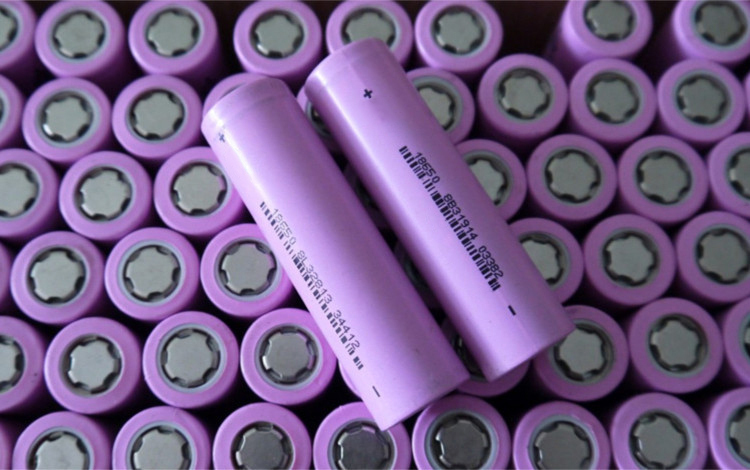
According to The Argus, the council of Adur and Worthing in the UK is taking action to collect used batteries as part of their street-side appliance recycling service.


The city council is requesting residents to place batteries in plastic bags to prevent them from falling out of the metal cages in the waste recycling trucks and onto the streets.


A spokesperson for the city council stated, "We are now able to recycle household batteries through our waste electrical equipment collection service on our streets, saving you the trip to the supermarket or landfill to dispose of them.


Last month, we started to collect disposable and refillable e-cigarettes because of their small size and they should also be placed in bags.


We welcome news tips, article submissions, interview requests, or comments on this piece.

Please contact us at info@2firsts.com, or reach out to Alan Zhao, CEO of 2Firsts, on LinkedIn


Notice

1.  This article is intended solely for professional research purposes related to industry, technology, and policy. Any references to brands or products are made purely for objective description and do not constitute any form of endorsement, recommendation, or promotion by 2Firsts.

2.  The use of nicotine-containing products — including, but not limited to, cigarettes, e-cigarettes, nicotine pouchand heated tobacco products — carries significant health risks. Users are responsible for complying with all applicable laws and regulations in their respective jurisdictions.

3.  This article is not intended to serve as the basis for any investment decisions or financial advice. 2Firsts assumes no direct or indirect liability for any inaccuracies or errors in the content.

4.  Access to this article is strictly prohibited for individuals below the legal age in their jurisdiction.


Copyright


This article is either an original work created by 2Firsts or a reproduction from third-party sources with proper attribution. All copyrights and usage rights belong to 2Firsts or the original content provider. Unauthorized reproduction, distribution, or any other form of unauthorized use by any individual or organization is strictly prohibited. Violators will be held legally accountable.

For copyright-related inquiries, please contact: info@2firsts.com


AI Assistance Disclaimer


This article may have been enhanced using AI tools to improve translation and editorial efficiency. However, due to technical limitations, inaccuracies may occur. Readers are encouraged to refer to the cited sources for the most accurate information.

We welcome any corrections or feedback. Please contact us at: info@2firsts.com

Bangladesh High Court Questions Legality of BEZA’s Approval for Philip Morris Nicotine Pouch Factory
The High Court in Bangladesh has asked government bodies to explain why the approval granted to Philip Morris to establish a nicotine pouch factory should not be deemed illegal. Petitioners argue the decision contradicts existing policies and a 2016 Appellate Division ruling that restricts new tobacco-related enterprises. Authorities have ten days to respond.
Nov.20 by 2FIRSTS.ai
U.S. Lawmakers Seek to Empower HHS to Destroy Counterfeit Chinese Tobacco Products
Bipartisan members of the U.S. Congress have introduced the “Ensuring the Necessary Destruction of Illicit Chinese Tobacco Act” (END Act), seeking to amend the Federal Food, Drug, and Cosmetic Act to authorize the Department of Health and Human Services (HHS) to directly destroy adulterated, misbranded, or counterfeit imported tobacco products.Major tobacco companies, including Altria, along with several public health organizations, have announced their support for the bill.
Nov.11 by 2FIRSTS.ai
Imperial Brands’ blu adds “Creamy Tobacco” flavour, rolling out across device kits and pod products
Imperial Brands’ vaping brand blu has outlined its flavour roadmap for 2026 on its official website, adding a new “Creamy Tobacco” flavour that has been rolled out across the rechargeable blu bar kit and its compatible blu kit pods. The brand describes the flavour as offering a more velvety tobacco taste.
Dec.19
Swedish Match to Revamp ZYN Lineup, Discontinue Four Nicotine Pouch Products in 2026
According to Swedish Match’s website, the company plans to discontinue four ZYN nicotine pouch products in 2026, spanning different flavors and strength variants, and is directing consumers to existing substitute options.
Dec.19 by 2FIRSTS.ai
Smoking Rate Drops to 17.9%, Vaping Rate Climbs to 9.3% in South Korea
The Korea Disease Control and Prevention Agency (KDCA) released its 2025 Community Health Survey results covering more than 230,000 adults. Traditional cigarette smoking dropped to 17.9%, down 1 percentage point from last year, while e-cigarette use increased to 9.3%, up 0.6 points. Overall tobacco product use stood at 22.1%, a slight decline from 2024 but still 0.5 points higher than 2019.
Dec.08 by 2FIRSTS.ai
Spain's Socialist Party proposes gradual decrease of nicotine pouch tax rate to 0.10 euros/gram by 2030
Spain’s Socialist Party (PSOE) has submitted a legal amendment to the Congress proposing a gradual reduction of the excise duty on nicotine pouches. The current rate of €0.10 per gram would be phased in progressively until 2030. The plan sets the rate at €0.02/g in 2026, rising by €0.02 annually until reaching €0.10/g in 2030. PSOE says this measure would mitigate price shocks and make the tax system more progressive.
Nov.04 by 2FIRSTS.ai