AMA and 11 Education Groups Call for E-Cigarette Reform Legislation

Regulations by 2FIRSTS.ai
May.24.2024
AMA and 11 Education Groups Call for E-Cigarette Reform Legislation
Australian Medical Association and 11 education groups urge federal government to pass e-cigarette reform bill due to school crisis.

According to a statement on the official website of the Australian Medical Association (AMA) on May 24th, the AMA has joined forces with 11 major education and parents' groups to call on lawmakers to pass federal government e-cigarette reform legislation.


The organization sent a joint letter to all Senators and Members of Parliament, warning that the crisis of e-cigarettes on Australian campuses is escalating. Teachers, principals, and parents are facing a difficult battle.


The President of the AMA, Steve Robson, stated:


In Australian schools, e-cigarettes are becoming increasingly normalized, while big tobacco companies and e-cigarette lobbying groups are willing to sacrifice children's health to keep these products on retail shelves.


The Australian federal government in the next stage of e-cigarette reform will ban the import, manufacture, supply, commercial ownership, and advertising of disposable and non-therapeutic e-cigarettes. These restrictions will prevent the widespread use of e-cigarettes and effectively remove them from school environments while maintaining the role of general practitioners in providing evidence-based care for those dealing with nicotine addiction. Currently, the legislation has passed in the House of Representatives.


These 12 collaborating organizations include:


The Australian Medical Association, the Australian Education Union, the Australian Council of State School Organisations, the Australian Parents Council, Catholic School Parents Australia, the Catholic Secondary Principals Association, the Australian Secondary Principals Association, the Australian Primary Principals Association, the National Catholic Education Commission, the Australian Special Education Principals Association, the Anglican Schools Commission, and Independent Schools Australia.


We welcome news tips, article submissions, interview requests, or comments on this piece.

Please contact us at info@2firsts.com, or reach out to Alan Zhao, CEO of 2Firsts, on LinkedIn


Notice

1.  This article is intended solely for professional research purposes related to industry, technology, and policy. Any references to brands or products are made purely for objective description and do not constitute any form of endorsement, recommendation, or promotion by 2Firsts.

2.  The use of nicotine-containing products — including, but not limited to, cigarettes, e-cigarettes, nicotine pouchand heated tobacco products — carries significant health risks. Users are responsible for complying with all applicable laws and regulations in their respective jurisdictions.

3.  This article is not intended to serve as the basis for any investment decisions or financial advice. 2Firsts assumes no direct or indirect liability for any inaccuracies or errors in the content.

4.  Access to this article is strictly prohibited for individuals below the legal age in their jurisdiction.


Copyright


This article is either an original work created by 2Firsts or a reproduction from third-party sources with proper attribution. All copyrights and usage rights belong to 2Firsts or the original content provider. Unauthorized reproduction, distribution, or any other form of unauthorized use by any individual or organization is strictly prohibited. Violators will be held legally accountable.

For copyright-related inquiries, please contact: info@2firsts.com


AI Assistance Disclaimer


This article may have been enhanced using AI tools to improve translation and editorial efficiency. However, due to technical limitations, inaccuracies may occur. Readers are encouraged to refer to the cited sources for the most accurate information.

We welcome any corrections or feedback. Please contact us at: info@2firsts.com

CCPIT Says Trade Friction Index for China-Related Electronics Sector Remains High, With Vape Products Among Areas of Focus
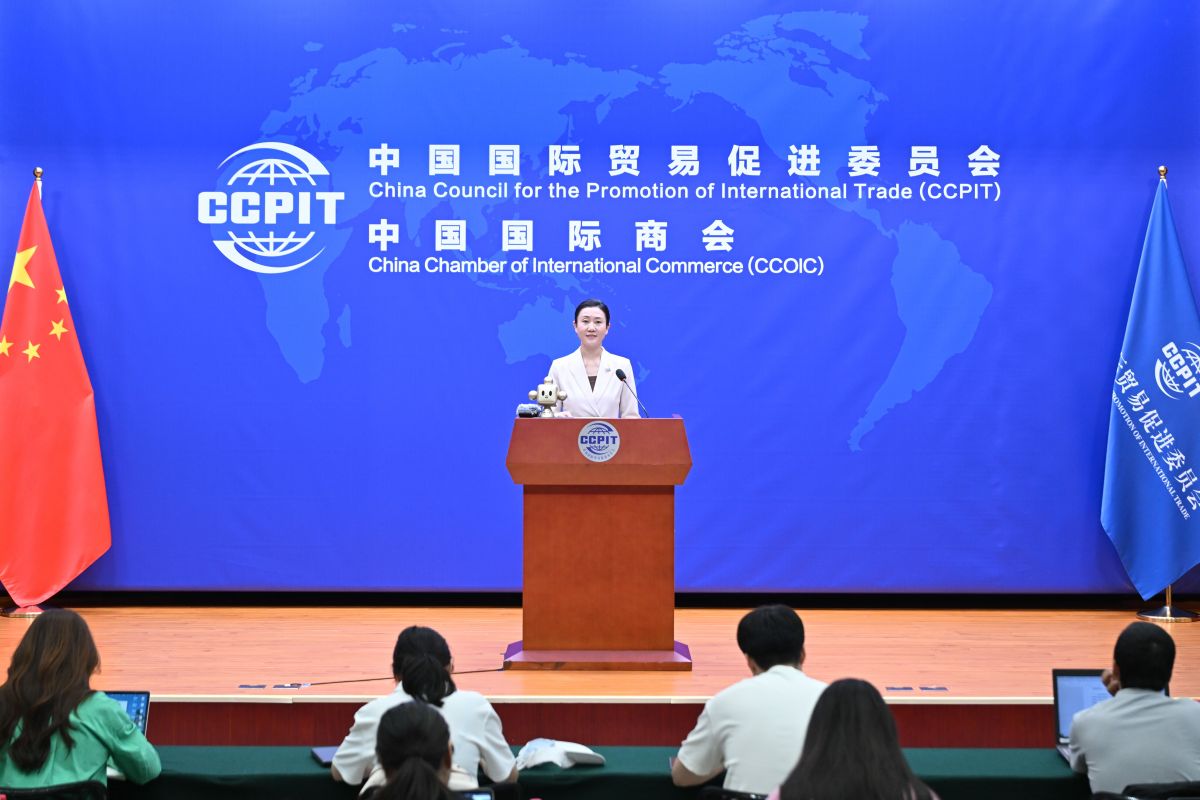
China Council for the Promotion of International Trade (CCPIT) held its July regular press conference on July 31, 2026, releasing the May 2026 Global Economic and Trade Friction Index. CCPIT spokesperson Yang Fan said the global trade friction index stood at 95 in May, remaining at a medium-to-high level. By industry, the electronics sector recorded the highest trade friction index among 13 monitored industries. In China-related trade frictions, the index stood at 93, with electronics products including drones, chips and vape products among areas where friction remained elevated.
Aug.03
U.S. Ninth Circuit Upholds FDA Denial of MH Global’s Flavored Vape PMTA Applications
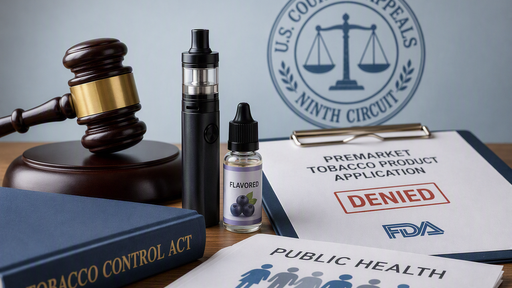
The U.S. Court of Appeals for the Ninth Circuit upheld the FDA’s denial of MH Global LLC’s applications to market flavored electronic nicotine delivery systems (ENDS). The court ruled that FDA’s comparative-efficacy framework, which requires applicants to show that flavored products provide greater cessation or switching benefits than tobacco-flavored alternatives, is consistent with the Tobacco Control Act’s “appropriate for the protection of the public health” standard. The court also found that FDA was not required to establish the framework through notice-and-comment rulemaking.
Aug.26
Minnesota Sues Loon as State Enforcement Targets U.S. Vape Brand Operators
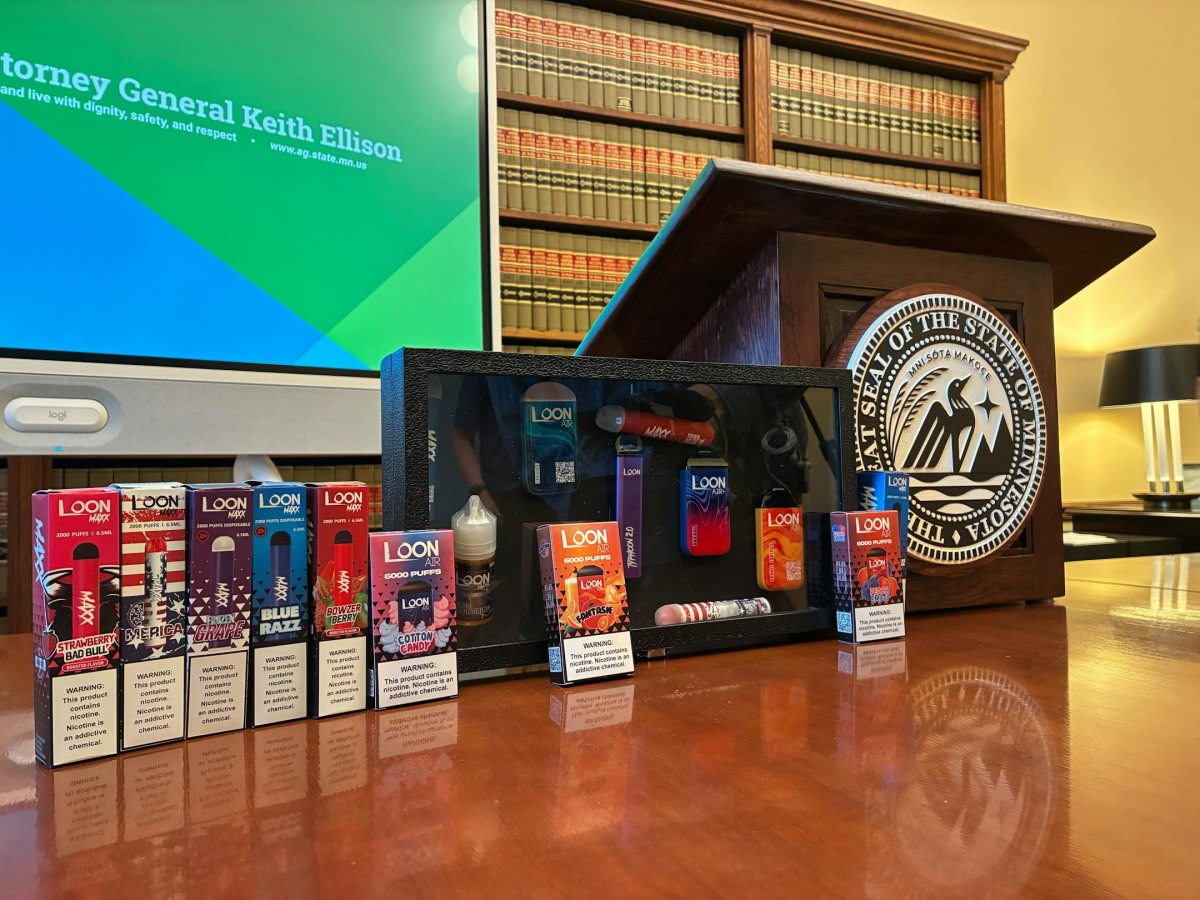
Minnesota Attorney General Keith Ellison sued Maduro Distributors, Inc., doing business as Loon, on July 15, 2026, alleging that the company illegally manufactured, distributed and sold flavored vapes that appeal to minors.
Jul.16
F1 Faces Renewed Pressure Over Tobacco and Nicotine Sponsorships as 67 Groups Target ZYN and VELO Ahead of Madrid Race
Ahead of the Formula 1 race in Madrid, 67 Spanish and international public-health, medical and consumer organizations have sent an open letter to F1 President and CEO Stefano Domenicali calling for an end to sponsorships linked to the tobacco and nicotine industry, including nicotine pouches, vaping products and heated tobacco. The letter focuses on Philip Morris International’s ZYN partnership with Ferrari and British American Tobacco’s long-running partnership with McLaren and exposure for VELO. The campaign follows a March letter in which more than 160 organizations worldwide made a similar request to Formula 1.
Sep.10
Australia’s TGA Places Nicotine Pouches Under Therapeutic Goods Rules From July 24, Blocking Imports of Unapproved Products
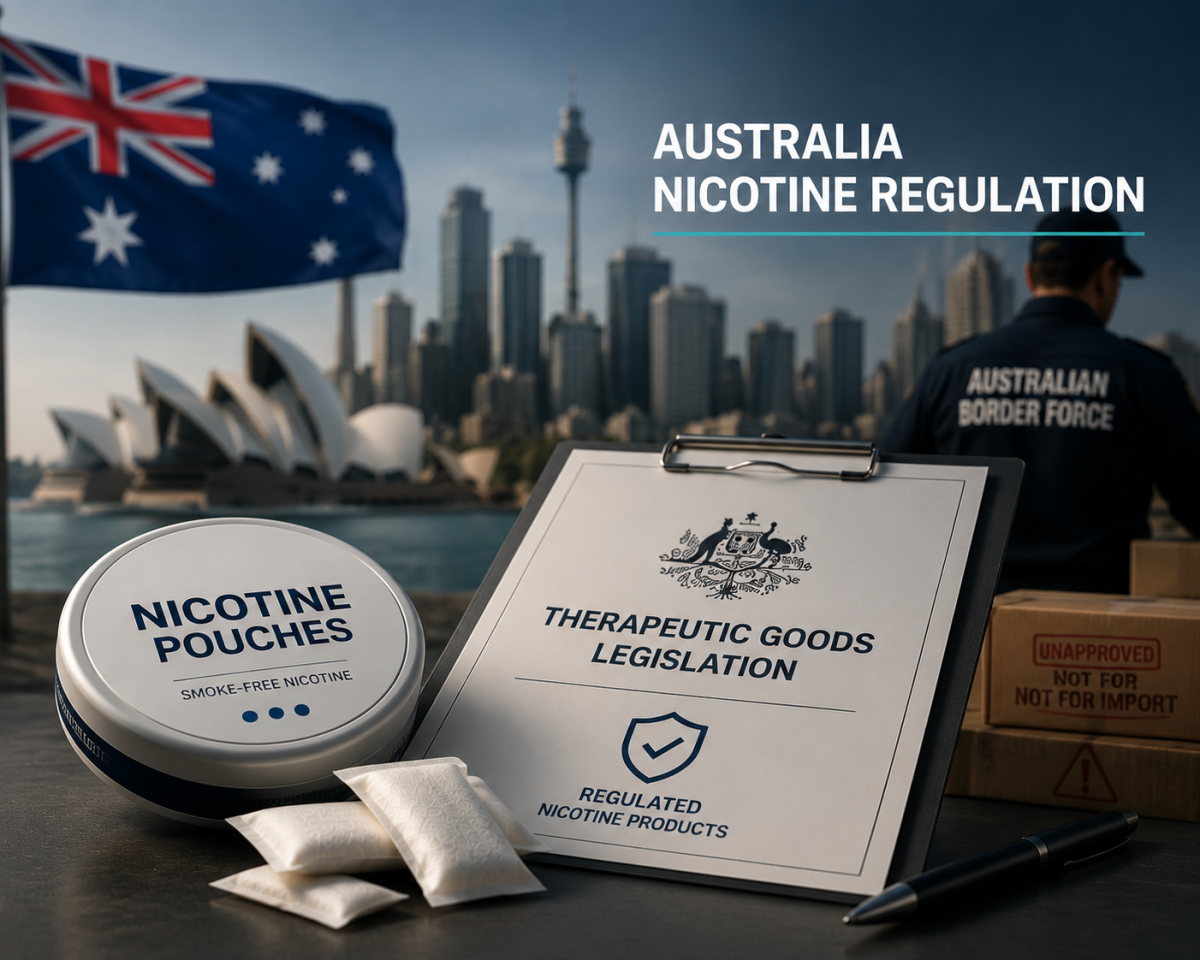
Australia is strengthening controls on nicotine pouches under its existing therapeutic goods regulatory framework. According to the Therapeutic Goods Administration (TGA), nicotine pouch products must meet regulatory requirements, and unapproved products cannot be legally imported. The move follows Australia’s broader approach of maintaining strict oversight of nicotine products, including nicotine-containing vapes. As nicotine pouches expand globally, Australia’s regulatory approach highlights growing differences in how countries manage emerging smoke-free nicotine products.
Regulations
Jul.27
Research | Swedish Study Finds Oral Lesions in 79% of Examined Nicotine Pouch Users, With Distinct Tissue Responses
A new Swedish study found oral mucosal lesions in 79% of examined nicotine pouch users and 89% of tobacco-derived snus users, with different tissue-response patterns between the two categories. For manufacturers and regulators, the findings shift attention toward product formulation, flavouring, pouch materials and local oral exposure, not only whether a product contains tobacco. The study found no higher prevalence of caries or periodontal disease, but it could not establish causality, long-term outcomes or differences between individual products or designs.
Special Report
Jul.27