Analysis of 2023 December China E-cigarette Exports to Switzerland

Industry Insight by 2FIRSTS Mincy
Mar.11.2024
Analysis of 2023 December China E-cigarette Exports to Switzerland
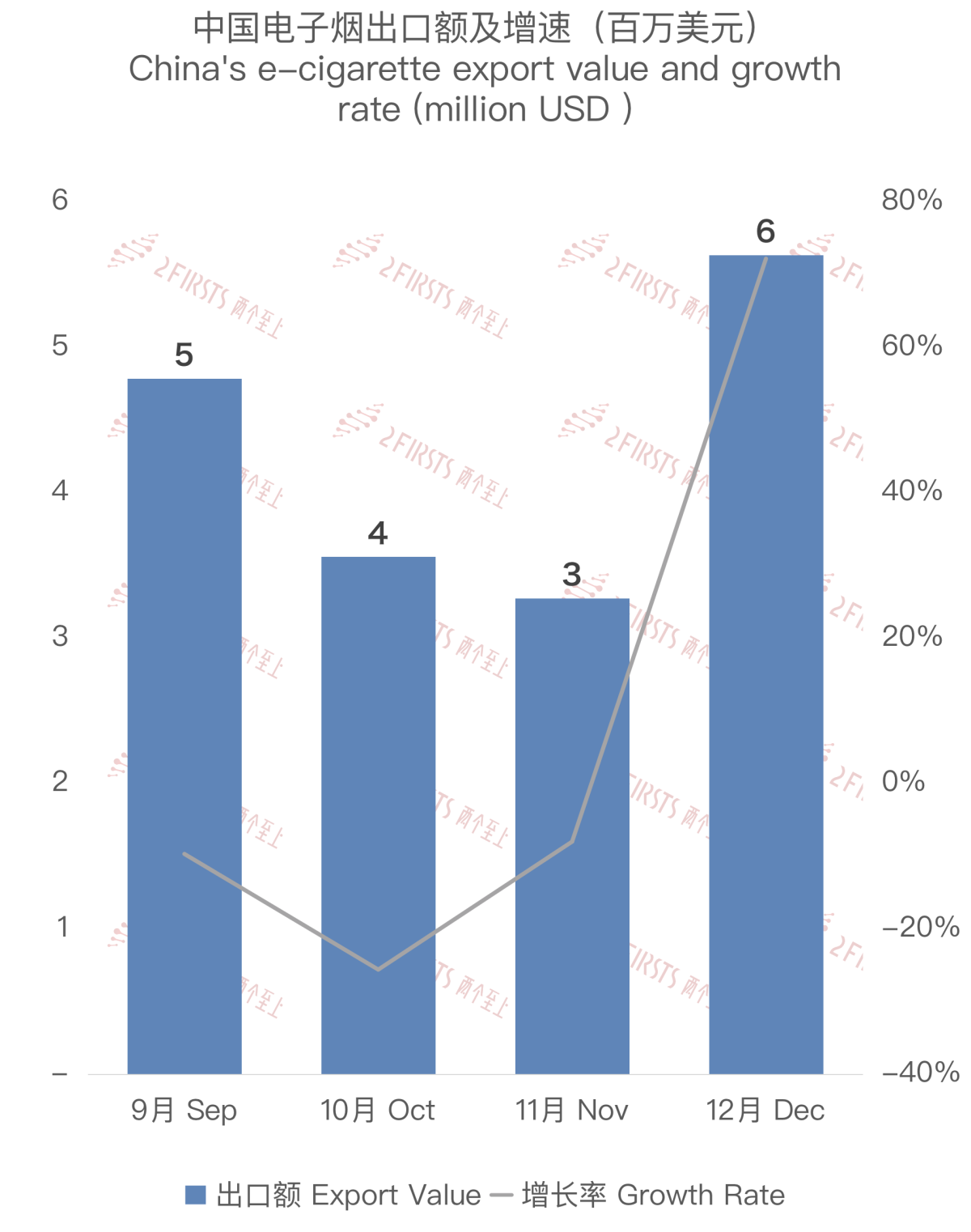
China's e-cigarette exports to Switzerland surged in December 2023, with a 72.18% monthly increase totaling $5.63 million.

According to the latest trade data released by the General Administration of Customs of the People's Republic of China, 2FIRSTS has compiled the e-cigarette export data from China to Switzerland in December 2023. The details are as follows:
Analysis of 2023 December China E-cigarette Exports to Switzerland
Image source: 2FIRSTS (Mincy graphics)


The export value reached approximately $5.63 million, showing a month-on-month increase of 72.18% and a year-on-year increase of 32.03%.
Analysis of 2023 December China E-cigarette Exports to Switzerland
Image source: 2FIRSTS (Mincy design)


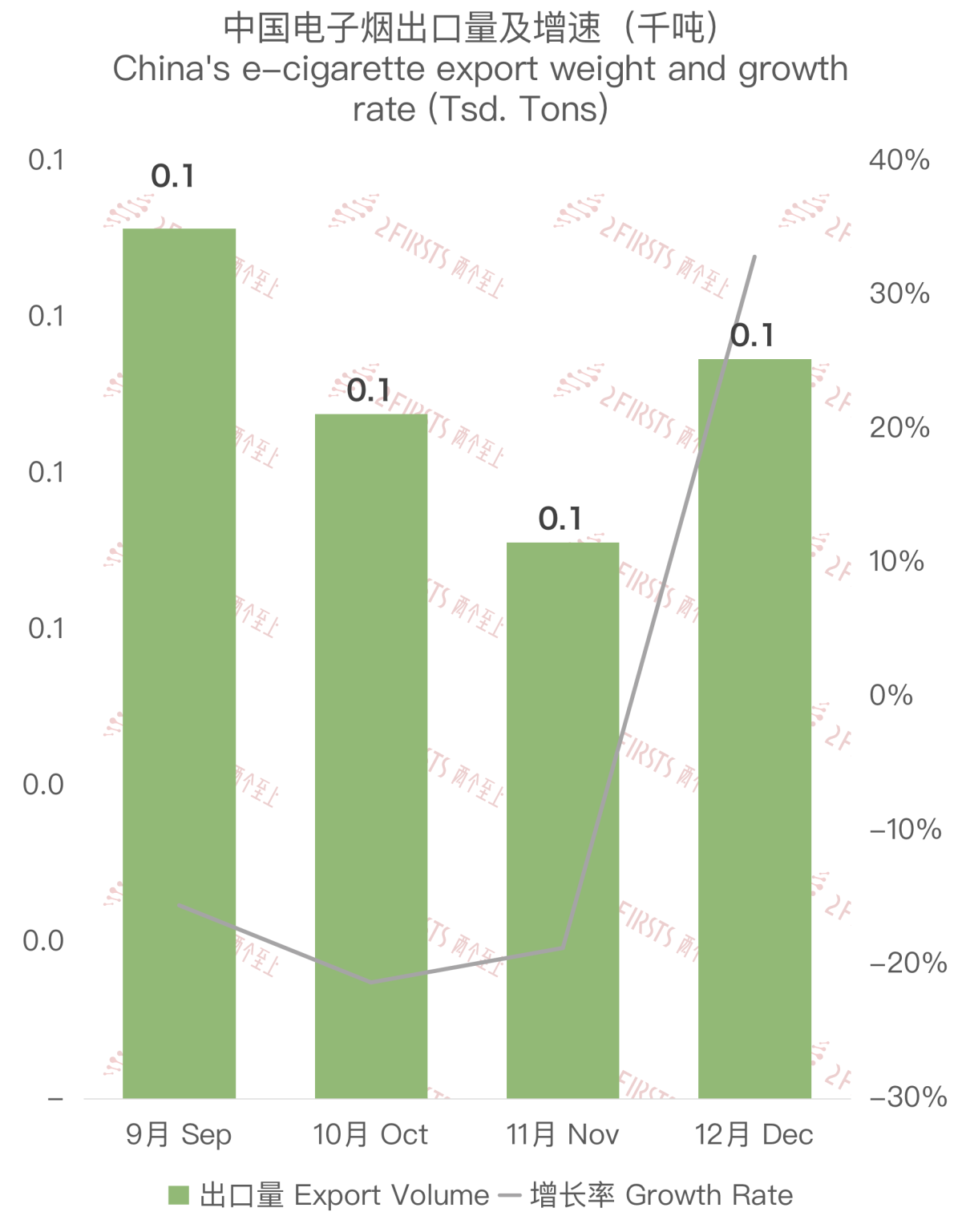
The export volume is approximately 94 tons, an increase of 32.89% month-on-month and 56.90% year-on-year.
Analysis of 2023 December China E-cigarette Exports to Switzerland
Image source: 2FIRSTS (Mincy diagram)


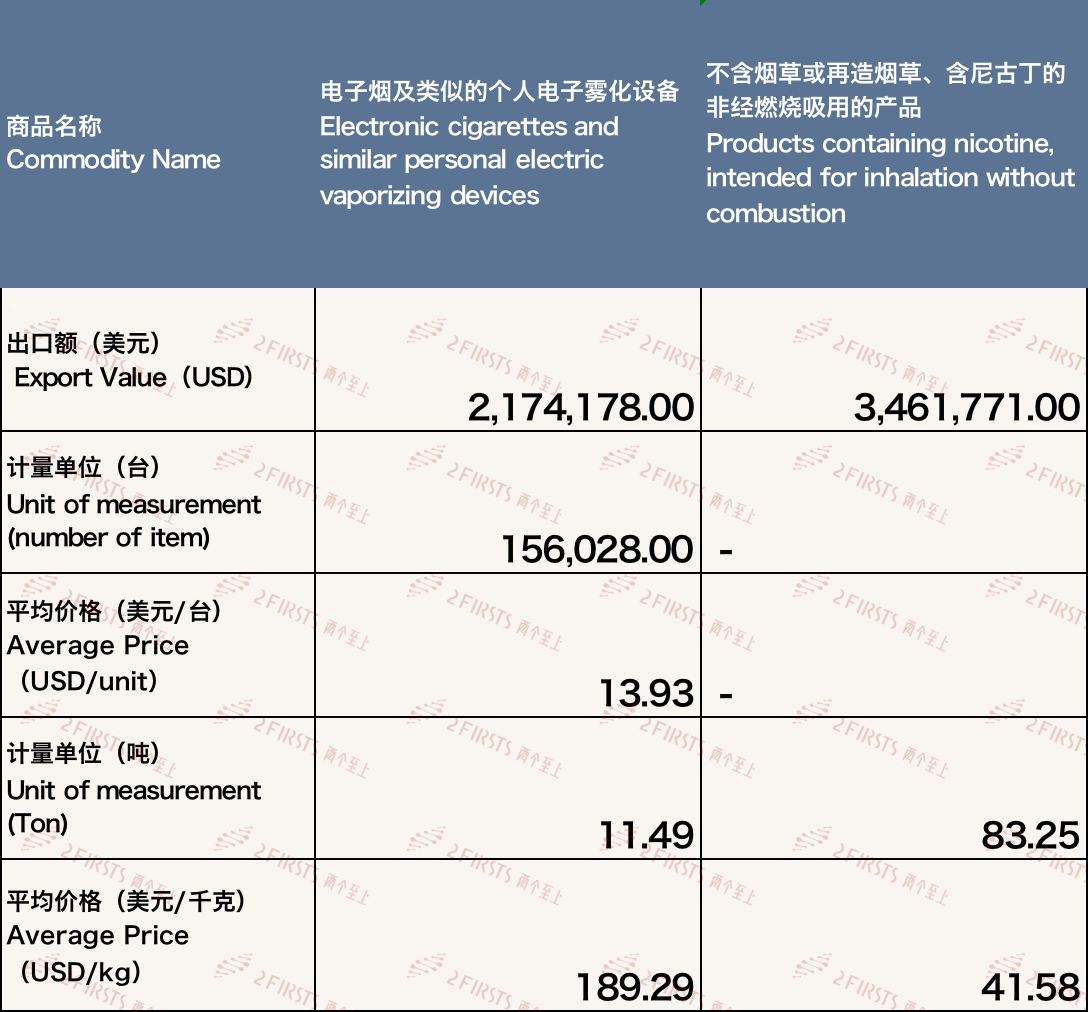
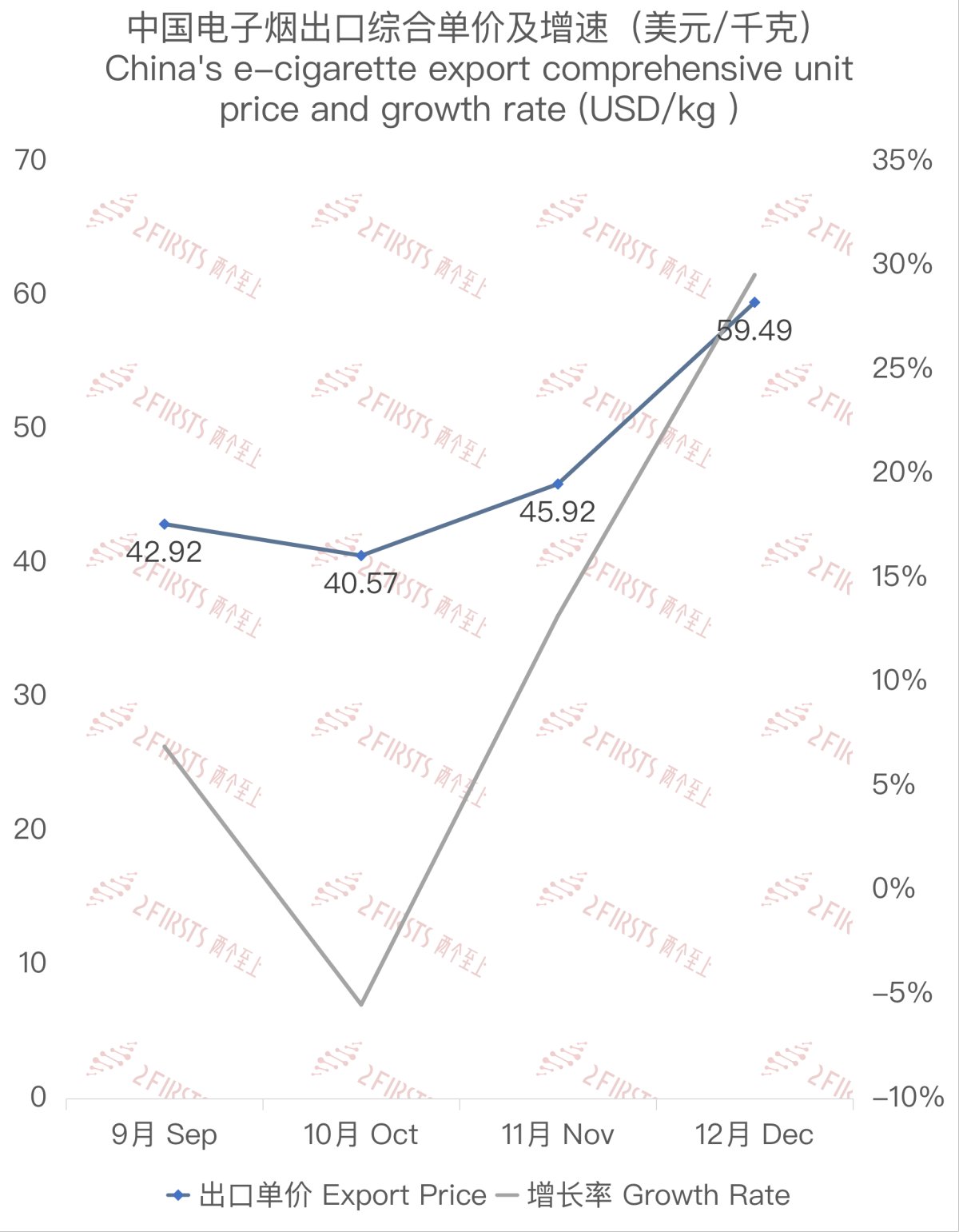
The export unit price was $59.49 per kilogram, representing a 29.56% increase month-on-month and a 15.85% decrease year-on-year. The average price for "e-cigarettes and similar personal electronic vaporizing devices" was $13.93 per unit.
 

Analysis of 2023 December China E-cigarette Exports to Switzerland
Image source: 2FIRSTS (Mincy Mapping)


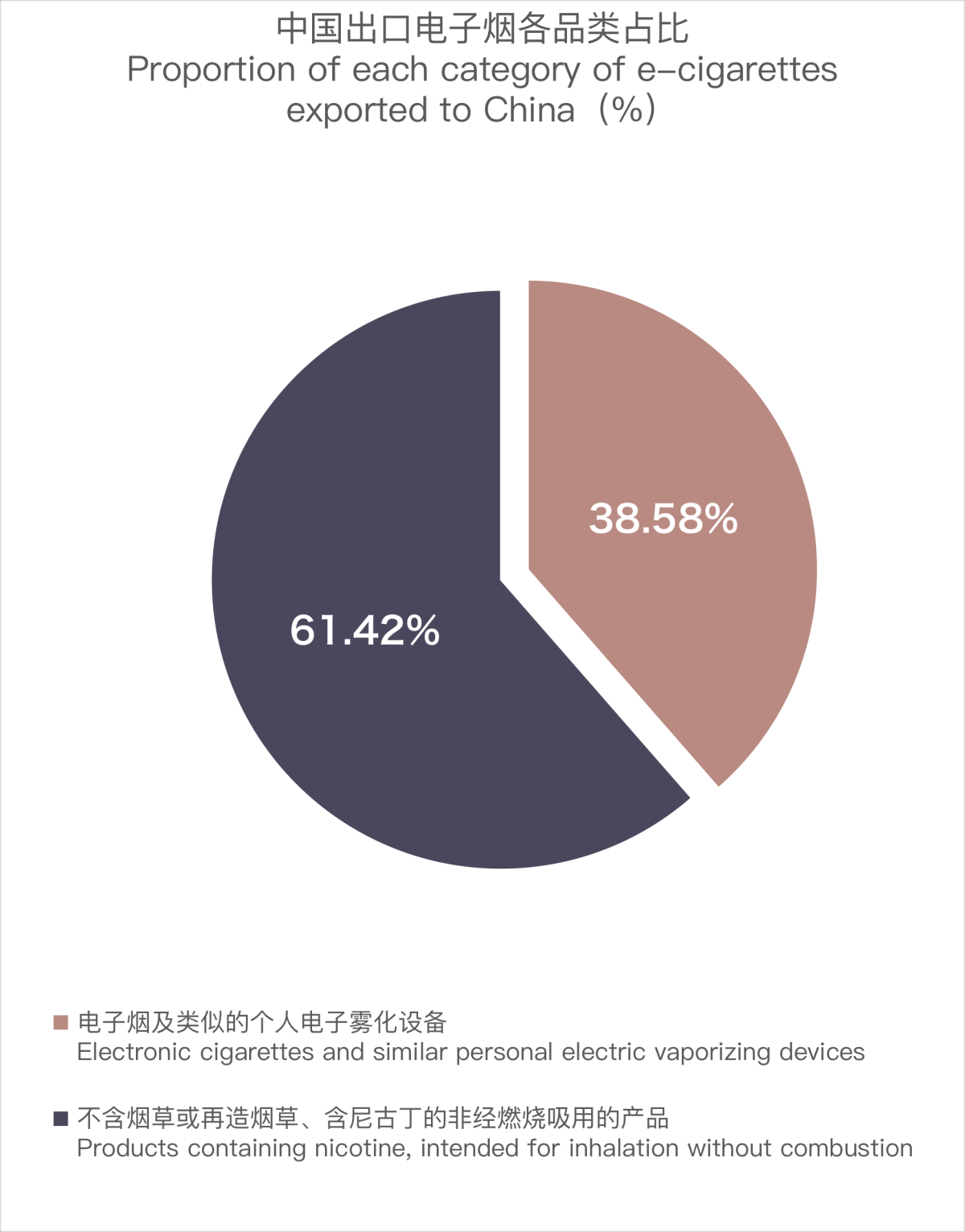
Among them, "e-cigarettes and similar personal electronic vaporizer devices" accounted for 38.58% of the export category, while "non-burning products containing nicotine without tobacco or reconstituted tobacco" accounted for 61.42%.
Analysis of 2023 December China E-cigarette Exports to Switzerland
Image source: 2FIRSTS (created by Mincy)


We welcome news tips, article submissions, interview requests, or comments on this piece.

Please contact us at info@2firsts.com, or reach out to Alan Zhao, CEO of 2Firsts, on LinkedIn


Notice

1.  This article is intended solely for professional research purposes related to industry, technology, and policy. Any references to brands or products are made purely for objective description and do not constitute any form of endorsement, recommendation, or promotion by 2Firsts.

2.  The use of nicotine-containing products — including, but not limited to, cigarettes, e-cigarettes, nicotine pouchand heated tobacco products — carries significant health risks. Users are responsible for complying with all applicable laws and regulations in their respective jurisdictions.

3.  This article is not intended to serve as the basis for any investment decisions or financial advice. 2Firsts assumes no direct or indirect liability for any inaccuracies or errors in the content.

4.  Access to this article is strictly prohibited for individuals below the legal age in their jurisdiction.


Copyright


This article is either an original work created by 2Firsts or a reproduction from third-party sources with proper attribution. All copyrights and usage rights belong to 2Firsts or the original content provider. Unauthorized reproduction, distribution, or any other form of unauthorized use by any individual or organization is strictly prohibited. Violators will be held legally accountable.

For copyright-related inquiries, please contact: info@2firsts.com


AI Assistance Disclaimer


This article may have been enhanced using AI tools to improve translation and editorial efficiency. However, due to technical limitations, inaccuracies may occur. Readers are encouraged to refer to the cited sources for the most accurate information.

We welcome any corrections or feedback. Please contact us at: info@2firsts.com

GSTHR Estimates 200 Million People Use Non-Combustible Nicotine Products as 28 Countries Show Rising Use Alongside Falling Smoking Rates
The Global State of Tobacco Harm Reduction, a project operated by Knowledge·Action·Change, estimates that about 200 million people worldwide use non-combustible nicotine products including vapes, heated tobacco, nicotine pouches and snus. Its 2026 report says use of these products rose alongside declining smoking rates in 28 countries it analyzed. The data do not establish that all 200 million users have quit smoking, nor do they prove a direct causal relationship. GSTHR also says regulatory restrictions on the products continue to expand in many markets.
Sep.10
As JUUL2 Wins FDA Authorization, Harm Reduction Journal Highlights the Role of Real-World Evidence in Nicotine Product Regulation
A commentary published in the international open-access, peer-reviewed Harm Reduction Journal argues that randomized controlled trials remain central to evaluating smoking cessation efficacy but cannot alone capture real-world uptake, complete switching, longer-term use and population impact of non-combustible nicotine products such as e-cigarettes, heated tobacco and nicotine pouches. The authors frame impact as “reach × efficacy” and call for real-world evidence to complement RCTs. Three days after publication, the FDA authorized three JUUL2 products and highlighted complete switching among adult smokers in explaining its decision, providing a timely regulatory backdrop to the debate.
Sep.08
Australia Extends Illicit Tobacco Crackdown From Tougher Penalties to Customs and Logistics Supply Chains
Australia's federal government introduced a new illicit tobacco enforcement bill on September 10 that would strengthen evidentiary presumptions, representative sampling, seizure and forfeiture procedures, proceeds-of-crime powers and obligations for customs and logistics operators. The proposal follows the Combatting Illicit Tobacco Act 2026, which took effect in August and increased penalties while expanding investigative and asset-recovery tools. Together, the reforms extend Australia's crackdown from tougher criminal sanctions into import, logistics and evidentiary enforcement.
Sep.14
UK HMRC Plans 30,000 Retail Enforcement Actions as Illegal Tobacco and Vape Sellers Face Tougher Crackdown
The UK government has announced that HM Revenue & Customs (HMRC) will carry out more than 30,000 interventions targeting businesses and retail premises during the 2026-2027 financial year. The actions will focus on tax fraud, illegal goods sales and businesses involved in unlawful activities through retail channels. The government said illegal tobacco and illegal vape sales remain areas of concern. The move shows that UK enforcement against illegal nicotine products is expanding from import and supply channels toward retail-level oversight, alongside the upcoming introduction of the Vaping Products Duty.
Jul.24
Australia’s Victoria Steps Up Illegal Tobacco Enforcement With Store Closures and Penalties of Up to A$2.5 Million
Australia’s state of Victoria has activated new powers allowing Tobacco Licensing Victoria and police to shut premises suspected of selling, supplying or possessing illicit tobacco for up to 90 days. Longer closures can be ordered by a magistrates’ court. Businesses subject to closure orders must generally cease all trading and will be placed on a public list. Breaching a closure order can carry penalties of up to A$2.5 million and 20 years in prison.
Sep.10
BAT Expands ITC Infotech Partnership Across Poland, Romania and India to Advance AI
ITC Infotech has expanded its multi-year strategic technology partnership with British American Tobacco (BAT), providing technology services across Poland, Romania and India while continuing to support BAT's newly launched Future Capabilities Centre in India and existing technology hubs in Malaysia and Mexico. The companies said the agreement will focus on AI-enabled innovation, technology capability building and greater operational efficiency. The partnership also aligns with BAT's broader Fit2Win transformation programme, under which the group is expanding the use of external technology and business-services partners to simplify its global operating model.
Aug.13