Analysis of China's E-cigarette Export to Canada in April 2024

Industry Insight by 2FIRSTS
May.30.2024
Analysis of China's E-cigarette Export to Canada in April 2024
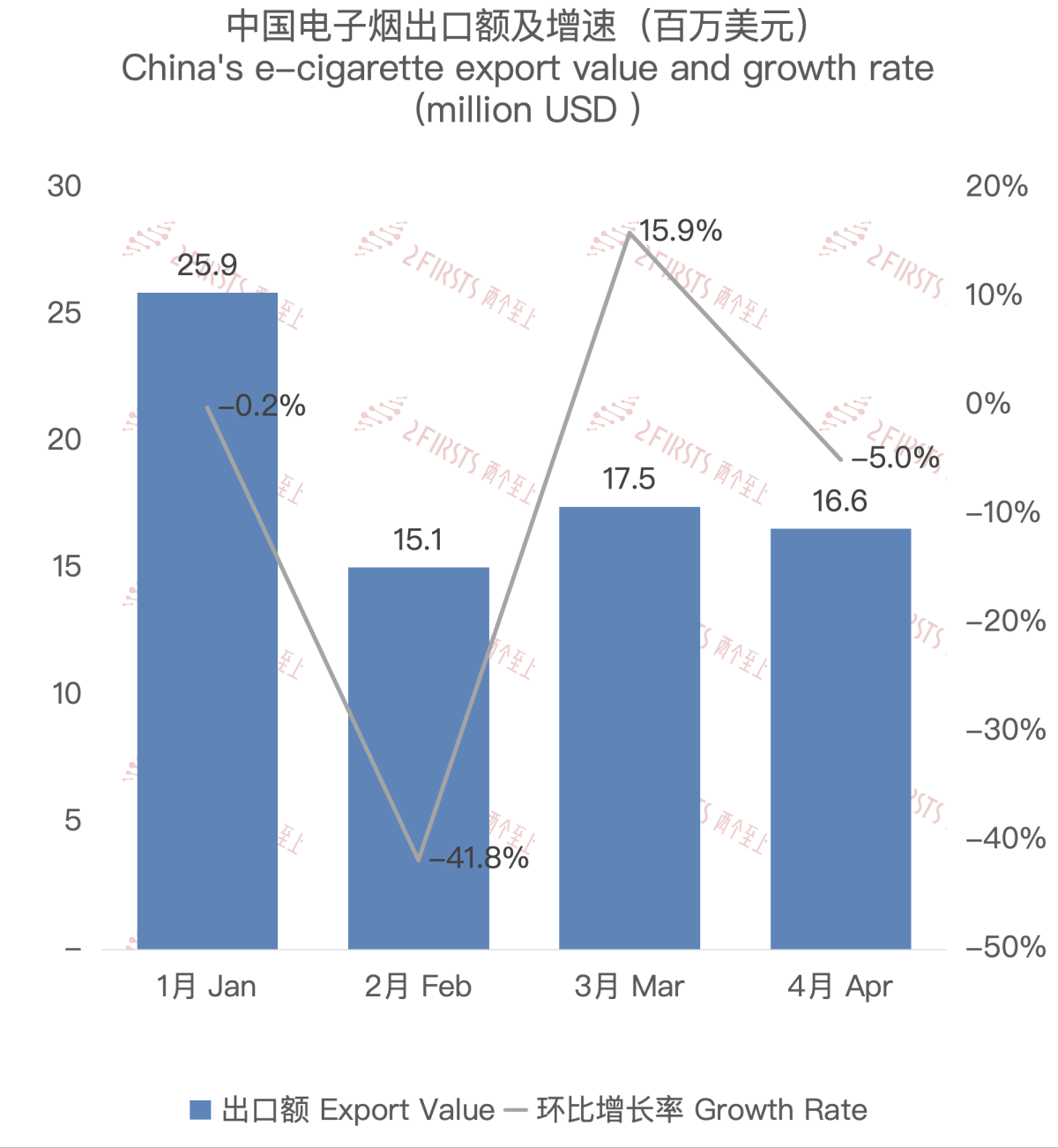
China's e-cigarette exports to Canada in April 2024 totaled $16.58 million, with a 4.98% monthly decrease.

According to updated trade data from the General Administration of Customs, 2FIRSTS has compiled e-cigarette export data from China to Canada for April 2024. Specifically:
Analysis of China's E-cigarette Export to Canada in April 2024
Mapping: 2FIRSTS


The export volume was approximately 16.58 million US dollars, showing a month-on-month decrease of 4.98% and a year-on-year decrease of 42.84%.
Analysis of China's E-cigarette Export to Canada in April 2024
Mapping: 2FIRSTS


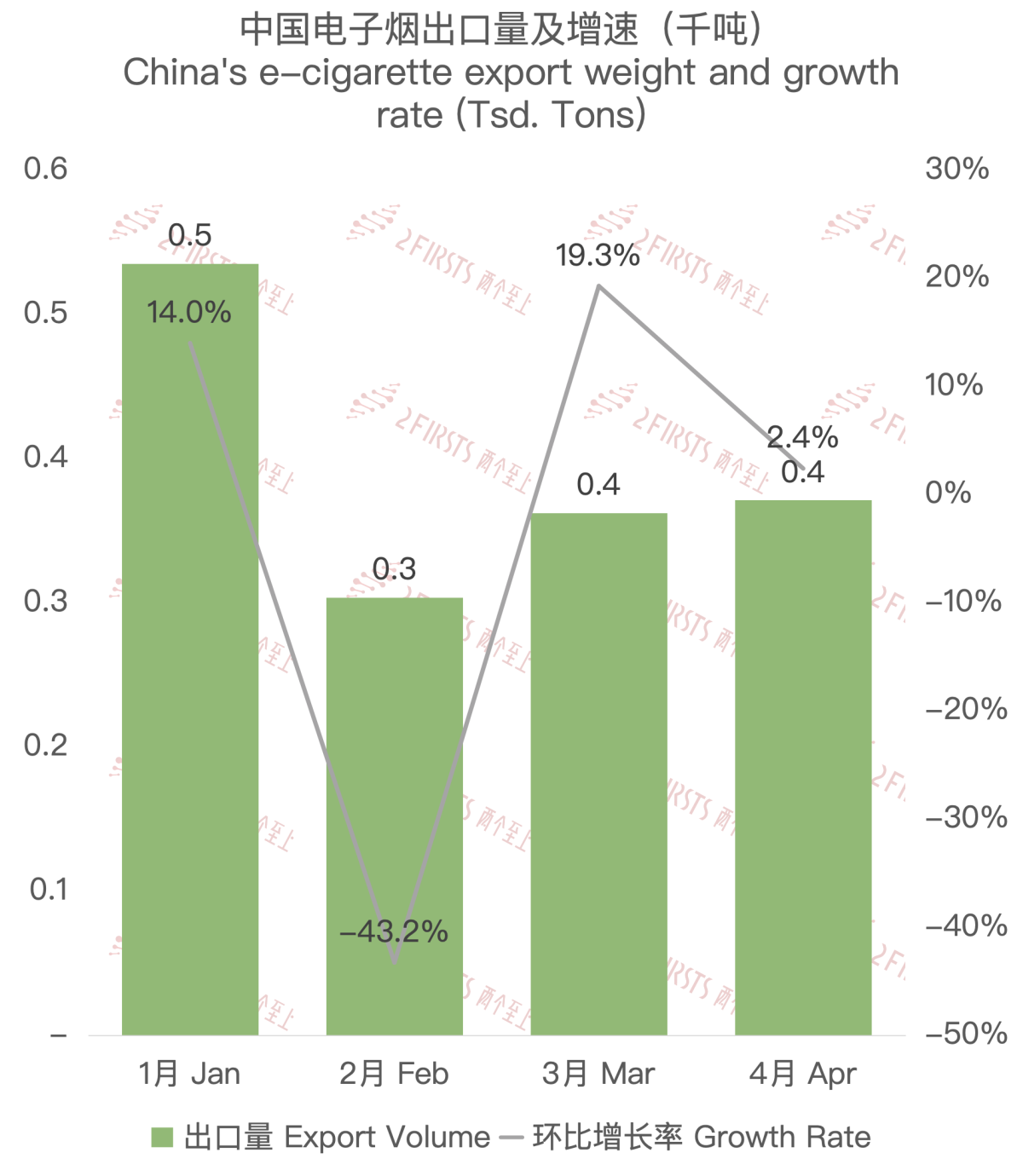
The export volume is approximately 371 tons, with a month-on-month increase of 2.44% and a year-on-year decrease of 22.12%.
Analysis of China's E-cigarette Export to Canada in April 2024
Mapping: 2FIRSTS


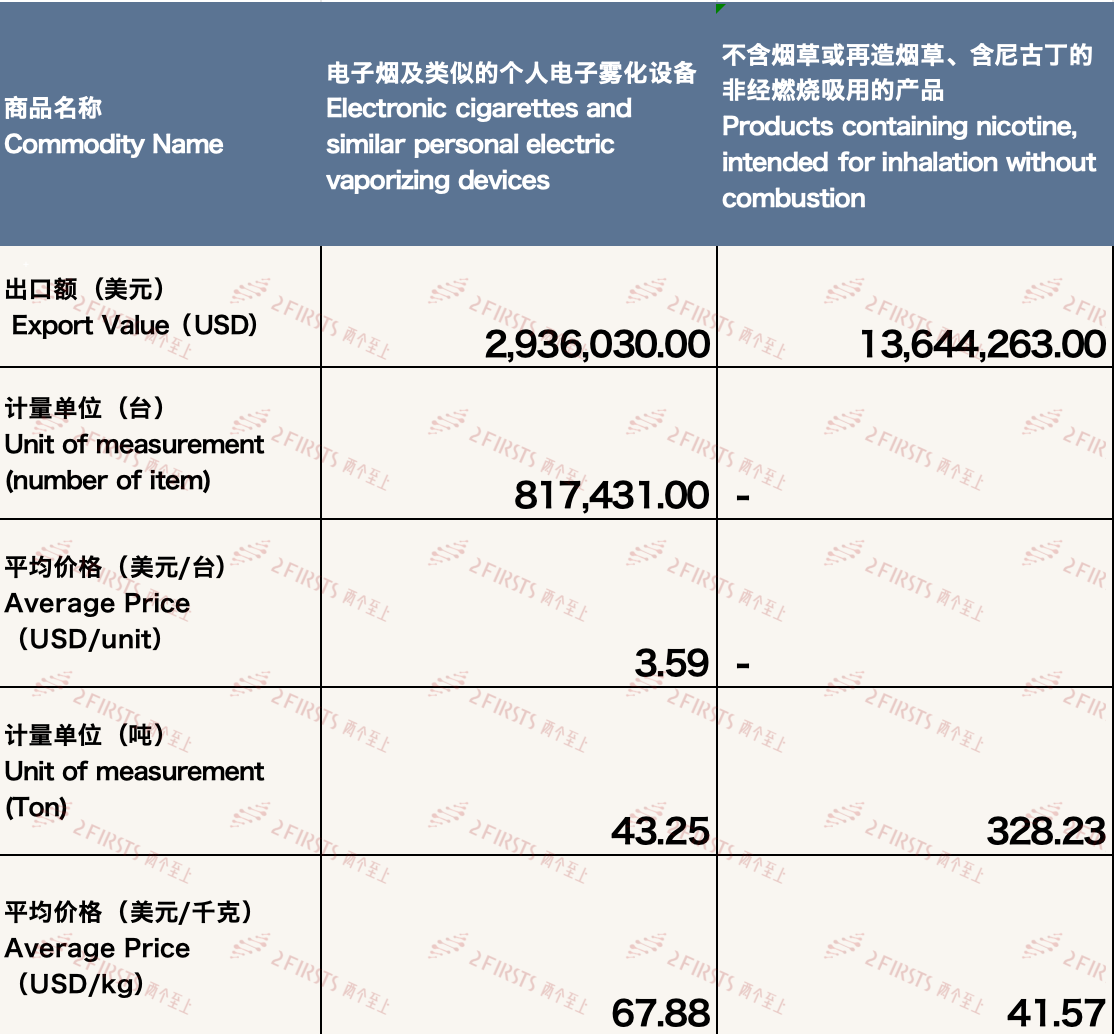
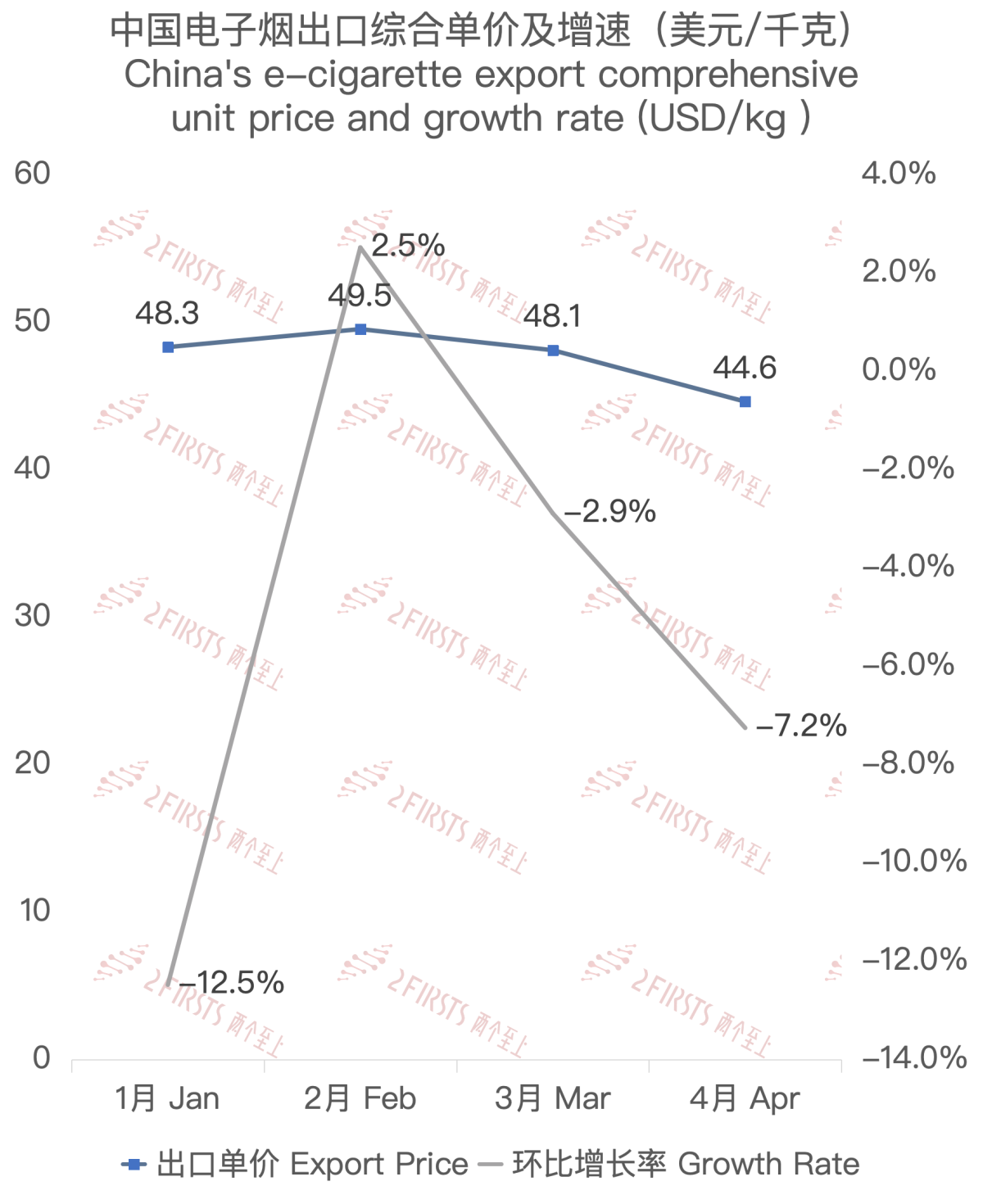
The export unit price was $44.63 per kilogram, a month-on-month decrease of 7.2% and a year-on-year decrease of 26.6%. The average price of "e-cigarettes and similar personal electronic vaporizing devices" is $3.59 per unit.
Analysis of China's E-cigarette Export to Canada in April 2024
Image source: 2FIRSTS (created by Jiang Mingxi)


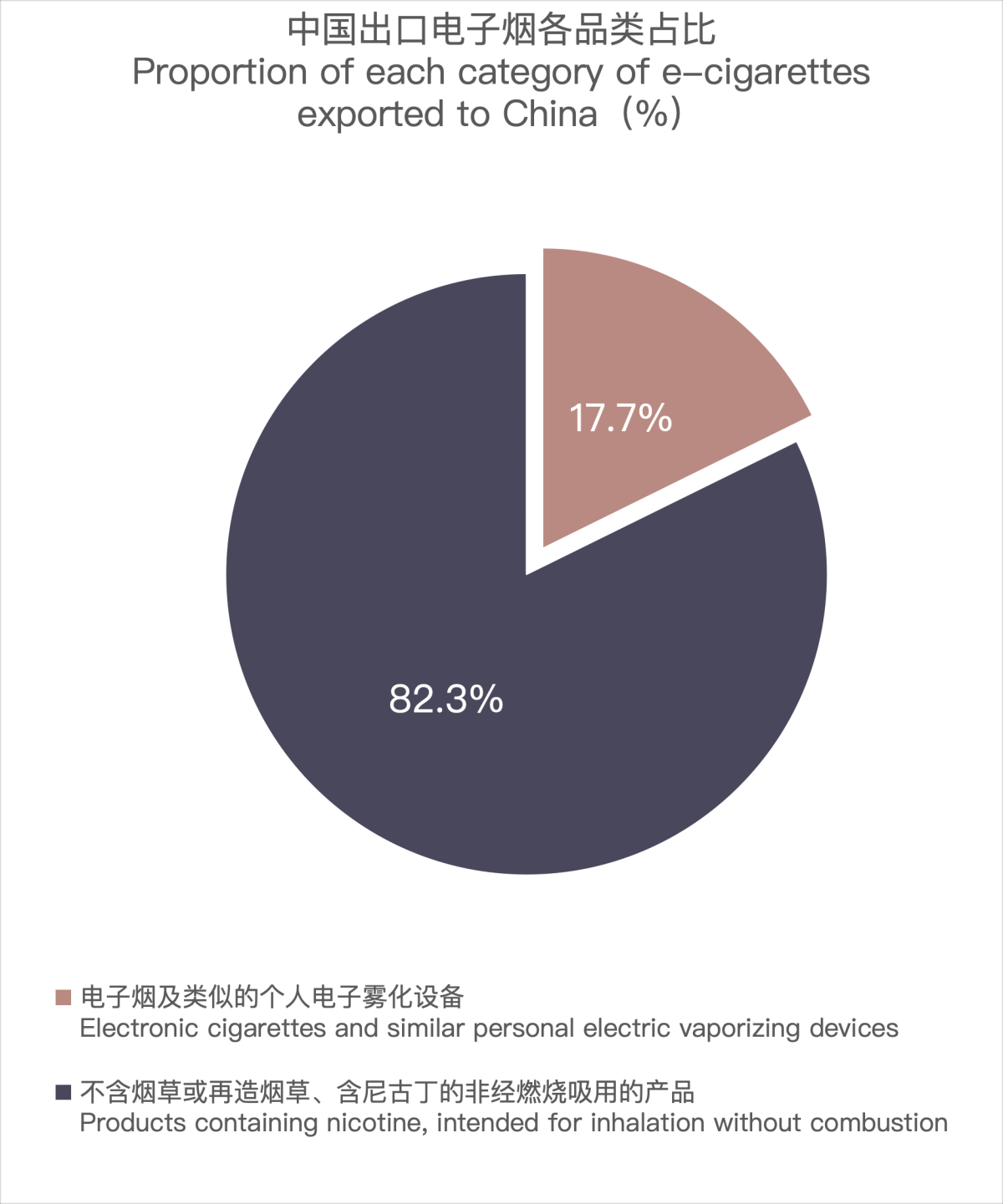
Among them, "e-cigarettes and similar personal electronic vaporizing devices" account for 17.7% of the export category, while "non-tobacco or reconstituted tobacco, nicotine-containing non-combustible products" account for 82.3%.
Analysis of China's E-cigarette Export to Canada in April 2024
Mapping: 2FIRSTS


We welcome news tips, article submissions, interview requests, or comments on this piece.

Please contact us at info@2firsts.com, or reach out to Alan Zhao, CEO of 2Firsts, on LinkedIn


Notice

1.  This article is intended solely for professional research purposes related to industry, technology, and policy. Any references to brands or products are made purely for objective description and do not constitute any form of endorsement, recommendation, or promotion by 2Firsts.

2.  The use of nicotine-containing products — including, but not limited to, cigarettes, e-cigarettes, nicotine pouchand heated tobacco products — carries significant health risks. Users are responsible for complying with all applicable laws and regulations in their respective jurisdictions.

3.  This article is not intended to serve as the basis for any investment decisions or financial advice. 2Firsts assumes no direct or indirect liability for any inaccuracies or errors in the content.

4.  Access to this article is strictly prohibited for individuals below the legal age in their jurisdiction.


Copyright


This article is either an original work created by 2Firsts or a reproduction from third-party sources with proper attribution. All copyrights and usage rights belong to 2Firsts or the original content provider. Unauthorized reproduction, distribution, or any other form of unauthorized use by any individual or organization is strictly prohibited. Violators will be held legally accountable.

For copyright-related inquiries, please contact: info@2firsts.com


AI Assistance Disclaimer


This article may have been enhanced using AI tools to improve translation and editorial efficiency. However, due to technical limitations, inaccuracies may occur. Readers are encouraged to refer to the cited sources for the most accurate information.

We welcome any corrections or feedback. Please contact us at: info@2firsts.com

Tennessee’s “Tobacco Product Retail Licensing Act” Would Require New Licenses for Tobacco and Vapes
A newly introduced Tennessee bill, S.B. 2086, would create a statewide tobacco product retail licensing system, move oversight to the Tennessee Alcohol Commission, and impose fees and escalating penalties. The proposal also requires all tobacco product sales to occur as in-person, over-the-counter transactions at licensed locations—effectively banning direct-to-consumer shipping of cigars and potentially restricting curbside or phone-order pickup models.
Jan.28 by 2FIRSTS.ai
Russia’s Duma Deputy Speaker Davankov calls for a total vape ban, citing drug sales disguised as vapes
Vladislav Davankov, deputy speaker of Russia’s State Duma, urged a nationwide ban on vapes, arguing it would help prevent drugs being sold under the cover of vaping products, including near schools. The remarks come as Russia prepares to enforce a separate ban on vape sales at public transport stops starting Sept. 1, 2026.
Feb.09 by 2FIRSTS.ai
BBC survey: over half of secondary teachers in England say vaping is a problem at their school
Granville Academy in Swadlincote, Derbyshire, has joined a county pilot overseen by Derbyshire County Council that puts pupils in charge of reducing vaping in school. After reports of pupils stealing vapes, vaping in toilets and using them while walking home, the school found detentions were not effective and shifted to peer-led education sessions, assemblies and health-warning signage.
Feb.05 by 2FIRSTS.ai
China’s E-Cigarette Exports Fall Slightly to USD 10.6 Billion in 2025, U.S. Market Further Consolidates Lead
China’s e-cigarette exports totaled approximately USD 10.60 billion in 2025, down 3.3% year-on-year from USD 10.96 billion in 2024, according to annual trade data released by the General Administration of Customs of China. Despite the mild decline, exports remained firmly above the USD 10 billion mark, with a clear rebound in the fourth quarter.
Jan.20 by 2FIRSTS.ai
FDA Details Carcinogenicity Tiering and ELCR Framework as Small Manufacturers Press for Predictability
During the “Toxicological Profile” session at FDA’s Feb 10 PMTA roundtable, officials outlined the carcinogenicity tiering system and Excess Lifetime Cancer Risk (ELCR) framework used in ENDS reviews under the APPH standard. Small manufacturers questioned database transparency, exposure assumptions, and the existence of clear compliance benchmarks. FDA reiterated toxicological risk is assessed case by case within a broader population-level determination.
Feb.11
PMTA Manufacturing Panel Sees Small Firms Warn “Unknown Is Death” as FDA Defends Review Boundaries
During FDA’s Feb 10 PMTA roundtable (manufacturing controls panel), small ENDS manufacturers warned that uncertainty in manufacturing expectations creates existential financial risk. FDA officials reiterated review flexibility is constrained by statutory and scientific boundaries. The panel debated testing standards, documentation requirements, open-system responsibility, supply chain changes, and software updates—highlighting unresolved PMTA challenges for small manufacturers.
Feb.11