China's E-cigarette Export Data to Malaysia in April 2024

Industry Insight by 2FIRSTS
May.28.2024
China's E-cigarette Export Data to Malaysia in April 2024
China's e-cigarette exports to Malaysia in April 2024 rose 32.19% month-on-month and 11.21% year-on-year, reaching $35.37 million.

According to updated trade data from the General Administration of Customs, 2FIRSTS has compiled e-cigarette export data from China to Malaysia for April 2024. The specifics are as follows:
China's E-cigarette Export Data to Malaysia in April 2024
Mapping: 2FIRSTS


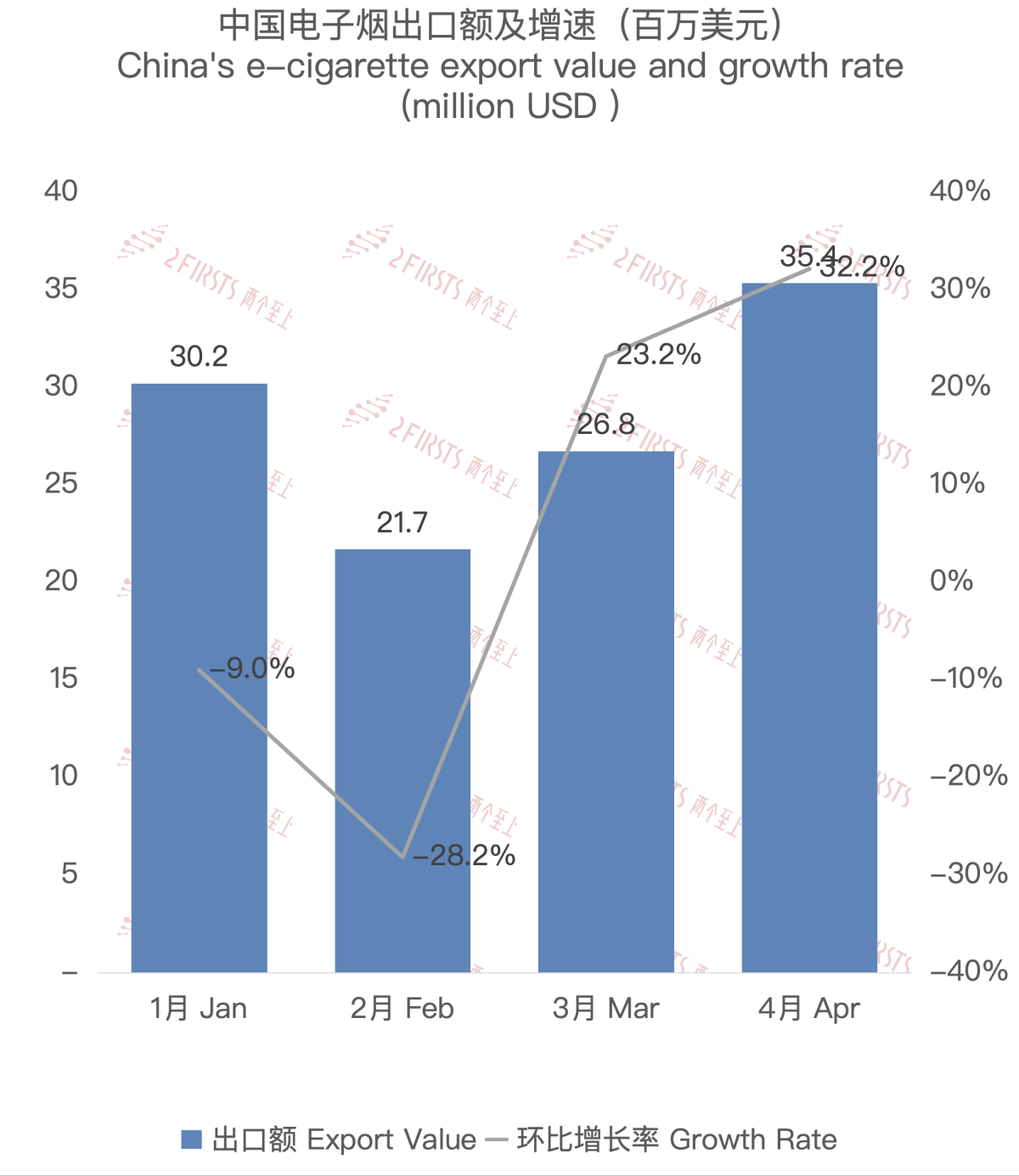
The export volume reached approximately $35.37 million, representing a month-on-month growth of 32.19% and a year-on-year growth of 11.21%.
China's E-cigarette Export Data to Malaysia in April 2024
Drawing: 2FIRSTS


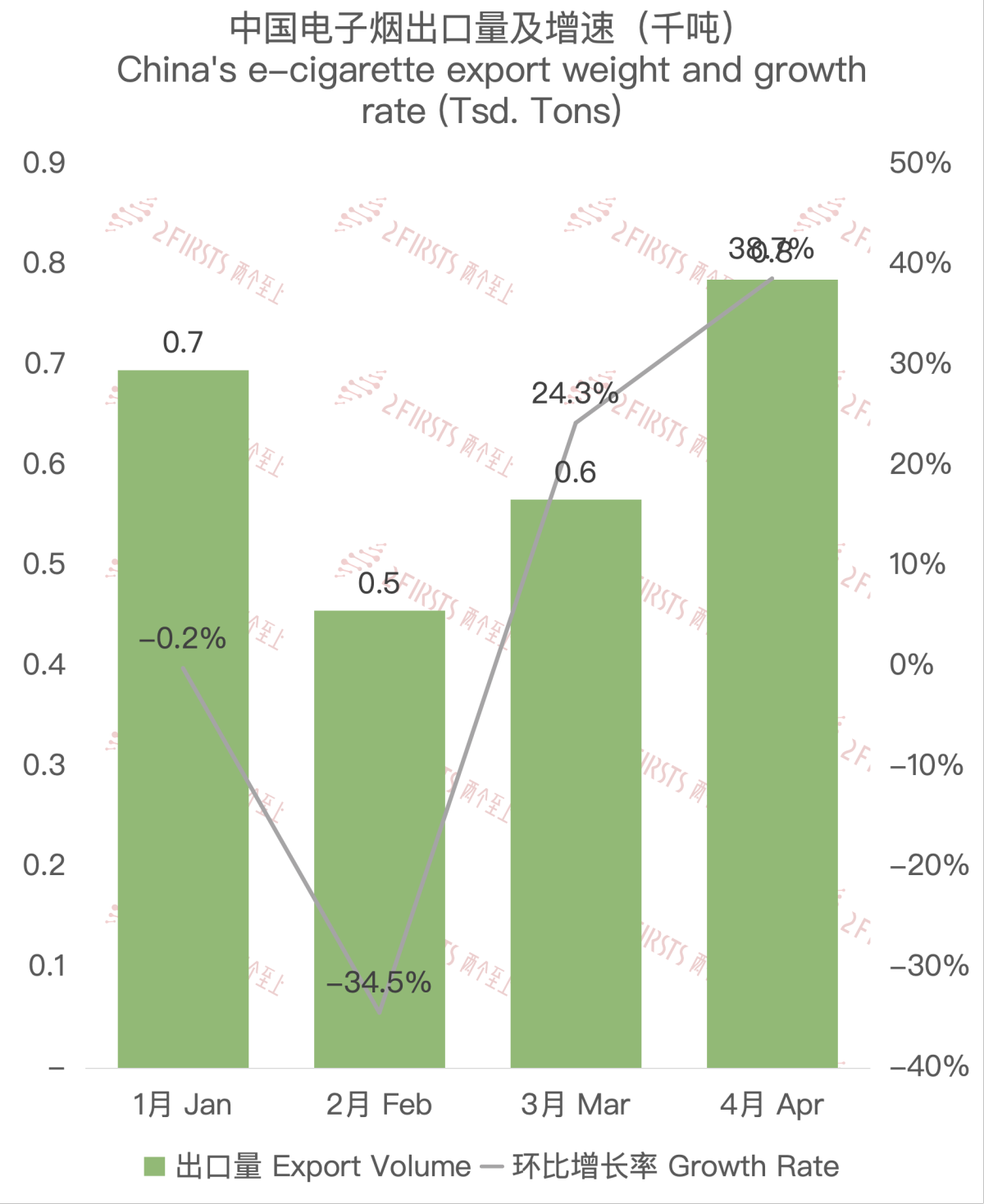
The export volume reached approximately 785.6 tons, increasing by 38.67% compared to the previous period and by 7.92% compared to the same period last year.
China's E-cigarette Export Data to Malaysia in April 2024
Mapping: 2FIRSTS


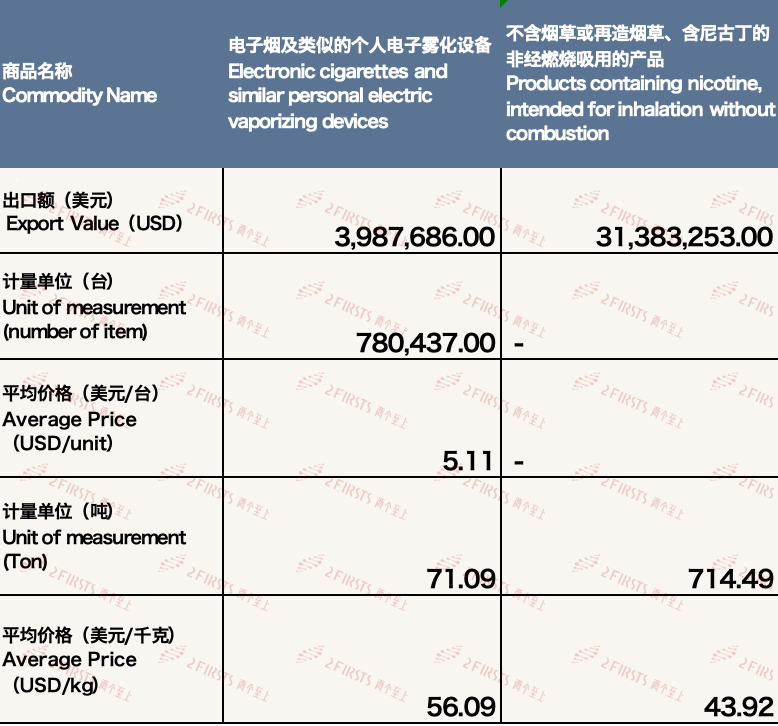
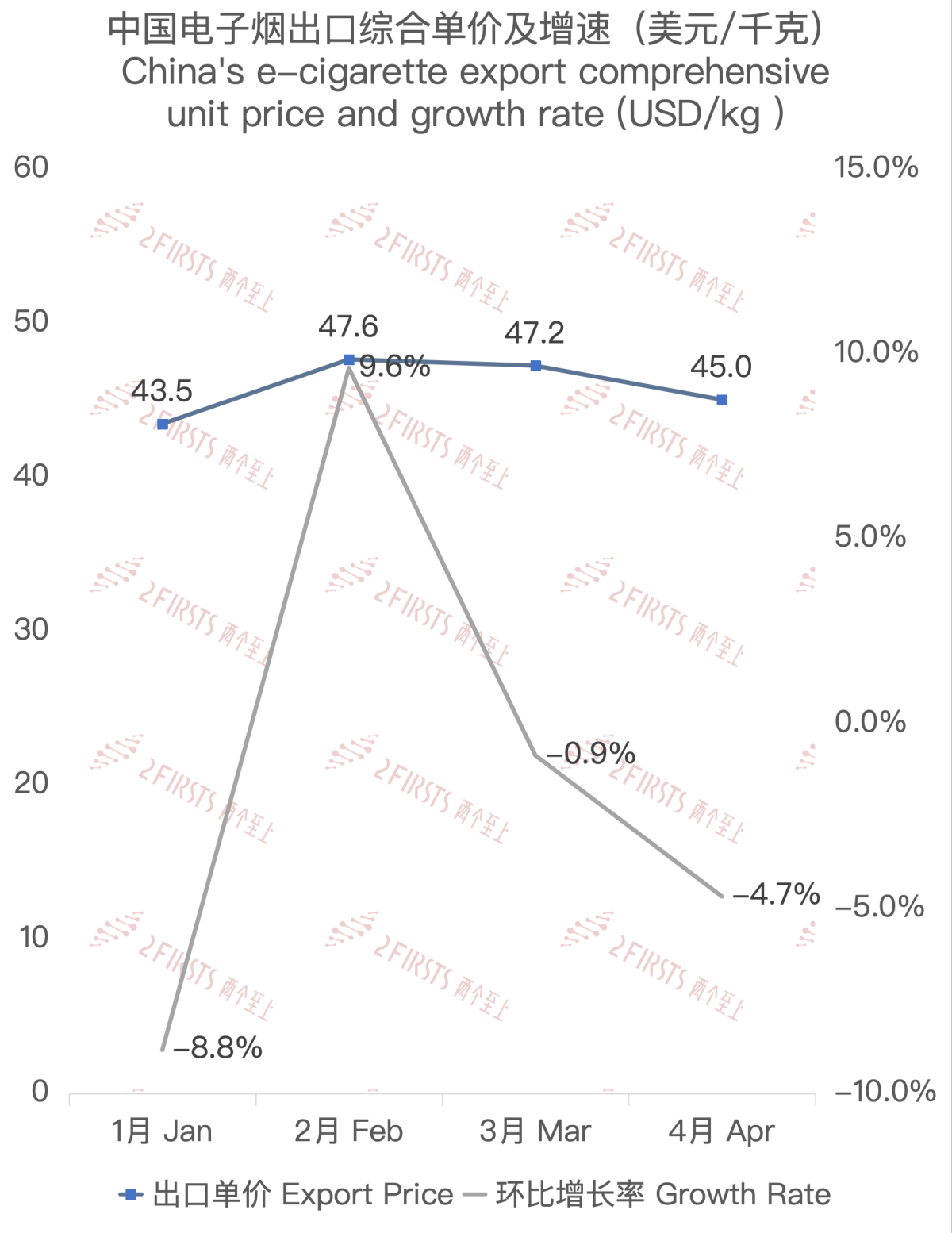
The export unit price was $45.02 per kilogram, a 4.7% decrease compared to the previous period and a 3.0% increase year-on-year. The average price of "e-cigarettes and similar personal electronic vaporization devices" was $5.11 per unit.
China's E-cigarette Export Data to Malaysia in April 2024
Mapping: 2FIRSTS


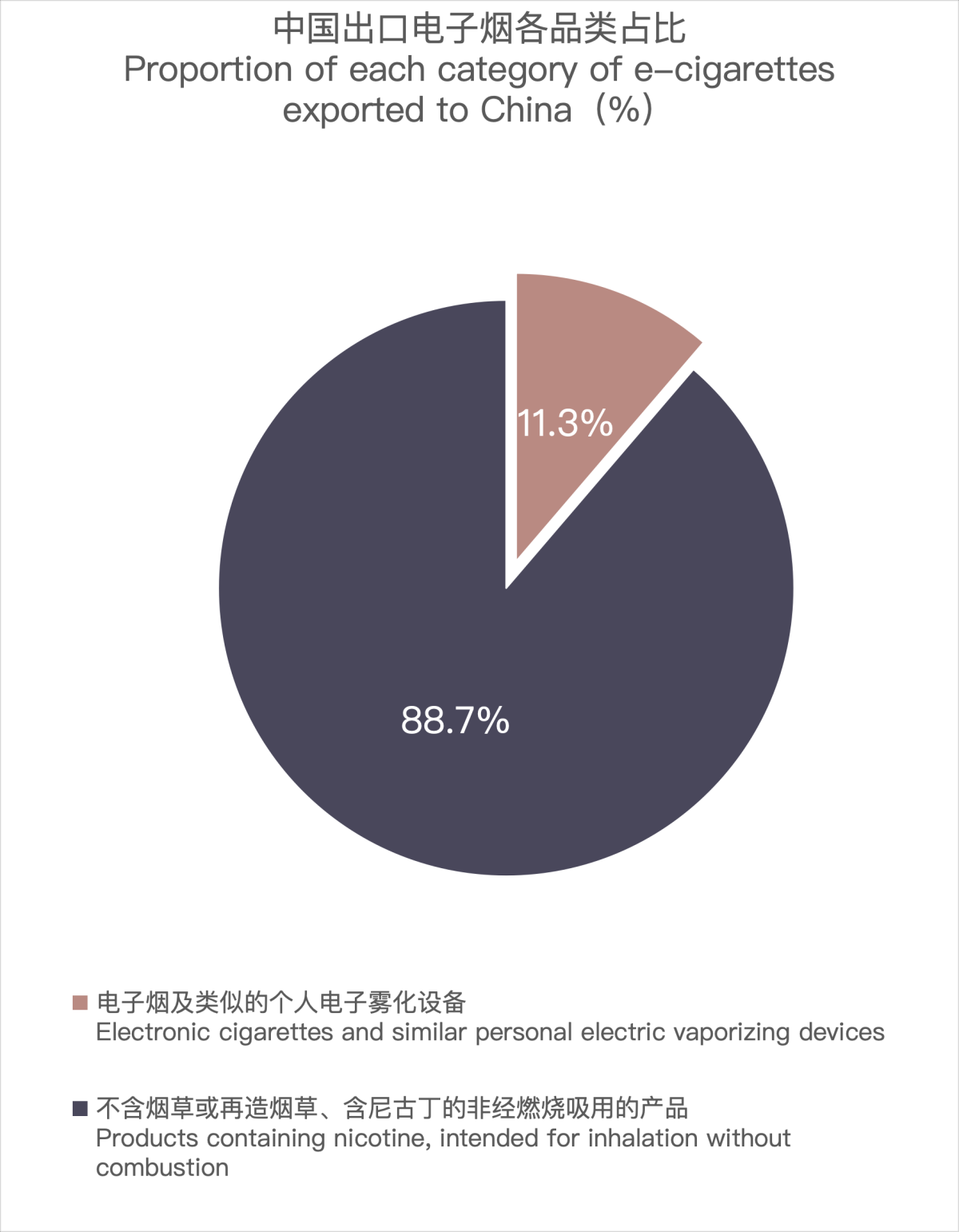
Among them, "e-cigarettes and similar personal electronic vaporizers" accounted for 11.3% of the export category, while "non-combustible products containing nicotine which do not contain tobacco or reconstituted tobacco" accounted for 88.7%.
China's E-cigarette Export Data to Malaysia in April 2024
Mapping: 2FIRSTS


We welcome news tips, article submissions, interview requests, or comments on this piece.

Please contact us at info@2firsts.com, or reach out to Alan Zhao, CEO of 2Firsts, on LinkedIn


Notice

1.  This article is intended solely for professional research purposes related to industry, technology, and policy. Any references to brands or products are made purely for objective description and do not constitute any form of endorsement, recommendation, or promotion by 2Firsts.

2.  The use of nicotine-containing products — including, but not limited to, cigarettes, e-cigarettes, nicotine pouchand heated tobacco products — carries significant health risks. Users are responsible for complying with all applicable laws and regulations in their respective jurisdictions.

3.  This article is not intended to serve as the basis for any investment decisions or financial advice. 2Firsts assumes no direct or indirect liability for any inaccuracies or errors in the content.

4.  Access to this article is strictly prohibited for individuals below the legal age in their jurisdiction.


Copyright


This article is either an original work created by 2Firsts or a reproduction from third-party sources with proper attribution. All copyrights and usage rights belong to 2Firsts or the original content provider. Unauthorized reproduction, distribution, or any other form of unauthorized use by any individual or organization is strictly prohibited. Violators will be held legally accountable.

For copyright-related inquiries, please contact: info@2firsts.com


AI Assistance Disclaimer


This article may have been enhanced using AI tools to improve translation and editorial efficiency. However, due to technical limitations, inaccuracies may occur. Readers are encouraged to refer to the cited sources for the most accurate information.

We welcome any corrections or feedback. Please contact us at: info@2firsts.com

Bringing Tax and Insurance Into Nicotine Regulation: Insights From a Tobacco Harm-Reduction Report
A smoke-free nicotine policy report argues that tobacco harm reduction should move beyond product bans and health warnings into tax policy, insurance pricing and risk-based regulation. While some projections remain open to debate, the report highlights a wider challenge: nicotine products, technologies and consumer behavior have changed sharply over the past decade, and regulatory systems may need new tools to better align tobacco control with harm-reduction goals.
Jun.08
China Tobacco International HK Warns First-Half Revenue May Fall 25%-30%, Tobacco Leaf and Duty-Free Exposure Highlight Reliance on Traditional Tobacco
CTIHK expects first-half 2026 revenue to fall 25%-30%, mainly due to lower tobacco leaf imports and delayed cigarette shipments to China’s domestic duty-free market. Its 2025 revenue mix—nearly 90% from tobacco leaf-related businesses and less than 1% from new tobacco products—shows continued exposure to traditional supply chains and trade variables.
Jun.18
One Nation Proposes 50% Tobacco Excise Cut as Australia’s Illicit Market Expands
Australian One Nation leader Pauline Hanson has proposed cutting tobacco excise by 50% and freezing indexation until June 30, 2028, in a bid to lower legal cigarette prices and reduce the price advantage of the illicit tobacco market.
Jun.18
PMI Partners With Italian Tenor Andrea Bocelli to Launch “Believe. Further” Platform
Philip Morris International (PMI) and Italian tenor Andrea Bocelli have launched “Believe. Further,” a multi-year communications platform targeting cultural, institutional and business audiences in Europe, as PMI says smoke-free products accounted for 43% of its net revenues as of the first quarter of 2026.
Jul.01
KT&G Overseas Tobacco Revenue Jumps 24.6%, Attracting Global Capital
South Korean tobacco company KT&G is drawing growing global investor attention after reporting record overseas tobacco sales, with international institutions including Capital Group and BlackRock increasing their stakes.
Business
May.19
Belgian Health Minister Calls Tobacco Industry “Criminal” After Court Undermines Supermarket Sales Ban
Belgian Health Minister Frank Vandenbroucke described the tobacco industry as a “criminal” sector with “no future” during an appearance on VRT’s current affairs program Ter Zake. His comments came after Belgium’s Constitutional Court ruled that a government ban on cigarette and vape sales in supermarkets was discriminatory because it allowed small shops to sell tobacco products while prohibiting larger retailers from doing so.
May.07 by 2FIRSTS.ai