Analysis of China's E-cigarette Exports to Belgium in April 2024

Jun.12.2024
Analysis of China's E-cigarette Exports to Belgium in April 2024
China's e-cigarette exports to Belgium surged in April 2024, with a 74.15% year-on-year increase in export value.

According to updated trade data from the General Administration of Customs, 2FIRSTS has compiled e-cigarette export data to Belgium from China in April 2024.
Analysis of China's E-cigarette Exports to Belgium in April 2024
Image source: 2FIRSTS


The details are as follows:

Analysis of China's E-cigarette Exports to Belgium in April 2024
Image source: 2FIRSTS


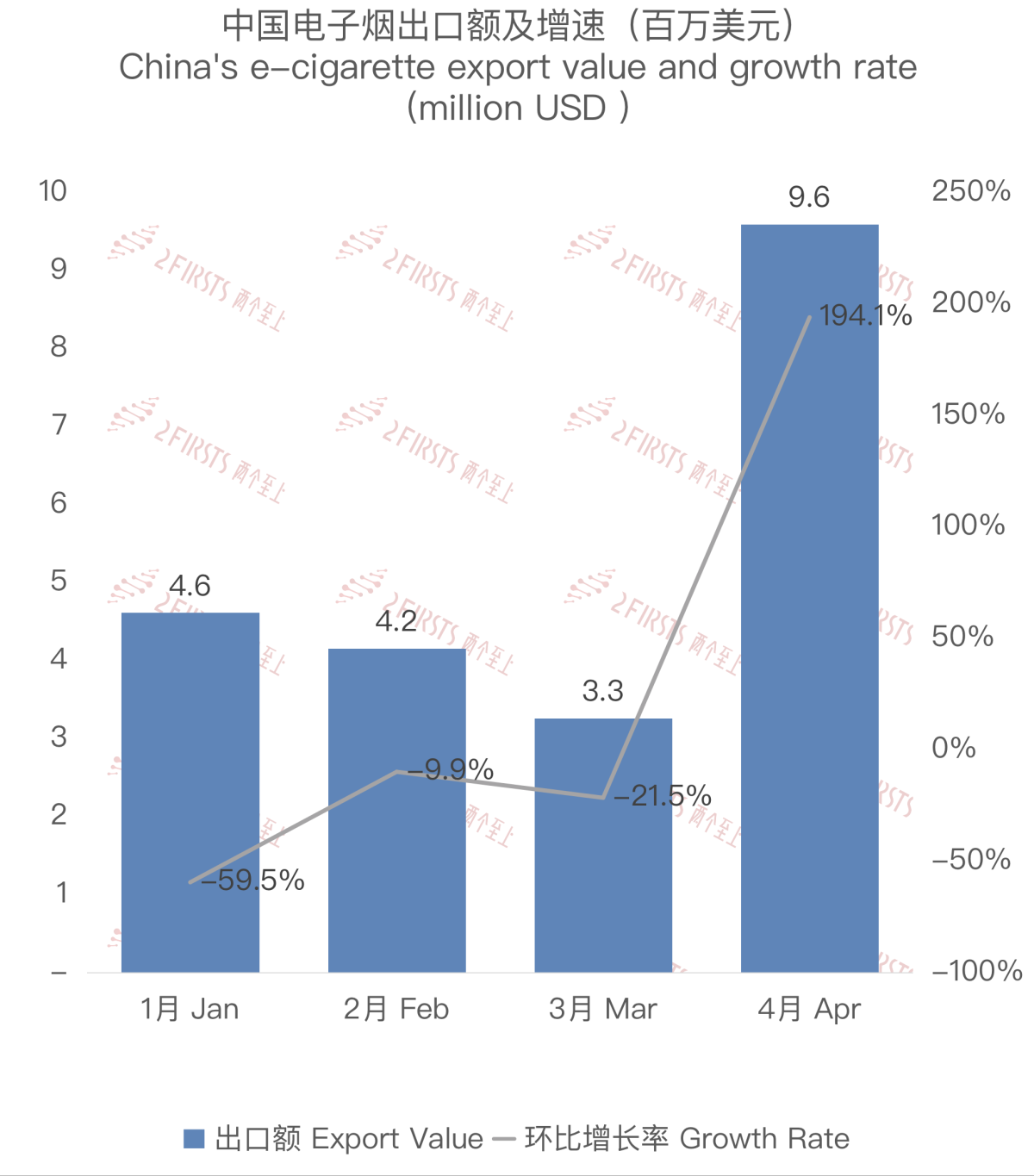
The export volume reached around 9.59 million US dollars, showing a month-on-month increase of 194.08% and a year-on-year increase of 74.15%.
Analysis of China's E-cigarette Exports to Belgium in April 2024
Image source: 2FIRSTS


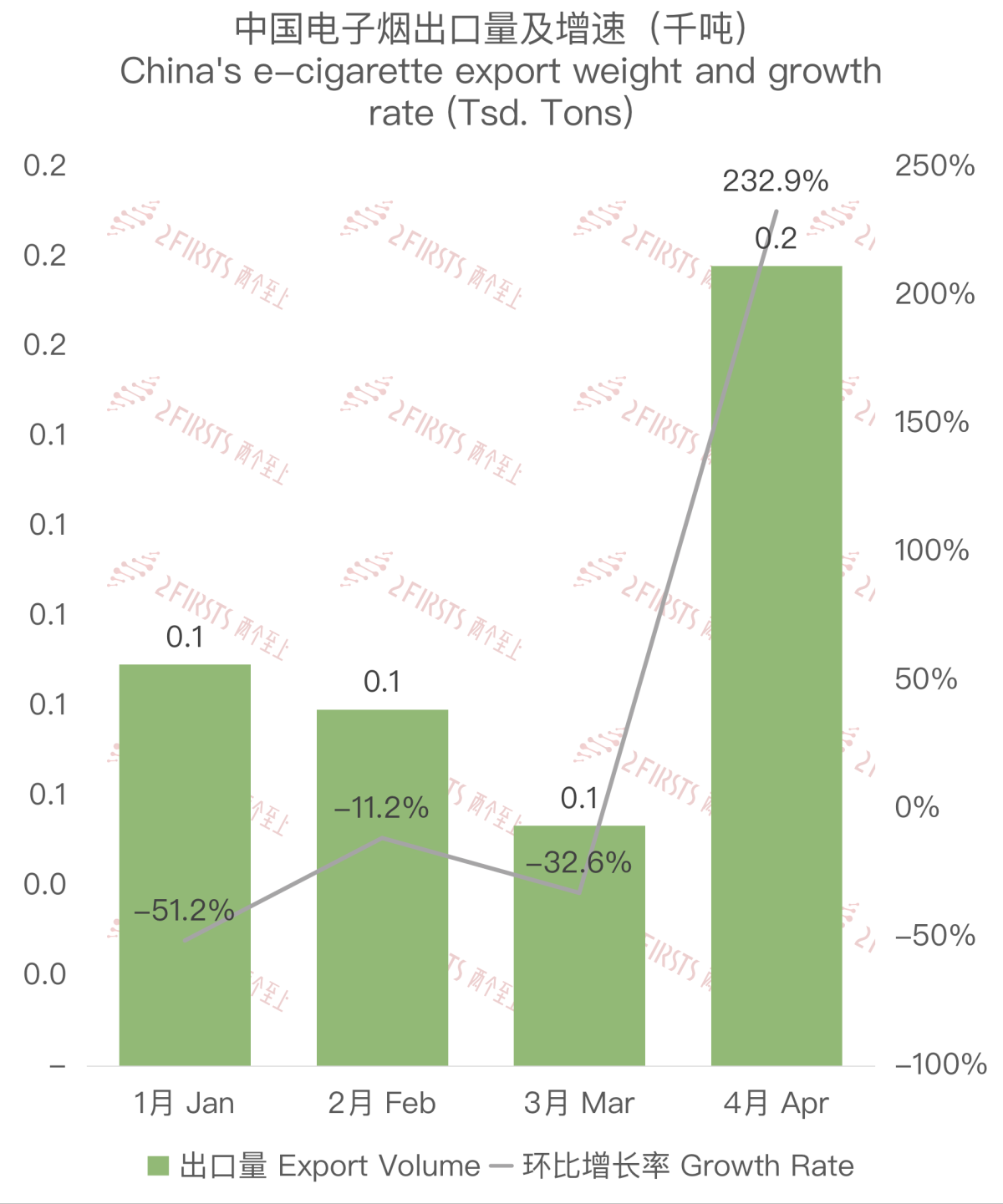
The export volume was approximately 178 tons, an increase of 232.86% on a monthly basis and an increase of 136.78% year-on-year.
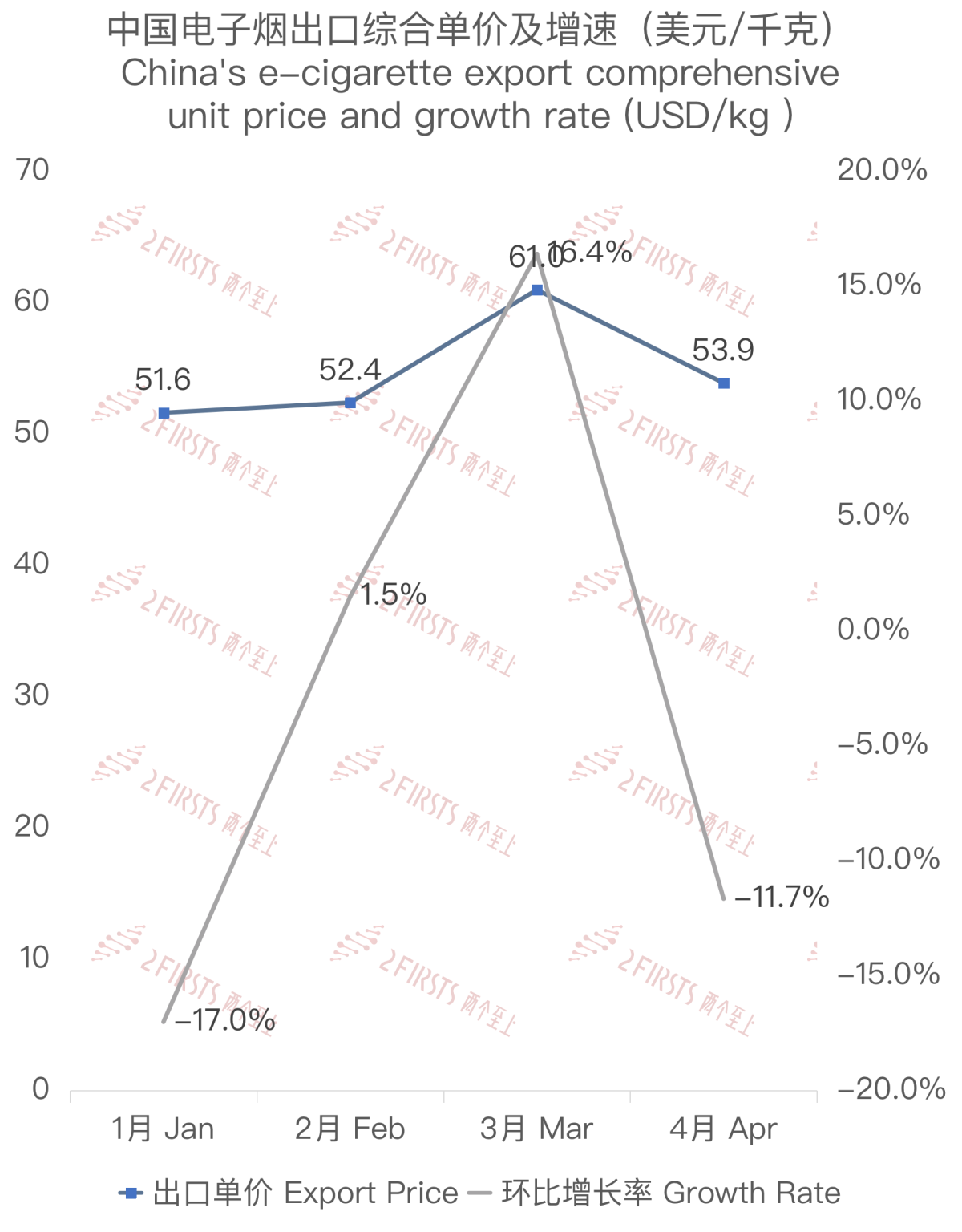
Analysis of China's E-cigarette Exports to Belgium in April 2024
Image source: 2FIRSTS


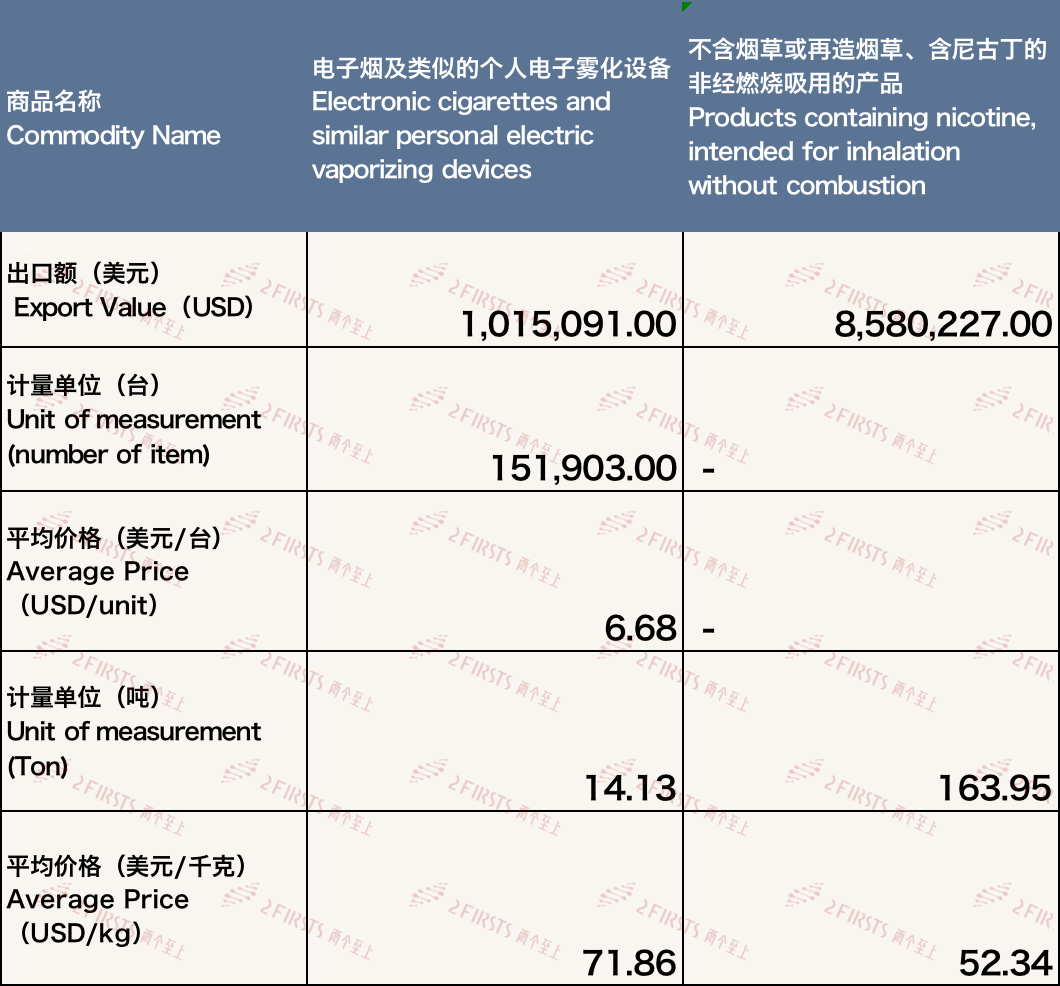
The export unit price is $53.88 per kilogram, a month-on-month decrease of 11.7% and a year-on-year decrease of 26.4%; the average price for "e-cigarette and similar personal electronic vaporization devices" is $6.68 per unit.
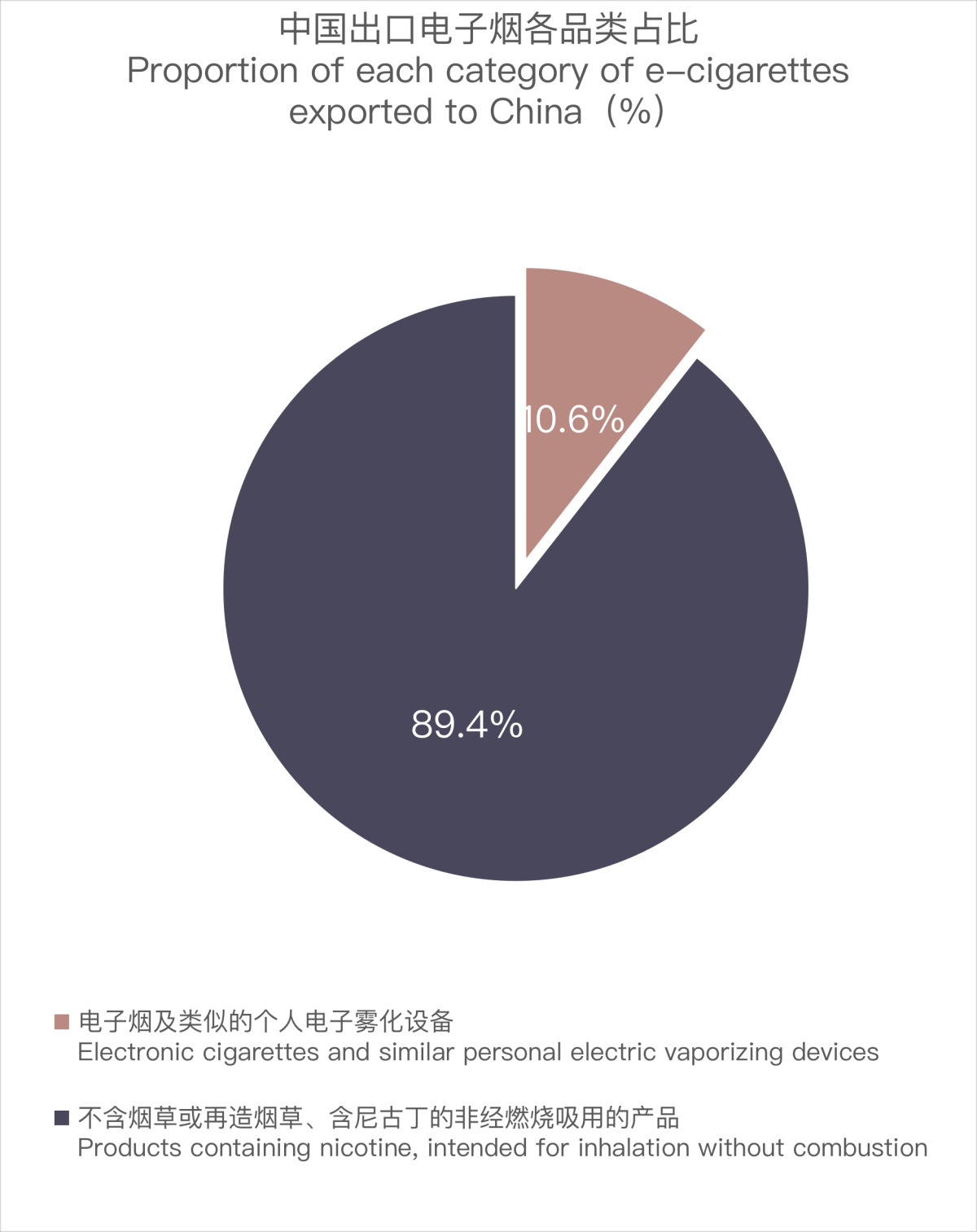
Analysis of China's E-cigarette Exports to Belgium in April 2024
Image source: 2FIRSTS


Among them, "e-cigarettes and similar personal electronic vaporization devices" account for 10.6% of exports, while "nicotine-containing non-combustible products that do not contain tobacco or reconstituted tobacco" account for 89.4%.


We welcome news tips, article submissions, interview requests, or comments on this piece.

Please contact us at info@2firsts.com, or reach out to Alan Zhao, CEO of 2Firsts, on LinkedIn


Notice

1.  This article is intended solely for professional research purposes related to industry, technology, and policy. Any references to brands or products are made purely for objective description and do not constitute any form of endorsement, recommendation, or promotion by 2Firsts.

2.  The use of nicotine-containing products — including, but not limited to, cigarettes, e-cigarettes, nicotine pouchand heated tobacco products — carries significant health risks. Users are responsible for complying with all applicable laws and regulations in their respective jurisdictions.

3.  This article is not intended to serve as the basis for any investment decisions or financial advice. 2Firsts assumes no direct or indirect liability for any inaccuracies or errors in the content.

4.  Access to this article is strictly prohibited for individuals below the legal age in their jurisdiction.


Copyright


This article is either an original work created by 2Firsts or a reproduction from third-party sources with proper attribution. All copyrights and usage rights belong to 2Firsts or the original content provider. Unauthorized reproduction, distribution, or any other form of unauthorized use by any individual or organization is strictly prohibited. Violators will be held legally accountable.

For copyright-related inquiries, please contact: info@2firsts.com


AI Assistance Disclaimer


This article may have been enhanced using AI tools to improve translation and editorial efficiency. However, due to technical limitations, inaccuracies may occur. Readers are encouraged to refer to the cited sources for the most accurate information.

We welcome any corrections or feedback. Please contact us at: info@2firsts.com

FDA Outlines Manufacturing Requirements as Critical to ENDS PMTA Success
FDA officials said manufacturing consistency is a core prerequisite for ENDS PMTA reviews, not a procedural formality. During its February 10, 2026 roundtable, the agency outlined expectations for quality management systems, manufacturing documentation, nicotine control, stability studies, and risk mitigation, emphasizing that robust manufacturing evidence underpins determinations of whether products are appropriate for the protection of public health.
Feb.11
Altria Reports Full-Year 2025 Results: Revenue Down 3.1%, Cigarette Volumes Slide 10% as NJOY Takes Impairment Hit
Altria has released its full-year 2025 results, reporting full-year net revenues of $23.279 billion, down 3.1% year over year. Domestic cigarette shipment volume fell 10% for the year. on! nicotine pouches reached a 7.7% share of the U.S. oral tobacco category in the fourth quarter. NJOY posted $21 million in net revenues in Q4, while full-year net revenues were negative $13 million (mainly due to returns and related factors).
Jan.30 by 2FIRSTS.ai
Georgia Lawmakers Push School Safety Bills Targeting Phones, Vaping and Firearm Safety Education
Georgia lawmakers are weighing new education bills that would tighten classroom phone rules, introduce firearm safety education from an early age, and require vape detectors in all high schools. Supporters argue the measures are needed to address mounting concerns around student safety, mental health and the growing presence of vaping on campuses.
Jan.26 by 2FIRSTS.ai
Vape sellers sue to block Texas law banning e-liquids from China and other “foreign adversaries”
A group of vape distributors and retailers has sued to block enforcement of a Texas law that criminalizes selling or marketing vape products containing e-liquids made wholly or partly in China or in countries designated as “foreign adversaries” by the U.S. Commerce Secretary. The plaintiffs argue the law violates the U.S. Constitution because only Congress may regulate foreign commerce.
Feb.03 by 2FIRSTS.ai
The Volume Illusion: Measuring the Future of Nicotine with the Tools of the Past
As next-generation nicotine products become economically central rather than marginal, traditional volume-based metrics are increasingly unable to explain consumption, risk, and value. Units designed for a cigarette-based economy struggle to describe systems defined by delivery speed, pharmacokinetics, and adaptive user behavior. Drawing on financial reporting, regulation, and nicotine science, a fundamental question: can the future of nicotine still be measured using the tools of its past?
Feb.09 by Alan Zhao | 2Firsts Perspectives
IMF Article Sets Out Three Principles: Cover All Harmful Products, Match Tax Rates to Harm, Improve Cross-Border Coordination
A March 2026 article in Finance & Development, “Taxing Harmful Habits,” argues that taxes on harmful products such as tobacco, alcohol and sugary drinks should better reflect the health harm they cause. The authors propose three principles: capture all harmful products, align tax rates with health harm, and strengthen cross-border coordination to reduce evasion and smuggling.
Mar.24 by 2FIRSTS.ai