Analysis of E-cigarette Export Data to Malaysia in February 2024

Industry Insight by 2FIRSTS Mincy
Apr.01.2024
Analysis of E-cigarette Export Data to Malaysia in February 2024
China's e-cigarette exports to Malaysia in February 2023 saw a significant decrease in both value and volume.

According to the latest trade data from the General Administration of Customs of the People's Republic of China, 2FIRSTS has compiled the e-cigarette export data from China to Malaysia for February 2024. Details are as follows:
Analysis of E-cigarette Export Data to Malaysia in February 2024
Image source: 2FIRSTS (Mincy chart)


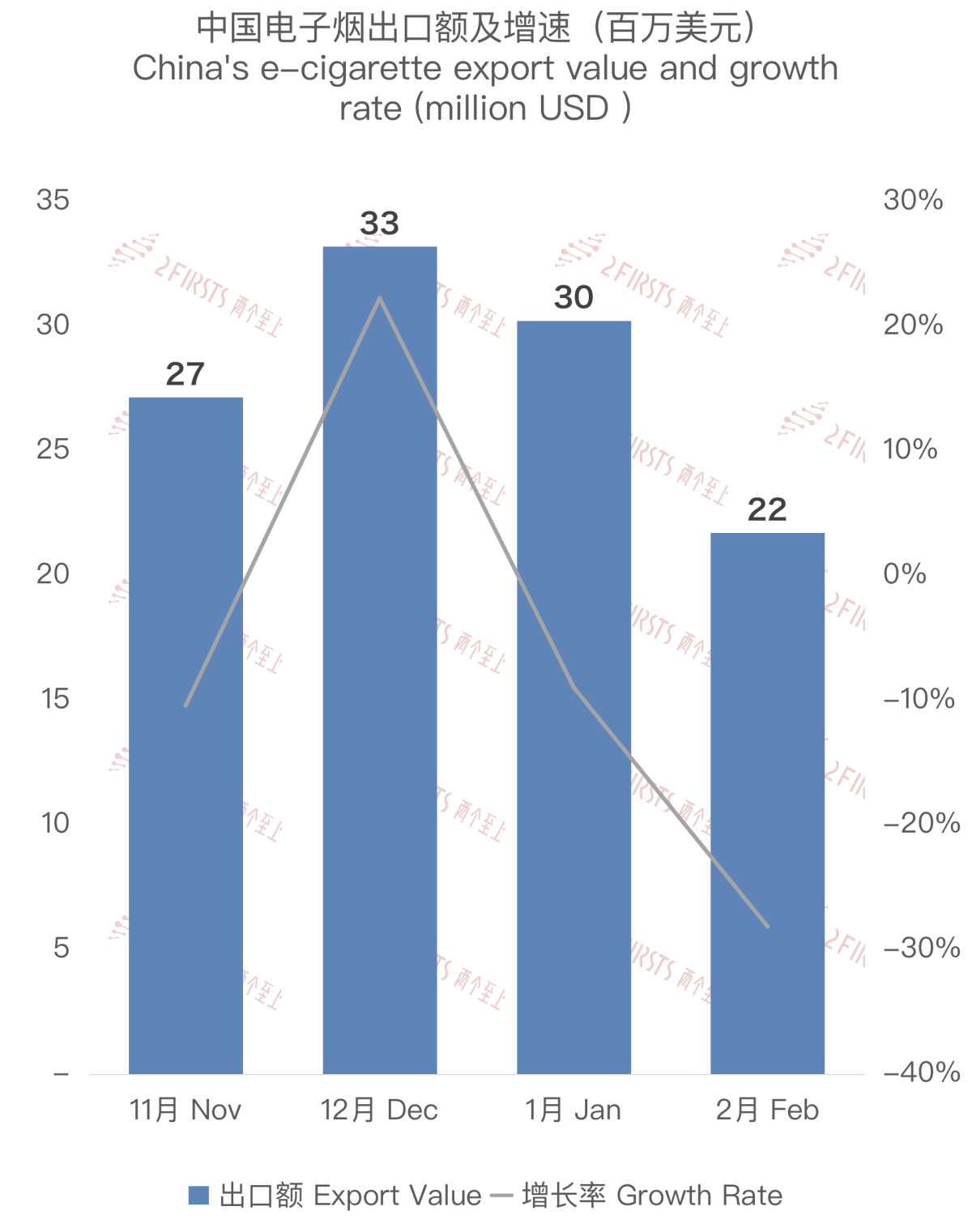
The export value is about $21.72 million, down 28.16% on a month-on-month basis and 19.85% year-on-year.
Analysis of E-cigarette Export Data to Malaysia in February 2024
Image source: 2FIRSTS (drawn by Mincy)


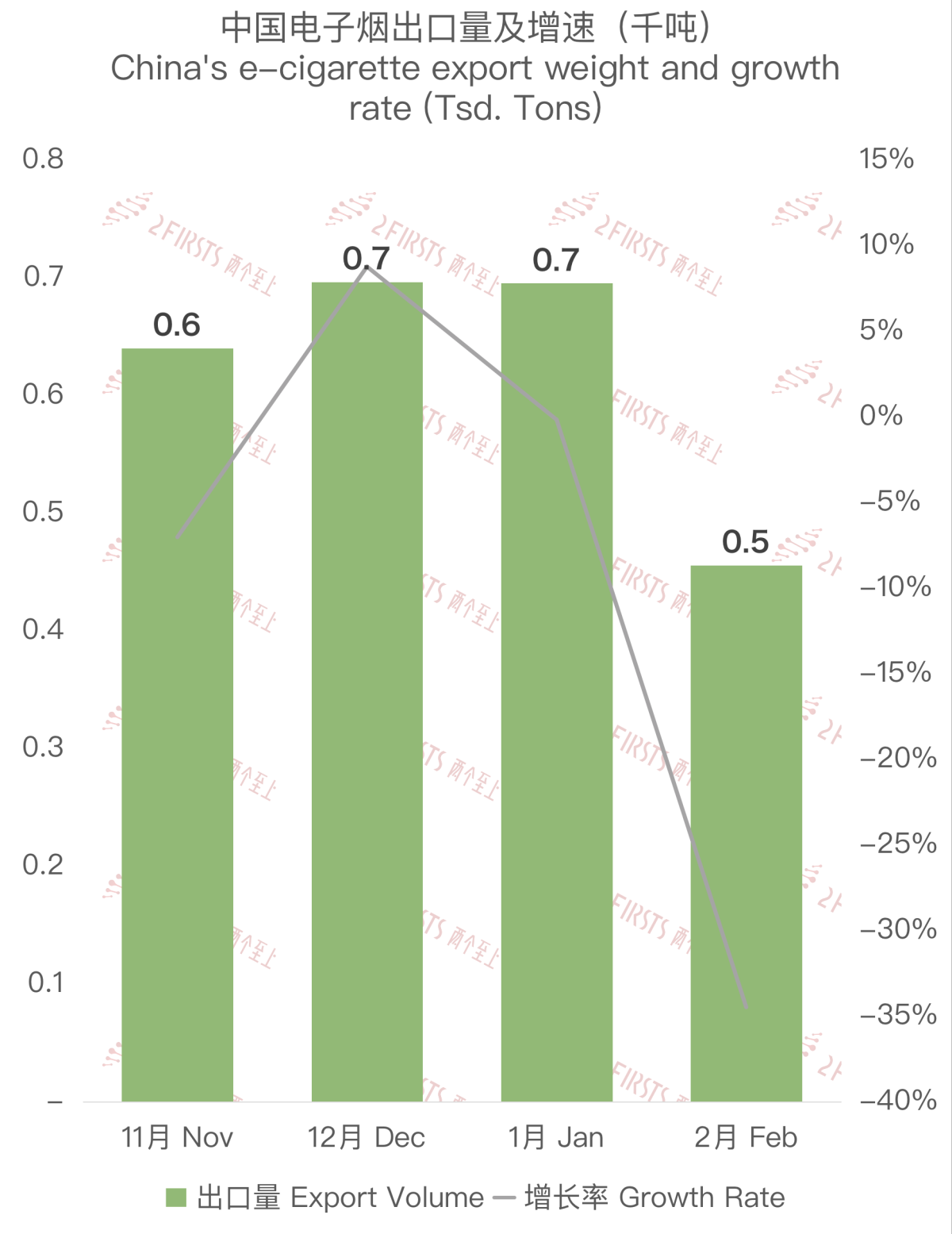
The export volume was approximately 456 tons, a decrease of 34.47% compared to the previous period and a decrease of 18.23% compared to the same period last year.
Analysis of E-cigarette Export Data to Malaysia in February 2024
Image source: 2FIRSTS (Mincy's illustration)


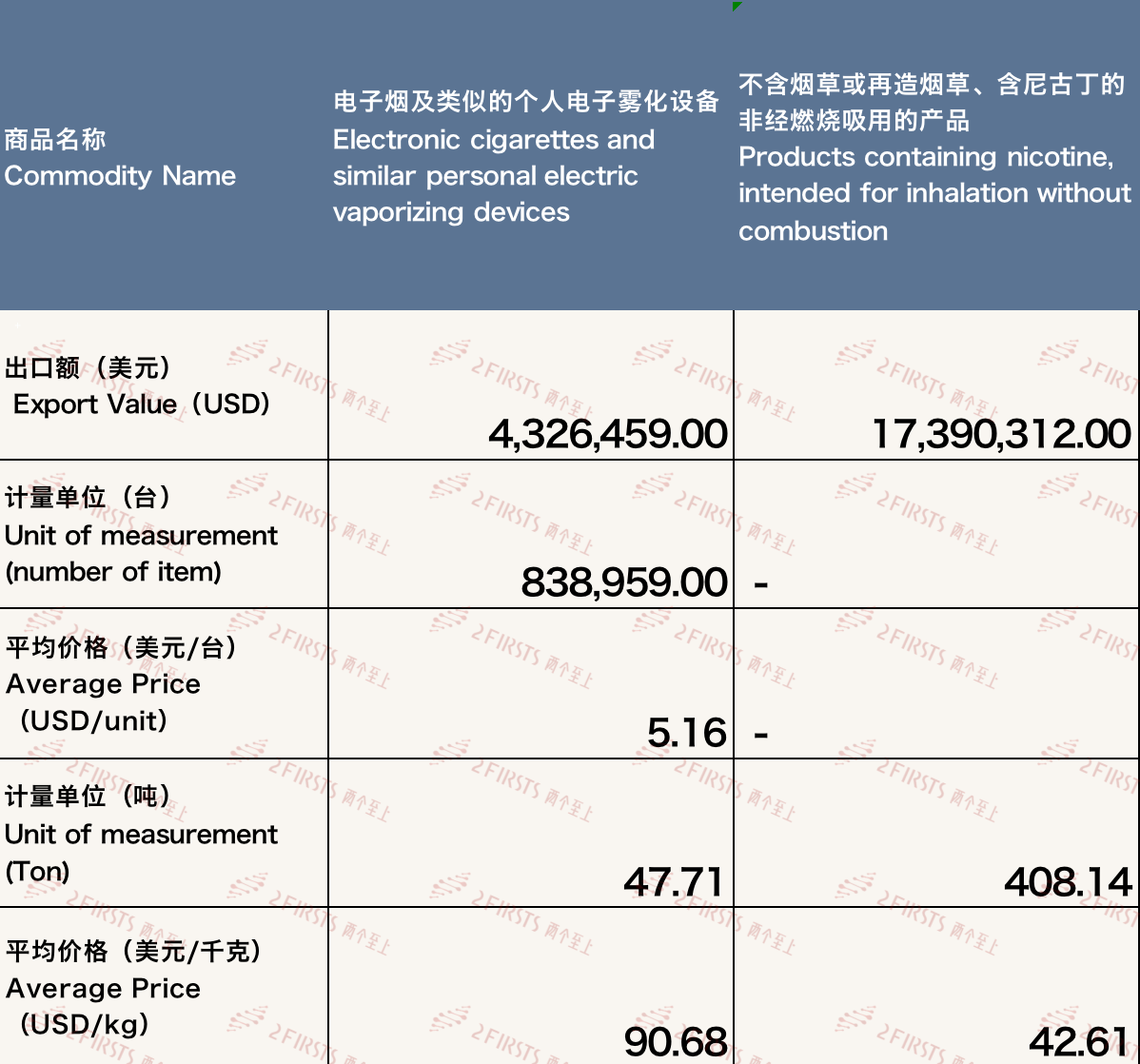
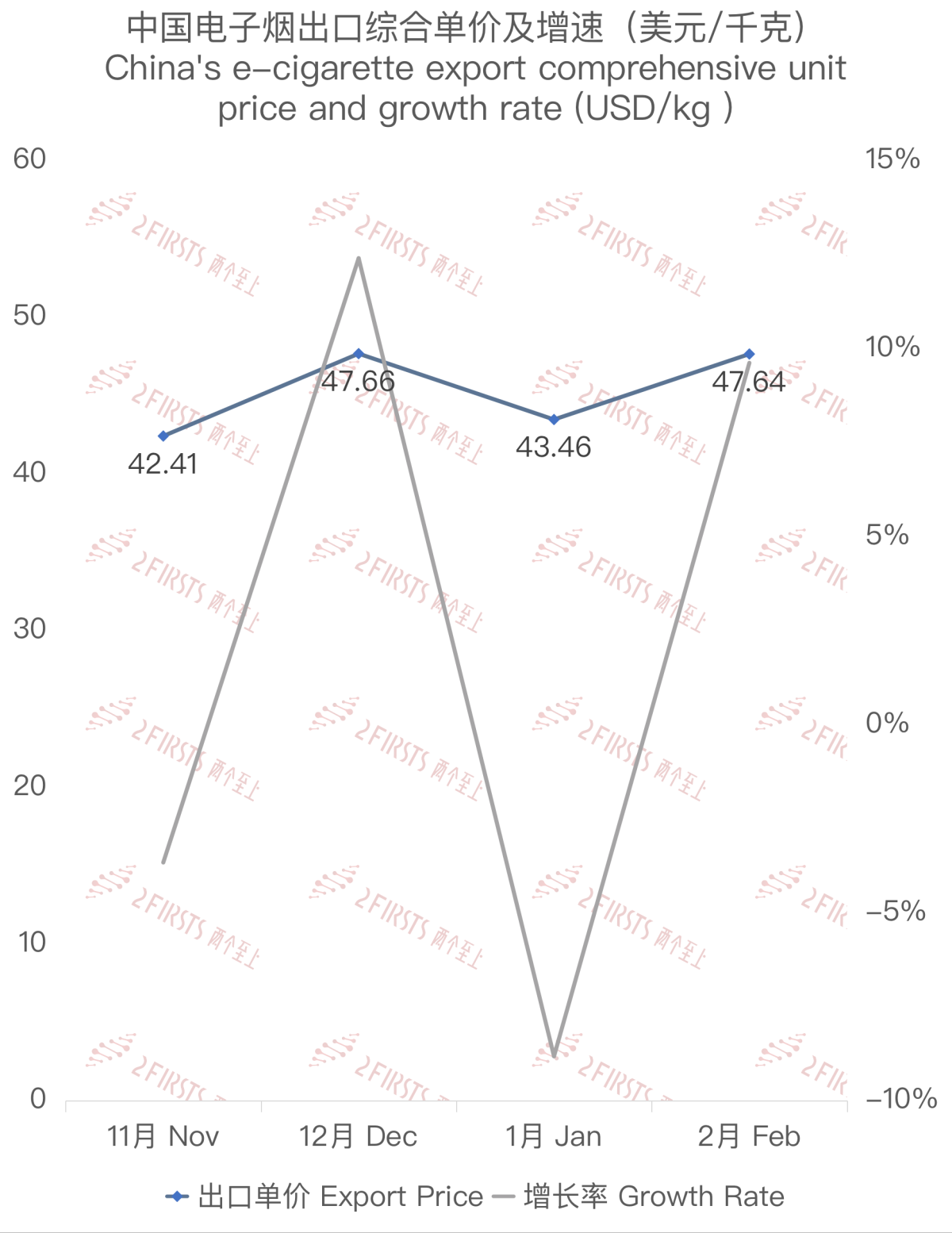
The export unit price is $47.64 per kilogram, a decrease of 9.62% month-on-month and 1.99% year-on-year; the average price of "e-cigarettes and similar personal electronic vaporizers" is $5.16 per unit.
Analysis of E-cigarette Export Data to Malaysia in February 2024
Image source: 2FIRSTS (drawn by Mincy)


Among them, "e-cigarettes and similar personal electronic vaporization devices" account for 19.92% of the export category, while "non-combustible products containing nicotine without tobacco or reconstituted tobacco" account for 80.08%.

Analysis of E-cigarette Export Data to Malaysia in February 2024
Image source: 2FIRSTS (Mincy Mapping)


We welcome news tips, article submissions, interview requests, or comments on this piece.

Please contact us at info@2firsts.com, or reach out to Alan Zhao, CEO of 2Firsts, on LinkedIn


Notice

1.  This article is intended solely for professional research purposes related to industry, technology, and policy. Any references to brands or products are made purely for objective description and do not constitute any form of endorsement, recommendation, or promotion by 2Firsts.

2.  The use of nicotine-containing products — including, but not limited to, cigarettes, e-cigarettes, nicotine pouchand heated tobacco products — carries significant health risks. Users are responsible for complying with all applicable laws and regulations in their respective jurisdictions.

3.  This article is not intended to serve as the basis for any investment decisions or financial advice. 2Firsts assumes no direct or indirect liability for any inaccuracies or errors in the content.

4.  Access to this article is strictly prohibited for individuals below the legal age in their jurisdiction.


Copyright


This article is either an original work created by 2Firsts or a reproduction from third-party sources with proper attribution. All copyrights and usage rights belong to 2Firsts or the original content provider. Unauthorized reproduction, distribution, or any other form of unauthorized use by any individual or organization is strictly prohibited. Violators will be held legally accountable.

For copyright-related inquiries, please contact: info@2firsts.com


AI Assistance Disclaimer


This article may have been enhanced using AI tools to improve translation and editorial efficiency. However, due to technical limitations, inaccuracies may occur. Readers are encouraged to refer to the cited sources for the most accurate information.

We welcome any corrections or feedback. Please contact us at: info@2firsts.com

CBP and FDA Seize 18 Million Illegal Vapes Worth $175 Million in Maritime Cargo Operation
U.S. Customs and Border Protection (CBP) announced that more than 18 million illegal e-cigarettes valued at over $175 million were seized during “Operation Red Mist,” a joint enforcement initiative involving the U.S. Coast Guard and the FDA. The operation primarily targeted maritime vape shipments originating from China and focused on combating illicit importation, transportation, and distribution activities.
Regulations
May.14
Australian State Targets Illegal Tobacco Retailers With Tougher Closure Powers
According to Reuters, Australia’s state of Victoria introduced legislation to give police and the state tobacco licensing regulator stronger powers to shut businesses selling illegal tobacco, with non-compliant operators facing fines of more than A$2.4 million and up to 20 years in prison.
Jun.05
AP Questions FDA Rationale as Glas Fruit-Flavored Vapes Won Authorization Without Added Cessation Benefit
The U.S. Food and Drug Administration (FDA) recently authorized two fruit-flavored vaping products from Glas, but a newly released agency memo shows the products did not demonstrate greater smoking-cessation benefits than tobacco-flavored e-cigarettes. The Associated Press said the findings are likely to raise further questions about the FDA’s regulatory rationale and standards for flavored vaping products.
Jun.12
South Korea Moves Against Synthetic Nicotine Regulatory Gap as Three Companies Face Tobacco Business Act Probe
South Korea’s Ministry of Finance and Economy said on May 4 that it requested the Daejeon Metropolitan Police Agency and Gyeonggi Nambu Provincial Police Agency to investigate three sales companies on suspicion of violating the Tobacco Business Act.
May.06 by 2FIRSTS.ai
Argentina’s New Nicotine Rules Draw Cautious Optimism and Market Concerns, Local Tobacco Harm Reduction Advocate Says
Argentina’s new tobacco and nicotine framework marks a shift from prohibition toward registration, traceability and health surveillance. Argentine THR advocate Juan Facundo Teme told 2Firsts that adult consumers and parts of the local commercial sector are cautiously optimistic, but concerns remain over flavor limits, registration costs and market access. The policy’s implementation may determine whether Argentina can move informal sales into regulated channels.
May.11
Special Report | Russian Vape Compromise Faces First Hurdles
Russia’s regional vape-ban model is facing early legal and political tests, as Perm Krai moves ahead before federal legislation is fully adopted. The case highlights uncertainty over regional authority, concerns from business groups about market fragmentation, and the risk that pressure against regional bans could revive calls for a stricter nationwide prohibition.
Industry Insight
May.28