Australian Government Implements Strict Regulations on E-Cigarettes

Regulations by 2FIRSTS.ai
Dec.05.2023
Australian Government Implements Strict Regulations on E-Cigarettes
Australia to ban disposable e-cigarette imports from January 1, 2024, while improving access to medical e-cigarettes to aid smokers quitting.

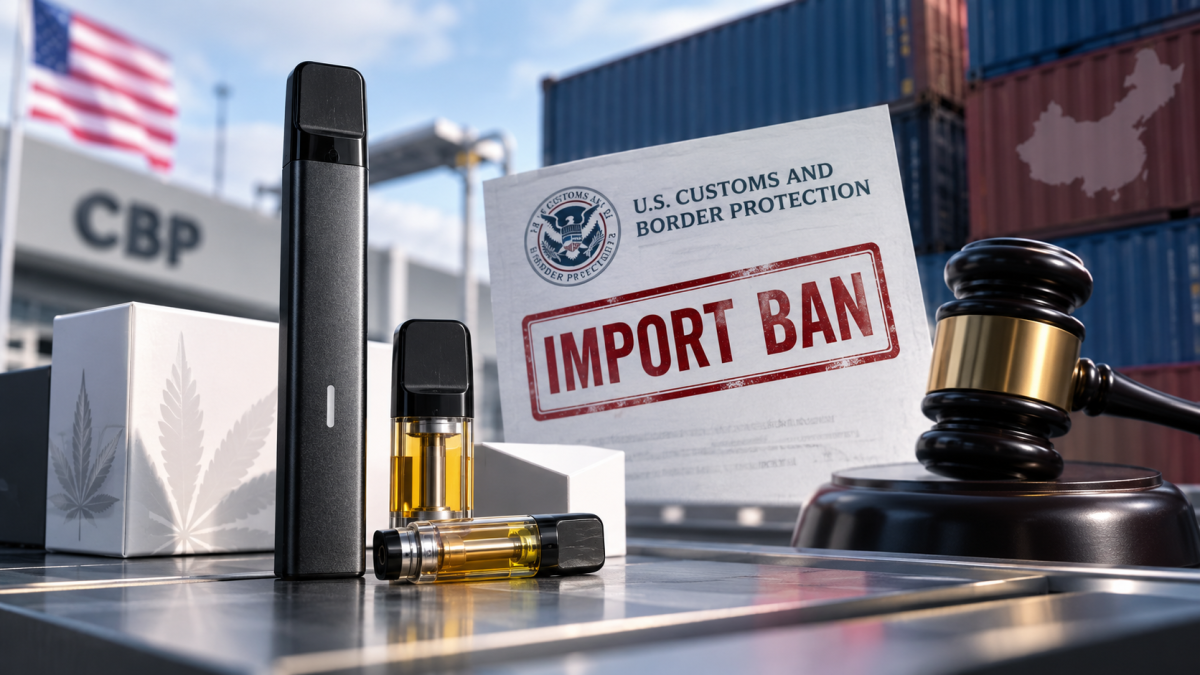
The Australian government cabinet has made an official decision to ban the importation of disposable e-cigarettes starting from January 1, 2024. Additionally, they have also implemented measures to enhance the usage of medical e-cigarettes, aiming to provide assistance to individuals who are looking to quit smoking.


Starting from March 1, 2024, the Australian government will implement further legislation, including the cessation of personal e-cigarette imports, the prohibition of non-therapeutic e-cigarette imports, and the requirement for therapeutic e-cigarette importers and manufacturers to report to the Australian Therapeutic Goods Administration on their compliance with relevant product standards. Additionally, they will need to obtain licenses from the Australian government's Office of Drug Control and import permits.


We welcome news tips, article submissions, interview requests, or comments on this piece.

Please contact us at info@2firsts.com, or reach out to Alan Zhao, CEO of 2Firsts, on LinkedIn


Notice

1.  This article is intended solely for professional research purposes related to industry, technology, and policy. Any references to brands or products are made purely for objective description and do not constitute any form of endorsement, recommendation, or promotion by 2Firsts.

2.  The use of nicotine-containing products — including, but not limited to, cigarettes, e-cigarettes, nicotine pouchand heated tobacco products — carries significant health risks. Users are responsible for complying with all applicable laws and regulations in their respective jurisdictions.

3.  This article is not intended to serve as the basis for any investment decisions or financial advice. 2Firsts assumes no direct or indirect liability for any inaccuracies or errors in the content.

4.  Access to this article is strictly prohibited for individuals below the legal age in their jurisdiction.


Copyright


This article is either an original work created by 2Firsts or a reproduction from third-party sources with proper attribution. All copyrights and usage rights belong to 2Firsts or the original content provider. Unauthorized reproduction, distribution, or any other form of unauthorized use by any individual or organization is strictly prohibited. Violators will be held legally accountable.

For copyright-related inquiries, please contact: info@2firsts.com


AI Assistance Disclaimer


This article may have been enhanced using AI tools to improve translation and editorial efficiency. However, due to technical limitations, inaccuracies may occur. Readers are encouraged to refer to the cited sources for the most accurate information.

We welcome any corrections or feedback. Please contact us at: info@2firsts.com

Exclusive: Altria Confirms FDA Grants Marketing Authorization to on! PLUS, Ending More Than a Year of PMTA Review
Altria on December 19 confirmed that six on! PLUS nicotine pouch products had received U.S. FDA marketing authorization, ending a PMTA review lasting more than a year after the company moved ahead with launch plans before clearance.
Regulations
Dec.20
Philip Morris International Restructures to Drive Its Smoke-Free Transformation
Philip Morris International (PMI) announced a new organizational model effective January 1, 2026, creating two main business units — PMI International and PMI U.S. — to accelerate its smoke-free strategy. The restructuring replaces four regional segments with three: International Smoke-Free, International Combustibles, and U.S., enhancing agility, governance, and long-term growth in reduced-risk products.
Nov.05 by 2FIRSTS.ai
Great Wall Cigar explores global industrial cooperation via embassy visits in Beijing
A delegation from the Great Wall Cigar Factory of China Tobacco Sichuan Industrial Co., Ltd. recently visited the embassies of Cuba, Morocco, and Indonesia in Beijing to explore opportunities for industrial cooperation and trade expansion.
Dec.08
U.S. Nicotine Pouch Sales Surge, Forcing Convenience Stores to Rethink Backbar Layouts
U.S. convenience stores are restructuring backbar displays as nicotine pouches and other modern oral products gain space amid regulatory and product-mix shifts. The New York Association of Convenience Stores reports nicotine pouch sales are up over 40% this year, while some chains are trimming cigarette facings and testing zero-nicotine and herbal alternatives.
Dec.04 by 2FIRSTS.ai
Czech Republic to Tighten E-Cigarette Rules in December, Ban Candy Flavours and Cannabinoids
Czech Republic will tighten regulations on the sale and labelling of e-cigarettes from December. Manufacturers will have seven months to sell existing stock, after which candy-flavoured or cannabinoid-containing e-cigarettes will be banned. A survey by the National Institute of Public Health (SZÚ) found that nearly 14% of the population used e-cigarettes in 2024 — almost triple the rate five years earlier.
Nov.18 by 2FIRSTS.ai
South Korea’s National Assembly Passes Law Classifying E-Cigarettes as Tobacco Products with Full Equivalent Regulation
South Korea’s National Assembly recently passed a comprehensive package of 79 bills that, among other measures, formally classifies liquid vapes — e-cigarette products using nicotine-containing e-liquids — as tobacco products. These products will now be subject to the same taxation, sales restrictions and advertising controls as traditional cigarettes, and the vaping industry in South Korea is expected to face significant adjustments in compliance costs, market access and business strategy.
Dec.03