Australian Retailer Fined $88,000 for Selling Nicotine E-Cigarettes

May.12.2023
Australian Retailer Fined $88,000 for Selling Nicotine E-Cigarettes
An Australian dealer was fined AUD 88,000 for selling e-cigarettes containing nicotine, which is unlawful in Queensland.

On May 12, according to Australian media outlet ABC, a dealer in Queensland, Australia was fined AUD 88,000 for selling electronic cigarettes containing nicotine.


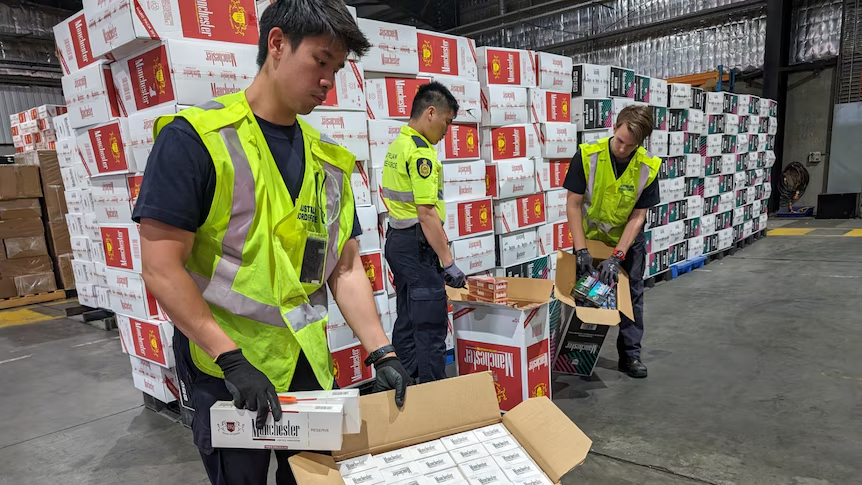
According to reports, the distributor in question is owned by M&R Trading Pty Ltd and conducts electronic cigarette transactions under the name Zam Zam Supermarket. Last May, the community in which the distributor operates filed a complaint. Authorities seized 45,000 electronic cigarettes and imposed a fine of AUD 88,000 after receiving the complaint.


It has been revealed that selling nicotine-containing electronic cigarettes in Queensland is illegal unless done through prescription, and due to nicotine being a regulated poison, authorities have the power to enforce strict regulations.


A statement from the public health department regarding the illegal sales practices of the dealer stated, "During the sentencing period, the local judge cited declarations indicating that children were purchasing electronic cigarettes from the company and condemned such behavior, putting young people at avoidable health risks.


Related legislation:


The Australian federal government has recently announced that electronic cigarettes can only be purchased at pharmacies using a prescription, and the sale of e-cigarettes in retail outlets is prohibited. Additionally, the use of colorful packaging and flavoring additives is also banned.


Disclaimer

This article is provided solely for professional research, industry discussion, and informational purposes. Any references to brands, companies, products, technologies, or policies are made for factual reporting and analytical purposes only, and do not constitute endorsement, recommendation, promotion, or advertising by 2Firsts.

Nicotine-containing products, including but not limited to cigarettes, e-cigarettes, heated tobacco products, and nicotine pouches, carry significant health risks. Readers are responsible for complying with all applicable laws and regulations in their respective jurisdictions, including age restrictions and access limitations.

The information contained in this article should not be regarded as investment, legal, medical, regulatory, or commercial advice. While 2Firsts strives to ensure the accuracy and reliability of its content, it does not assume liability for any direct or indirect loss arising from errors, omissions, inaccuracies, or reliance on the information contained herein.

This article is not intended for individuals below the legal age for accessing tobacco or nicotine-related information in their jurisdiction.


Copyright Notice

This article is either original content produced by 2Firsts or content reproduced, translated, summarized, or adapted from third-party sources with attribution where applicable. The intellectual property rights of the original content remain with 2Firsts or the respective original rights holders.

No individual or organization may copy, reproduce, distribute, republish, modify, translate, or otherwise use this content without prior authorization. Any unauthorized use may result in legal action.

For copyright-related inquiries, corrections, or removal requests, please contact: info@2firsts.com.


AI-Assisted Translation and Editing Notice

Portions of this article may have been translated, edited, or reviewed with the assistance of artificial intelligence tools to improve efficiency and readability. Due to the limitations of AI-assisted translation and editing, discrepancies, omissions, or inaccuracies may exist when compared with the original source.

Where applicable, readers are advised to refer to the original source for the most complete and accurate information. If you identify any errors or believe that any content infringes upon your rights, please contact us at info@2firsts.com, and we will review and address the matter promptly.

China Tobacco Yunnan files patent for cellulose-free nicotine pouch scaffold to replace microcrystalline cellulose
China Tobacco Yunnan Industrial Co., Ltd. has filed a patent application for a cellulose-free scaffold material for nicotine pouches, proposing a combination of bioceramic material, polydextrose and sugar alcohols to replace conventional microcrystalline cellulose and cellulose derivatives. The filing aims to address issues including powdery mouthfeel, residue and limited release control, while also reducing reliance on existing cellulose-based patent portfolios. In patent examples, one fast-release formulation reached a nicotine release rate of 50% at 10 minutes and more than 90% at 20 minutes.
Sep.02
PMI Q2 Revenue Rises 10.4% as IQOS and VEEV Expand, U.S. ZYN Growth Slows
Philip Morris International’s second-quarter net revenues rose 10.4% to a record $11.19 billion, as heated tobacco and e-vapor expanded across international markets. IQOS remained the main smoke-free growth engine, while VEEV shipments jumped 55.1%. In the United States, however, ZYN shipments increased just 1.8% and consumer offtake was broadly flat to slightly higher. Cigarette volumes also rose, showing that PMI’s transformation is advancing, but growth is becoming increasingly uneven across categories and markets.
PMI
Jul.22
Gallup Tracks Nicotine Pouch Use for the First Time: 11% of U.S. Adults Smoke, 9% Vape and 4% Use Nicotine Pouches
Gallup’s 2026 Consumption Habits survey tracked nicotine pouch use for the first time. The survey found that 11% of U.S. adults reported smoking cigarettes in the past week, 9% reported vaping, and 4% reported using nicotine pouches. Cigarette smoking remained near Gallup’s long-term low, while adult vaping rates stayed relatively stable in recent years.
Market
Aug.25 by 2Firsts Perspectives
IQOS Enters Kantar BrandZ Global Top 100 for First Time, Valued at $36.6 Billion and Ranked No. 74
Philip Morris International’s IQOS has entered the Kantar BrandZ Top 100 Most Valuable Global Brands for the first time, ranking No. 74 with a brand value of $36.634 billion and becoming one of only three newcomers to the 2026 ranking. Kantar said the combined value of the Global Top 100 reached $13.1 trillion, up 22% year on year, while the threshold for entry rose to a record high. PMI says IQOS has more than 35 million users worldwide and surpassed $10 billion in annual net revenues within a decade of launch.
Sep.03
From Nicotine Salts to Cocrystals: China’s Shenzhen Huabao institute explores a more stable form for sustained nicotine release
China-based Shenzhen Huabao Collaborative Innovation Technology Research Institute Co., Ltd. has filed a patent application for a nicotine-ascorbic acid cocrystal, exploring a new solid-state form of nicotine. The patent proposes applications across e-liquids, heated tobacco sticks, oral tobacco, chewing tobacco and snuff. In nicotine pouch tests disclosed in the filing, cocrystal formulations showed less than a 6% decline in nicotine content after three months of accelerated storage and a release profile combining early-stage release with sustained delivery over 60 minutes. The filing reflects exploration of nicotine forms beyond conventional nicotine base and nicotine salts.
Aug.13
U.S. Ninth Circuit Upholds FDA Denial of MH Global’s Flavored Vape PMTA Applications
The U.S. Court of Appeals for the Ninth Circuit upheld the FDA’s denial of MH Global LLC’s applications to market flavored electronic nicotine delivery systems (ENDS). The court ruled that FDA’s comparative-efficacy framework, which requires applicants to show that flavored products provide greater cessation or switching benefits than tobacco-flavored alternatives, is consistent with the Tobacco Control Act’s “appropriate for the protection of the public health” standard. The court also found that FDA was not required to establish the framework through notice-and-comment rulemaking.
Aug.26