Bangkok Public Health Office Concerned about Lack of Protective Measures for E-cigarettes, Marijuana

Regulations by 2FIRSTS.ai
Jan.23.2024
Bangkok Public Health Office Concerned about Lack of Protective Measures for E-cigarettes, Marijuana
Bangkok Public Health Office (PSOB) expresses concern over the lack of protective measures for e-cigarettes, marijuana, and kratom in educational and medical institutions.

According to the Bangkok City Government News website, Suthat Sunthrajati, Director of the Bangkok Public Health Office (PSOB), has recently expressed concern about the need to enhance protective measures for e-cigarettes, marijuana, and kratom leaves in educational and healthcare institutions.


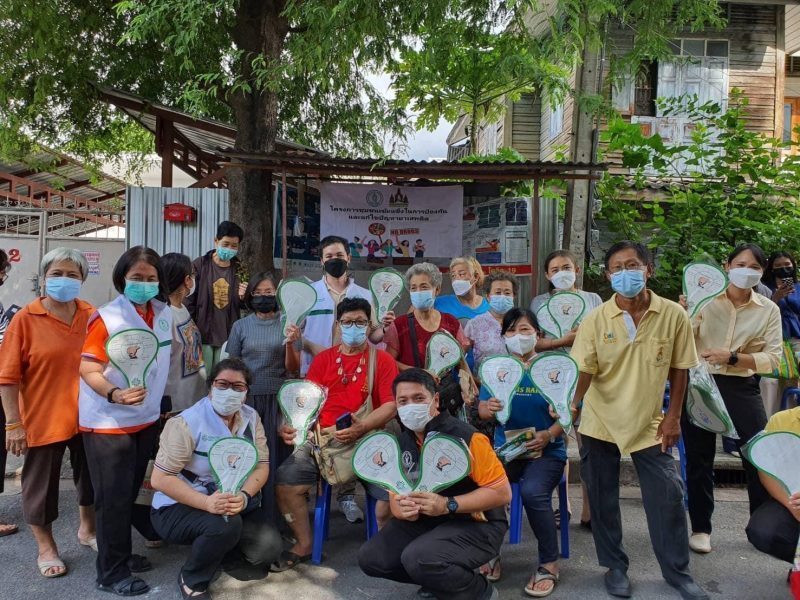
Suanat, the spokesperson, revealed that the Bangkok Public Health Office also serves as the secretary to the Bangkok Tobacco Control Committee. This committee is currently working towards finding solutions to the growing issue of e-cigarette use among children, adolescents, and the general public in the Bangkok area through collaborative efforts with various sectors, including the public, private, and social sectors.


The office also actively promotes awareness of the dangers of e-cigarettes and implements preventive measures. These awareness campaigns primarily target children and teenagers and are conducted with the assistance of schools and health organizations. Additionally, there is strengthened regulation of merchants selling e-cigarettes to ensure compliance with the law, ultimately improving public health in the city.


We welcome news tips, article submissions, interview requests, or comments on this piece.

Please contact us at info@2firsts.com, or reach out to Alan Zhao, CEO of 2Firsts, on LinkedIn


Notice

1.  This article is intended solely for professional research purposes related to industry, technology, and policy. Any references to brands or products are made purely for objective description and do not constitute any form of endorsement, recommendation, or promotion by 2Firsts.

2.  The use of nicotine-containing products — including, but not limited to, cigarettes, e-cigarettes, nicotine pouchand heated tobacco products — carries significant health risks. Users are responsible for complying with all applicable laws and regulations in their respective jurisdictions.

3.  This article is not intended to serve as the basis for any investment decisions or financial advice. 2Firsts assumes no direct or indirect liability for any inaccuracies or errors in the content.

4.  Access to this article is strictly prohibited for individuals below the legal age in their jurisdiction.


Copyright


This article is either an original work created by 2Firsts or a reproduction from third-party sources with proper attribution. All copyrights and usage rights belong to 2Firsts or the original content provider. Unauthorized reproduction, distribution, or any other form of unauthorized use by any individual or organization is strictly prohibited. Violators will be held legally accountable.

For copyright-related inquiries, please contact: info@2firsts.com


AI Assistance Disclaimer


This article may have been enhanced using AI tools to improve translation and editorial efficiency. However, due to technical limitations, inaccuracies may occur. Readers are encouraged to refer to the cited sources for the most accurate information.

We welcome any corrections or feedback. Please contact us at: info@2firsts.com

Bringing Tax and Insurance Into Nicotine Regulation: Insights From a Tobacco Harm-Reduction Report
A smoke-free nicotine policy report argues that tobacco harm reduction should move beyond product bans and health warnings into tax policy, insurance pricing and risk-based regulation. While some projections remain open to debate, the report highlights a wider challenge: nicotine products, technologies and consumer behavior have changed sharply over the past decade, and regulatory systems may need new tools to better align tobacco control with harm-reduction goals.
Jun.08
Australian State Targets Illegal Tobacco Retailers With Tougher Closure Powers
According to Reuters, Australia’s state of Victoria introduced legislation to give police and the state tobacco licensing regulator stronger powers to shut businesses selling illegal tobacco, with non-compliant operators facing fines of more than A$2.4 million and up to 20 years in prison.
Jun.05
Michael Olise’s World Cup Locker-Room Photo Puts Nicotine Pouches in the Sports Business Spotlight
Several European sports outlets have reported on a suspected nicotine pouch seen in French footballer Michael Olise’s locker photo, bringing football’s long-running “snus” culture back into public view and highlighting brand visibility, product classification and public-health debate around nicotine pouches in sports settings.
News
Jun.25 by 2Firsts Perspectives
 BAT Bangladesh Cigarette Sales Fall 14%, Q1 Profit Drops 34%
BAT Bangladesh Cigarette Sales Fall 14%, Q1 Profit Drops 34%
British American Tobacco Bangladesh reported a 14% year-on-year decline in cigarette sales volume and a 34% drop in first-quarter profit, highlighting mounting pressure from inflation, taxation, and weakening consumer spending in Bangladesh.
News
May.18
BAT Restructuring to Affect 9,000 Roles as Tobacco Group Pushes Cost Cuts and AI
British American Tobacco (BAT) plans to cut about 5,500 jobs globally and shift around 3,500 roles to strategic partners by the end of 2026, affecting about 9,000 roles in total, as the company seeks to simplify operations, strengthen technology capabilities and deliver £600 million in annual savings by 2028.
BAT
Jun.29
 Arizona Rules Extend Across Alternative Nicotine Supply Chain, With Licensing From 2028
Arizona Rules Extend Across Alternative Nicotine Supply Chain, With Licensing From 2028
Arizona Governor Katie Hobbs has signed HB 4001, bringing alternative nicotine products under a new state regulatory framework that will require maker and distributor licensing from 2028 and ban packaging designs that could appeal to minors.
Regulations
Jun.23