British American Tobacco (BAT) Korea has cut the prices of its heated tobacco products by half within two months of their launch, aiming to increase sales through lower prices. However, the market is questioning the sustainability of this strategy as the company's profitability continues to deteriorate, according to South Korean media outlet Today's Economy.
From April 17, BAT has been selling Glo Hyper X2 at a 50% discount, lasting until June 8, effectively making it a price reduction. The company has increased its market share through continuous promotions. In 2021, BAT discounted Glo's price by 90% to 9,500 KRW, pre-selling 100,000 units within three weeks, and maintained this price throughout the year.
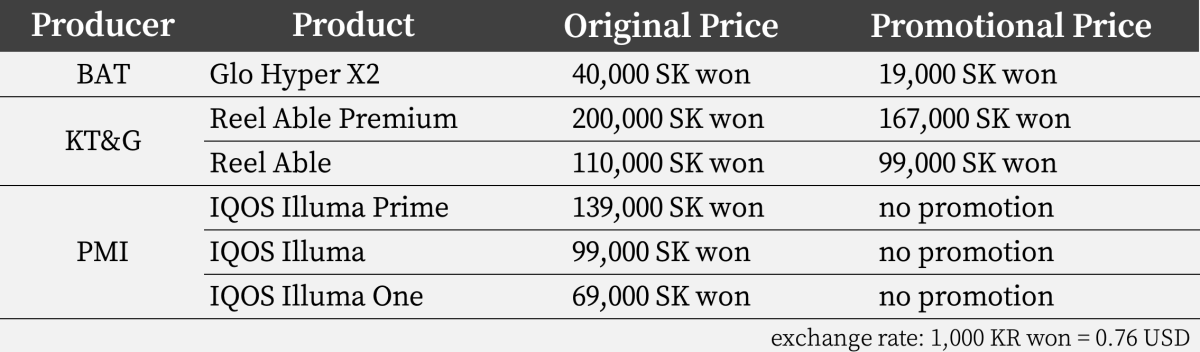
KT&G and PMI Korea dominate the South Korean heated tobacco product market with approximately 40% share each, but BAT's low-price strategy has increased its market share from 6.04% in 2020 to 11.72% in 2021.
BAT's strategy involves gaining profits by introducing proprietary replacement tobacco sticks, promoting exclusive sticks for promotional products incompatible with other heated tobacco products in its portfolio. The idea is that the more users a product has, the greater its tobacco stick sales will be.
However, analysts say this strategy is causing BAT's profitability to decline. Last year, BAT Korea's revenue increased 14.3% year-on-year to KRW 539.8 billion, but operating profit decreased by 11.9% to KRW 44.6 billion, and operating profit margin dropped from 10.7% to 8.3%.
The tobacco industry believes the price threshold for low-end heated tobacco products is between KRW 30,000 and KRW 40,000 to maintain a profit margin. Sales prices below this threshold would mean a loss in costs.
An industry insider assessed, "This is a nascent market with only a 15% share in the entire tobacco market, so a product expansion strategy may work," but added, "BAT will have difficulty continuing to bear the losses from promoting low-priced products."
In response, a BAT spokesperson said, "We will focus on product sales to establish our position in the heated tobacco market."
Special Statement: This article is for internal research and communication within the industry only and does not endorse any brands or products.
*The content of this article is written after the extraction, compilation and integration of multiple information for exchange and learning purposes. The copyright of the summary information still belongs to the original article and its author. If any infringement is found, please contact us to delete it.