Be Vape Vigilant: Birmingham Retailers Take Action Against Underage Sales

Regulations by 2FIRSTS.ai
Dec.12.2023
Be Vape Vigilant: Birmingham Retailers Take Action Against Underage Sales
E-cigarette retailers in Birmingham are actively responding to a new nationwide initiative aimed at reporting sales to minors.

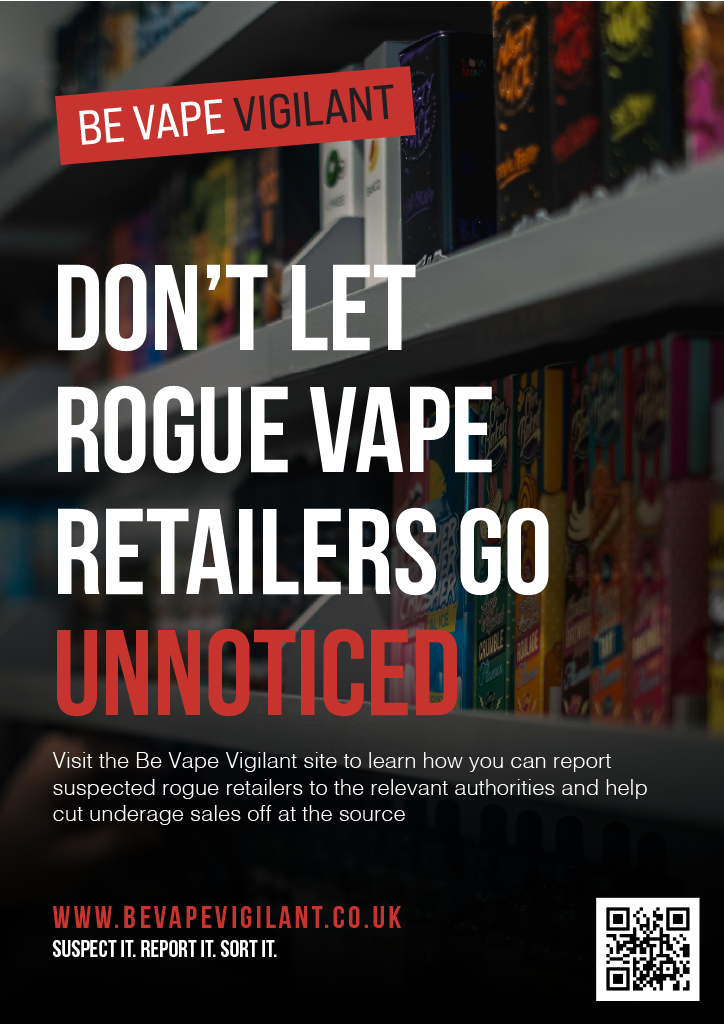
According to a recent report by Grapevine Birmingham, e-cigarette retailers in Birmingham, UK are now actively responding to a new nationwide initiative aimed at identifying and reporting instances where e-cigarettes are believed to be sold to underage individuals.


The "Be Vape Vigilant" initiative was launched by the UK Vaping Industry Association (UKVIA), with support from trade standards, convenience store associations, and the wider retail industry.


Retailers in Birmingham have shown particularly active support for this initiative. They have made it clear that only through this approach can illegal activities be effectively curbed and the market environment be purified, thus safeguarding the legitimate rights and interests of consumers.


Despite e-cigarettes being proven to have lesser health impacts compared to traditional tobacco, the government continues to emphasize that minors should not come into contact with e-cigarettes. Consequently, any act of selling e-cigarettes to minors is considered illegal.


According to reports, it has been revealed that all retailers who have positively responded to this initiative will carry out reporting and hold accountable any illegal e-cigarette suppliers who sell to minors. The success of this campaign heavily relies on the cooperation and efforts of these retailers, as their actions will directly impact the development of the entire e-cigarette industry and promote fair competition in the market.


We welcome news tips, article submissions, interview requests, or comments on this piece.

Please contact us at info@2firsts.com, or reach out to Alan Zhao, CEO of 2Firsts, on LinkedIn


Notice

1.  This article is intended solely for professional research purposes related to industry, technology, and policy. Any references to brands or products are made purely for objective description and do not constitute any form of endorsement, recommendation, or promotion by 2Firsts.

2.  The use of nicotine-containing products — including, but not limited to, cigarettes, e-cigarettes, nicotine pouchand heated tobacco products — carries significant health risks. Users are responsible for complying with all applicable laws and regulations in their respective jurisdictions.

3.  This article is not intended to serve as the basis for any investment decisions or financial advice. 2Firsts assumes no direct or indirect liability for any inaccuracies or errors in the content.

4.  Access to this article is strictly prohibited for individuals below the legal age in their jurisdiction.


Copyright


This article is either an original work created by 2Firsts or a reproduction from third-party sources with proper attribution. All copyrights and usage rights belong to 2Firsts or the original content provider. Unauthorized reproduction, distribution, or any other form of unauthorized use by any individual or organization is strictly prohibited. Violators will be held legally accountable.

For copyright-related inquiries, please contact: info@2firsts.com


AI Assistance Disclaimer


This article may have been enhanced using AI tools to improve translation and editorial efficiency. However, due to technical limitations, inaccuracies may occur. Readers are encouraged to refer to the cited sources for the most accurate information.

We welcome any corrections or feedback. Please contact us at: info@2firsts.com

China Tobacco Plans CNY 60 Billion Investment in ICBC, Agricultural Bank as Strategic Ties Extend Beyond Equity
China National Tobacco Corporation and several subsidiaries plan to invest a combined CNY 60 billion ($8.7 billion) in share placements by Industrial and Commercial Bank of China and Agricultural Bank of China as strategic investors. The agreements extend beyond equity investment to corporate governance, banking services and supply-chain finance. The filings also disclose 2025 data on China Tobacco’s tax and profit contributions and industry scale.
Sep.07
Malaysia Withdraws Appeal Against Liquid Nicotine Ruling as Vape Regulation Framework Enters New Phase
Malaysia’s government has withdrawn its appeal against a High Court ruling concerning the regulatory status of liquid nicotine used in vape and e-cigarette products, according to reports by New Straits Times, Free Malaysia Today and CodeBlue on August 18, 2026. The Kuala Lumpur High Court ruled on May 15 that the government’s decision to remove liquid nicotine from the scheduled poisons list under the Poisons Act 1952 was irrational and made without proper consultation with the Poisons Board. The withdrawal ends the government’s appeal process, while the future regulatory framework for nicotine vape products remains under discussion.
Aug.21
U.S. Customs Plan to Require Foreign Export Declarations Could Deal ‘Devastating’ Blow to China’s Vape Exports, Logistics gl Expert Says
A U.S. Customs and Border Protection proposal to collect foreign export declarations and other overseas customs documents could expose discrepancies in the value, classification and description of China-made vape shipments entering the United States. A veteran Chinese logistics professional told 2Firsts that the measure, if implemented, could undermine the all-inclusive shipping model used by some unauthorized vape exporters and push parts of the trade toward costlier underground channels. The risk extends beyond higher duties: accurately declared products may also be more readily identified as unauthorized e-cigarettes subject to FDA enforcement.
Special Report
Sep.07
Russia’s Vape Device Labeling Regime Enters Force: Registration Starts in September, Mandatory Coding in December
Russia's digital labeling regime for reusable e-cigarettes and similar personal vaping devices entered its first mandatory phase in September 2026. From September 1, manufacturers, importers and other market participants must register with the national Chestny ZNAK tracking system. From December 1, newly manufactured and imported covered devices will be required to carry digital identification codes and be reported as entering circulation. Russia has also issued new operational guidance for imports, marking the transition from a voluntary pilot to phased mandatory implementation.
Sep.15
Philippines BIR Steps Up Illicit Vape Enforcement Ahead of Christmas Shopping
The Philippines’ Bureau of Internal Revenue is intensifying enforcement against illicit vape and tobacco products ahead of the Christmas shopping season, directing regional and enforcement offices to strengthen monitoring of production sites, warehouses, distribution channels and retail outlets. The BIR destroyed 240,550 illicit vape products in August with an estimated tax liability of about PHP1.53 billion. A nationwide tax-compliance operation in July also inspected 3,590 businesses involved in tobacco and vapor products.
Regulations
Sep.17 by 2Firsts Perspectives
JUUL Purchasers Ask Ninth Circuit to Preserve Antitrust Classes in Case Over Altria’s $12.8 Billion Investment
Private antitrust litigation stemming from Altria's 2018 $12.8 billion investment for a 35% economic interest in JUUL is advancing before the U.S. Court of Appeals for the Ninth Circuit. Direct purchasers, indirect purchasers and indirect resellers of JUUL products filed answering briefs this week seeking to preserve class certifications granted by a California federal court in February. Altria and JUUL argue that individual consumers and large distributors differ too much in purchasing terms to remain in a single direct-purchaser class, while a separate dispute concerns whether California antitrust law can apply to indirect purchasers across 27 jurisdictions. A September trial has been put on hold during the appeal.
Sep.23