Belgium uncovers illegal cigarette factory, €6.2 million in tax losses

Oct.28.2024
Belgium uncovers illegal cigarette factory, €6.2 million in tax losses
The Belgian authorities recently dismantled the 11th illegal cigarette production facility, resulting in a loss of €6.2 million in tax revenue. In 2024, Belgium seized nearly 205 million cigarettes, which the Ministry of Finance estimates represents a tax loss of approximately €96 million.

The Belgian Finance Ministry announced on Wednesday (23 October) that authorities had dismantled the country's 11th illegal cigarette production facility this year, marking a record number of discoveries in a single year, according to the Brussels Times on 24 October.


Ministry spokeswoman Florence Angelici said: "We know what we've seized," confirming that rising tobacco prices have led to a general increase in demand for cheaper, illegal cigarettes. (The illicit cigarette trade often involves the production or sale of counterfeit tobacco products and untaxed cigarettes).


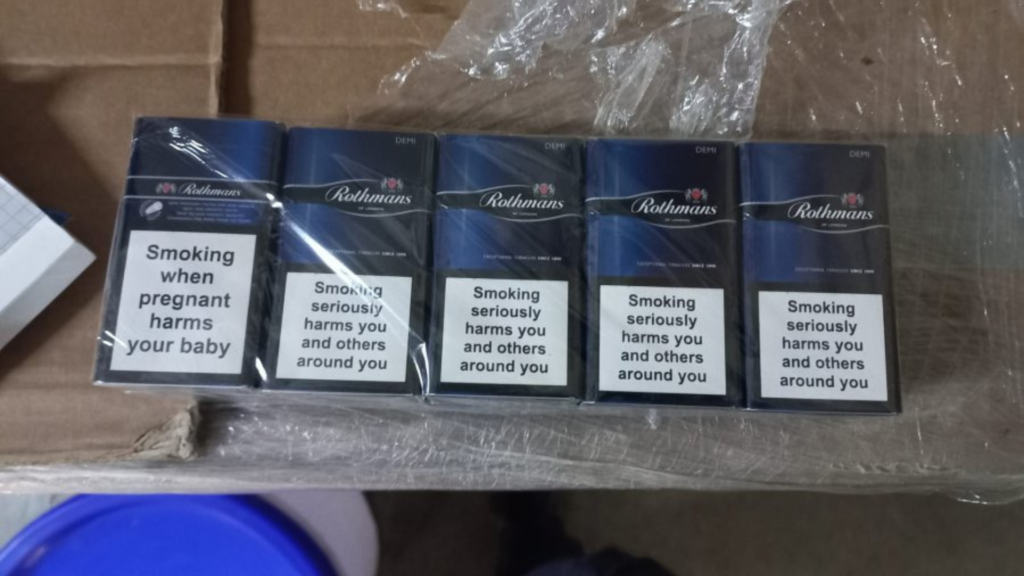
The latest raid took place at a warehouse in East Flanders, which was equipped with tobacco cutting, production and packaging lines. Belgian customs and local police seized approximately 11 tonnes of tobacco and 5.6 million Rothmans and Marlboro cigarettes, resulting in an estimated loss of €6.2 million in tax revenue.


A report commissioned by Philip Morris International found that around 13% of illegal cigarettes consumed in the EU last year were smoked in Belgium.


Angelici noted that much of the domestically produced cigarettes are not sold locally, but are smuggled to high demand countries such as the UK and France. The proximity to a booming illicit cigarette market, as well as the country's ports and extensive road networks, make Belgium "highly attractive" to those involved in production and smuggling activities.


In 2024, Belgium seized nearly 205 million cigarettes, which the finance ministry estimates represents a loss of tax revenue of around €96 million.


We welcome news tips, article submissions, interview requests, or comments on this piece.

Please contact us at info@2firsts.com, or reach out to Alan Zhao, CEO of 2Firsts, on LinkedIn


Notice

1.  This article is intended solely for professional research purposes related to industry, technology, and policy. Any references to brands or products are made purely for objective description and do not constitute any form of endorsement, recommendation, or promotion by 2Firsts.

2.  The use of nicotine-containing products — including, but not limited to, cigarettes, e-cigarettes, nicotine pouchand heated tobacco products — carries significant health risks. Users are responsible for complying with all applicable laws and regulations in their respective jurisdictions.

3.  This article is not intended to serve as the basis for any investment decisions or financial advice. 2Firsts assumes no direct or indirect liability for any inaccuracies or errors in the content.

4.  Access to this article is strictly prohibited for individuals below the legal age in their jurisdiction.


Copyright


This article is either an original work created by 2Firsts or a reproduction from third-party sources with proper attribution. All copyrights and usage rights belong to 2Firsts or the original content provider. Unauthorized reproduction, distribution, or any other form of unauthorized use by any individual or organization is strictly prohibited. Violators will be held legally accountable.

For copyright-related inquiries, please contact: info@2firsts.com


AI Assistance Disclaimer


This article may have been enhanced using AI tools to improve translation and editorial efficiency. However, due to technical limitations, inaccuracies may occur. Readers are encouraged to refer to the cited sources for the most accurate information.

We welcome any corrections or feedback. Please contact us at: info@2firsts.com

Nearly Half of Seoul Vape Vending Machines Bypassed by Fake IDs, Raising Youth Access Concerns
Seoul city authorities inspected 339 tobacco vending machines at e-cigarette retailers and found that 168, or 49.5%, allowed purchases using fake IDs, showing that unmanned retail terminals and adult-verification systems remain a major enforcement gap after e-cigarettes were brought under tobacco regulation.
Market
Jul.03 by 2Firsts Perspectives
China Tobacco International HK Warns First-Half Revenue May Fall 25%-30%, Tobacco Leaf and Duty-Free Exposure Highlight Reliance on Traditional Tobacco
CTIHK expects first-half 2026 revenue to fall 25%-30%, mainly due to lower tobacco leaf imports and delayed cigarette shipments to China’s domestic duty-free market. Its 2025 revenue mix—nearly 90% from tobacco leaf-related businesses and less than 1% from new tobacco products—shows continued exposure to traditional supply chains and trade variables.
Jun.18
BAT New Categories Revenue Rises 18% in H1 2026 as Broad Portfolio Offers More Ways to Win—and Lose
British American Tobacco’s New Category revenue rose 18% at constant rates in the first half of 2026. Nicotine-pouch brand Velo expanded rapidly, while Vuse recovered as U.S. enforcement against illicit e-vapor products strengthened. Heated-tobacco platform glo remained under pressure, and cigarettes continued to provide most of the group’s profit and cash. Compared with PMI and JT, BAT has more routes to growth—but also greater regulatory, investment and execution risks across its broader portfolio.
BAT
Jul.30
Philip Morris Italia Invests €1 Million to Upgrade Retail Network, Supporting 45,000 Tobacco Shops in Smoke-Free Shift
Philip Morris Italia has launched the Trade Academy program, investing €1 million to provide training and development support for approximately 45,000 tobacco retailers in Italy. The initiative aims to strengthen retailers’ capabilities in heated tobacco products, digital tools and consumer services. The move reflects how nicotine companies are increasingly investing in retail networks and frontline capabilities as new nicotine products become more important in the market.
Jul.28
Altria Smokeable Profit Rises 2.4% as Marlboro Share Falls and U.S. Discounts Gain
Altria’s second-quarter results show a U.S. nicotine market splitting across price, product and regulation. Smokeable profit rose 2.4% as Marlboro pricing offset lower volumes, while discount brand Basic gained share among value-conscious smokers. In oral nicotine, on! PLUS expanded distribution but faced intensifying competition from ZYN and Velo. NJOY remained off the market as patent and regulatory hurdles delayed its return. The broader lesson: U.S. growth increasingly depends on price-tier strategy, retail execution, authorisation and enforcement readiness across the industry.
Special Report
Jul.31
JT’s Ploom Volumes Rise 43.5% as Cigarettes Anchor Its Transition
JT’s Ploom heated-tobacco volumes rose 43.5% in the first half of 2026, while combustibles still represented about 97% of its tobacco volume and remained the main earnings base. In Japan, reduced-risk products now account for 48.7% of industry shipments, shifting competition from category adoption towards brand share, pricing and consumer retention. JT’s results offer a revealing case of a traditional tobacco company pursuing a prolonged, dual-track transformation.
JTI
Jul.30