Brazilian Authorities Seize $80,000 Worth of E-Cigarettes at Border

Regulations by 2FIRSTS.ai
Dec.08.2023
Brazilian Authorities Seize $80,000 Worth of E-Cigarettes at Border
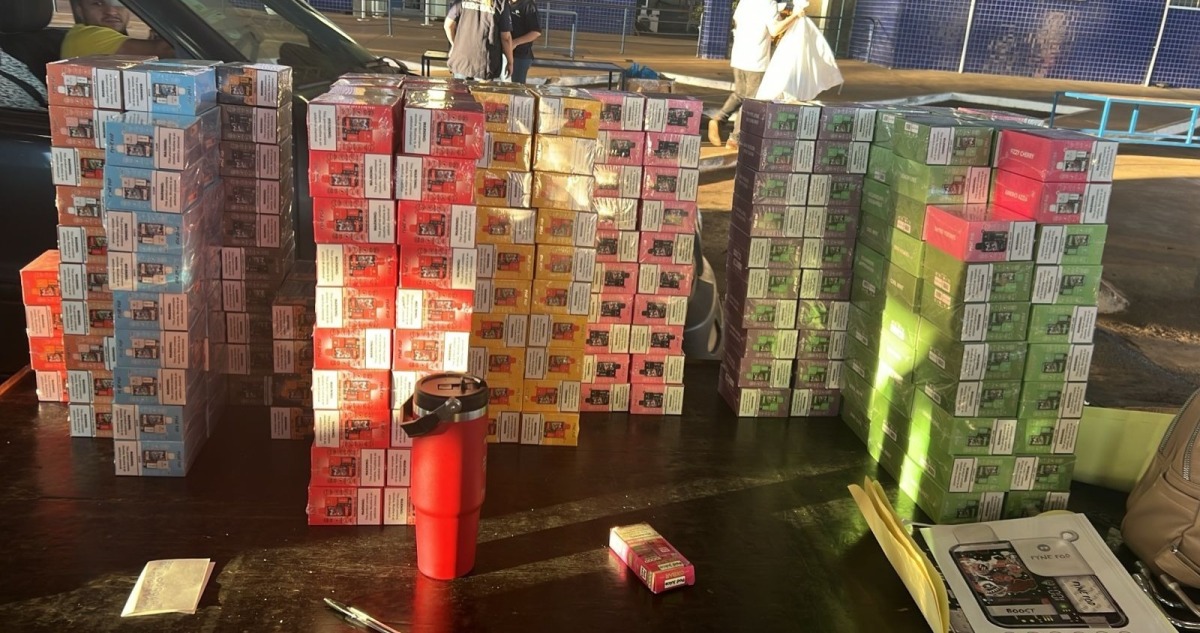
Brazilian authorities seized a shipment of approximately 2,000 e-cigarettes worth 80,000 Brazilian reais at the International Friendship Bridge.

According to a report by Brazil's Band News FM on Wednesday, December 6th, Brazilian law enforcement authorities seized a batch of e-cigarettes worth 80,000 reais (approximately 115,000 yuan) at the International Friendship Bridge (Ponte Internacional da Amizade).


During the inspection, nearly 2,000 e-cigarettes were found in a hidden compartment, beneath the vehicle, and inside the headlights of a truck. Both the driver and the passenger were apprehended and taken to the federal police station. The confiscated shipment was subsequently transported to the headquarters of the Federal Revenue Customs Office located in the western region of Parana State, specifically in Iguazu.


We welcome news tips, article submissions, interview requests, or comments on this piece.

Please contact us at info@2firsts.com, or reach out to Alan Zhao, CEO of 2Firsts, on LinkedIn


Notice

1.  This article is intended solely for professional research purposes related to industry, technology, and policy. Any references to brands or products are made purely for objective description and do not constitute any form of endorsement, recommendation, or promotion by 2Firsts.

2.  The use of nicotine-containing products — including, but not limited to, cigarettes, e-cigarettes, nicotine pouchand heated tobacco products — carries significant health risks. Users are responsible for complying with all applicable laws and regulations in their respective jurisdictions.

3.  This article is not intended to serve as the basis for any investment decisions or financial advice. 2Firsts assumes no direct or indirect liability for any inaccuracies or errors in the content.

4.  Access to this article is strictly prohibited for individuals below the legal age in their jurisdiction.


Copyright


This article is either an original work created by 2Firsts or a reproduction from third-party sources with proper attribution. All copyrights and usage rights belong to 2Firsts or the original content provider. Unauthorized reproduction, distribution, or any other form of unauthorized use by any individual or organization is strictly prohibited. Violators will be held legally accountable.

For copyright-related inquiries, please contact: info@2firsts.com


AI Assistance Disclaimer


This article may have been enhanced using AI tools to improve translation and editorial efficiency. However, due to technical limitations, inaccuracies may occur. Readers are encouraged to refer to the cited sources for the most accurate information.

We welcome any corrections or feedback. Please contact us at: info@2firsts.com

Canada’s B.C. Passes First Vaping Cost-Recovery Framework, Allowing Government to Sue Manufacturers Over Health Expenses
According to the Nelson Star, British Columbia has passed the Vaping Product Damages and Health Care Costs Recovery Act by a 49–42 vote. The legislation enables the provincial government to seek recovery of future public health costs from vape manufacturers, following models used in opioid and tobacco litigation.
Dec.03
Guam checks 277 eligible retailers in 2025; eight found selling tobacco or disposable vapes to minors aged 16–20
he Guam Behavioral Health and Wellness Center said that out of 277 eligible tobacco retailers inspected in 2025, eight were found selling tobacco or disposable e-cigarettes or vapes to minors aged 16–20, and one retailer failed to display the required “No Sale Under 21” prohibition sign.
Jan.05 by 2FIRSTS.ai
Tajikistan Signals Plan to Ban Use, Production and Circulation of E-Cigarettes
According to Kazinform, Tajikistan addressed the issue of electronic cigarettes during the fourth session of the Majlisi Milli, stating a position to prohibit the use, production, and circulation of e-cigarettes. Chairman Rustam Emomali emphasized that the position aims to protect public health and prevent negative impacts on youth and adolescents.
Dec.16 by 2FIRSTS.ai
BAT Taps McLaren Title Win for Travel Retail Activation, Launches VELO “Champions’ Edition” Nicotine Pouches
British American Tobacco (BAT) is leveraging McLaren F1 Team’s 2025 Constructors’ Championship win to roll out a VELO×McLaren brand activation across the travel retail market. The campaign spans major airports in Abu Dhabi, the UK, Ireland and Spain, alongside the launch of a VELO “Champions’ Edition” product.
Dec.15 by 2FIRSTS.ai
Azerbaijan’s Milli Majlis passes final reading bill banning e-cigarettes and their components
Azerbaijan’s Milli Majlis adopted in final reading a bill banning the import, export, production, storage, wholesale and retail sale, and use of electronic cigarettes and their components, through amendments to the law On Tobacco and Tobacco Products. The document states that nicotine-containing electronic cigarettes are included within the concept of tobacco products and sets out a definition of electronic cigarettes.
Dec.31 by 2FIRSTS.ai
Special Report|With Charlie’s US Line Online, the US-Filled Vape Supply Chain Model Enters a New Phase
Charlie’s Holdings has activated its first US-based manufacturing and filling line, enabling the company’s Pachamama 25K vape series to meet Texas’ new domestic manufacturing requirements. As state-level rules tighten, the move signals a broader industry shift toward US-filled supply chains and marks an inflection point for brands historically reliant on China-based prefilled production.
Industry Insight
Dec.02