Breaching the Law: UK Retailer Fined for Selling to Minors

Jul.15.2024
Breaching the Law: UK Retailer Fined for Selling to Minors
Damin Grocers Limited fined for selling disposable e-cigarettes to minors, breaking UK laws.法庭裁定违反法律,处以罚款。

According to The Telegraph and Argus on July 15th, earlier this month, Denis Andrukianiec, a director of British retailer Damian Grocers Limited, failed to appear at Bradford Magistrates' Court to respond to charges against his company Damian Food for selling disposable e-cigarettes to minors.
Breaching the Law: UK Retailer Fined for Selling to Minors
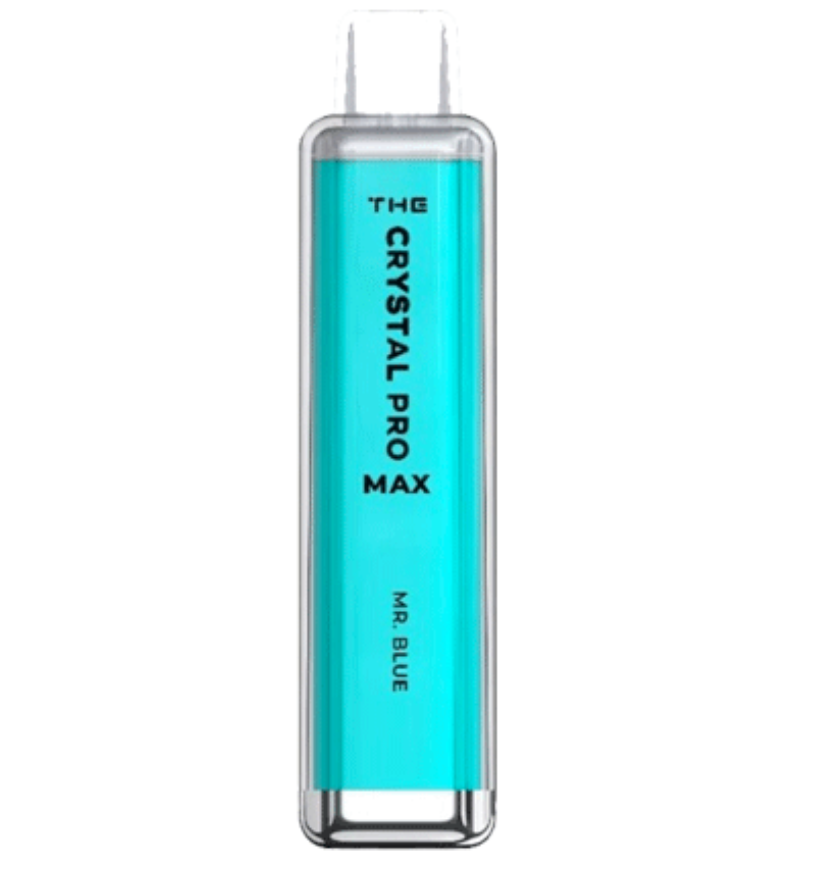
Crystal PRO-MAX 4000+ Mr Blue


In his absence, the court found that Damin Grocers Limited had violated the 2015 Nicotine Inhalation Products (Minimum Age for Sale and Proxy Purchasing) Regulation and the 2014 Children and Families Act. The judge fined the company £2,000 and ordered them to pay an additional £800 in victim surcharge and £2,658 in legal costs, totaling £5,458.


The judge also fined him £1,000 and ordered him to pay an additional £400 in victim surcharge fees, totaling £1,400. The case was initiated by the West Yorkshire Trading Standards Department following a public complaint alleging that the company had sold e-cigarettes to minors.


In August 2023, under the supervision of trade standards officials, a 13-year-old volunteer entered the store and attempted to purchase an e-cigarette. The seller sold a nicotine-containing Crystal PRO-MAX 4000+ Mr Blue disposable e-cigarette for £10 without questioning or asking for ID to verify the volunteer's age of over 18 years.


Selling e-cigarettes containing nicotine to individuals under the age of 18 is illegal. Furthermore, the specific e-cigarette mentioned is also illegal as it exceeds the regulations by containing more than 2 milliliters or 600 puffs of capacity.


The Head of the Trade Standards Department, David Strover, stated that...


Selling e-cigarettes to children should not be happening in our community. We have written to the company to inform them of the complaints we have received and to let them know that test purchases may be conducted.


E-cigarettes are adult products designed for adult smokers looking to quit. Selling e-cigarettes to children is unacceptable. Retailers need to ensure they have systems in place to prevent the sale of e-cigarettes to minors and train their staff accordingly.


The Deputy Chair of the West Yorkshire Joint Services Committee, Sue Duffy, stated that


Failing to check the age of adolescent customers who wish to purchase restricted products is clearly irresponsible. Trade standards staff regularly conduct test purchases to ensure stores are compliant with e-cigarette laws. Simply requiring identification and verifying the age of young customers will help reduce underage e-cigarette use.


We welcome news tips, article submissions, interview requests, or comments on this piece.

Please contact us at info@2firsts.com, or reach out to Alan Zhao, CEO of 2Firsts, on LinkedIn


Notice

1.  This article is intended solely for professional research purposes related to industry, technology, and policy. Any references to brands or products are made purely for objective description and do not constitute any form of endorsement, recommendation, or promotion by 2Firsts.

2.  The use of nicotine-containing products — including, but not limited to, cigarettes, e-cigarettes, nicotine pouchand heated tobacco products — carries significant health risks. Users are responsible for complying with all applicable laws and regulations in their respective jurisdictions.

3.  This article is not intended to serve as the basis for any investment decisions or financial advice. 2Firsts assumes no direct or indirect liability for any inaccuracies or errors in the content.

4.  Access to this article is strictly prohibited for individuals below the legal age in their jurisdiction.


Copyright


This article is either an original work created by 2Firsts or a reproduction from third-party sources with proper attribution. All copyrights and usage rights belong to 2Firsts or the original content provider. Unauthorized reproduction, distribution, or any other form of unauthorized use by any individual or organization is strictly prohibited. Violators will be held legally accountable.

For copyright-related inquiries, please contact: info@2firsts.com


AI Assistance Disclaimer


This article may have been enhanced using AI tools to improve translation and editorial efficiency. However, due to technical limitations, inaccuracies may occur. Readers are encouraged to refer to the cited sources for the most accurate information.

We welcome any corrections or feedback. Please contact us at: info@2firsts.com

Retail Case Study | Wisconsin Vape Market One Year After New Regulations: Johnny Vapes Reports 80% Sales Decline as Consumers Shift Online and Across State Lines
According to WNCY on August 24, 2026, some independent vape retailers in Wisconsin say they have faced significant business pressure one year after new vape regulations took effect. Johnny Vapes, a retailer operating in northeast Wisconsin, said its store count fell from seven locations to four, sales declined by about 80%, and roughly 90% of its inventory was affected. Retailers said some consumers have shifted to online purchases or traveled to neighboring Michigan to buy vape products. The case highlights how local regulations can reshape retail operations, inventory management and consumer purchasing patterns.
Aug.28
China’s Zhengzhou Tobacco Research Institute develops end-to-end heated tobacco analysis to trace aerosol compound origins
The Zhengzhou Tobacco Research Institute of China National Tobacco Corporation has filed a patent application for an end-to-end method to analyze the migration and transformation of chemical compounds in heated tobacco products. Using GC-Orbitrap/MS non-targeted analysis, the method compares tobacco substrate and aerosol samples to distinguish compounds transferred directly from the substrate from those newly formed during heating, while also calculating transfer rates. In an example involving nine heated tobacco products, the patent identified 17 newly formed thermal decomposition compounds and 38 transferred compounds.
Aug.13
From Border-Logistics Insiders to Retail Service Stations, Australia Mounts a Sweeping Crackdown on the Illicit Nicotine Trade as iGET Vapes Surface in A$80 Million Crime Networks
Australian authorities have disclosed two major enforcement actions that go beyond product seizures and retail closures to examine how illicit tobacco and vape networks operate. On Aug. 14, the Multi Agency Strike Team said seven people had been charged and two criminal networks were valued by authorities at a combined A$80 million, or about US$56.8 million. Investigators allege the groups used bonded warehouses, freight businesses and “trusted insiders” in legitimate industries to circumvent border controls. In a separate operation on Aug. 11, more than 100 service stations were targeted as authorities sought information on illicit tobacco importation, distribution networks and the movement of sales proceeds.
Aug.17
DOJ Trade Fraud Task Force Tops $1 Billion in Cases, Putting Vape Supply Chains at Risk of Fraud Enforcement
According to the U.S. Department of Justice (DOJ), Fox News and other reports, the DOJ’s Trade Fraud Task Force (TFTF) has been linked to more than $1 billion in recoveries, penalties, forfeitures and publicly charged losses in less than one year. The task force focuses on trade fraud issues including country-of-origin fraud, illegal transshipment, false declarations and tariff evasion. While vape products are not the main source of the $1 billion figure, the industry’s reliance on global manufacturing and cross-border supply chains places it within broader U.S. trade enforcement scrutiny. The development suggests that U.S. oversight of cross-border vape products may increasingly extend beyond product authorization into import compliance, supply-chain transparency and corporate accountability.
Jul.23
Tobacco Companies Are Redesigning Nicotine Products. BAT Wins Three Red Dot Awards
According to BAT and the Red Dot Design Award website, BAT’s glo Hilo Plus, Vuse Pro One Box and Vuse Ultra x McLaren F1 Team Limited Edition received Red Dot recognition in the Product Design 2026 competition.BAT said the awards reflect not only the design quality of the individual products but also the development of design as a core internal capability across industrial design, user experience and sustainability. Red Dot’s product pages describe glo Hilo Plus as a two-part tobacco heater with a pen and charging case, plus a touch-sensitive AMOLED display. Vuse Pro One Box is described as a rechargeable e-cigarette with replaceable pods, USB-C charging and a switchable VapourBoost mode. Vuse Ultra x McLaren F1 Team Limited Edition brings motorsport-inspired design elements into a compact e-cigarette device and includes exchangeable batteries.
Jul.17
U.S. Appeals Court Says BAT Must Face Class Action Over Cigarette Labels
A U.S. appeals court ruled that British American Tobacco (BAT) must continue facing a consumer class action lawsuit over cigarette labels. The ruling allows the case to proceed but does not determine that BAT violated the law or is liable for damages. The case highlights ongoing legal risks facing major tobacco companies related to product labeling, consumer disclosures and product liability claims.
Jul.31