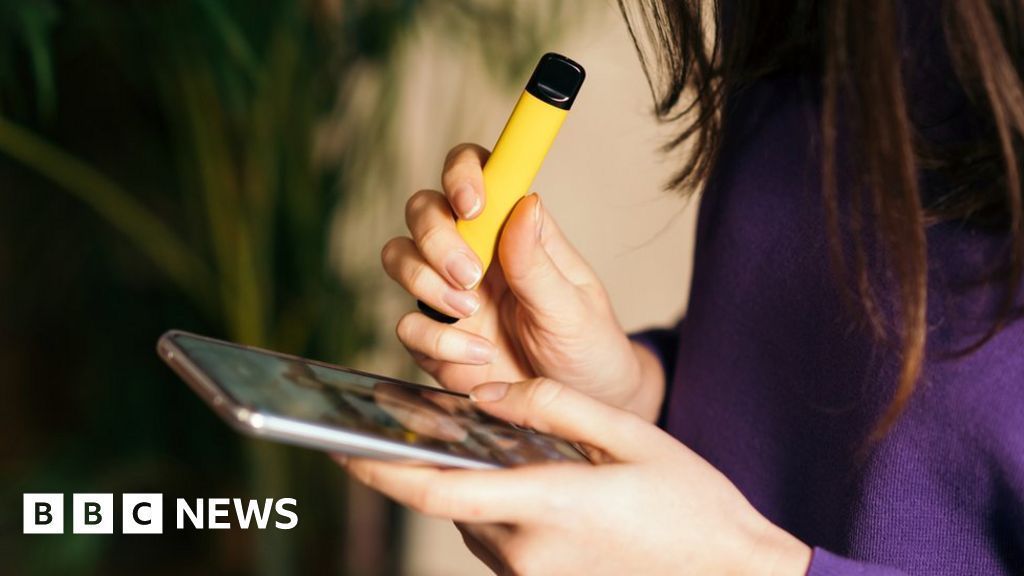
According to a report by the BBC on January 15th, the council of a county in the UK is urging the government to completely ban the sale of disposable e-cigarettes. Tom Hunt, the leader of the council, recently sent a letter to Health Minister Victoria Atkins expressing concerns about the issue of young people smoking.
In his letter, Mr. Hunter explicitly stated that the sale of disposable e-cigarettes should be ceased in order to protect children and the environment. He added that while e-cigarettes may be helpful for adult smokers trying to quit, the government should take active measures to prevent children from being attracted to this harmful product. Mr. Hunter also emphasized the environmental concerns associated with disposable e-cigarettes, noting that this too is one of the reasons for the proposed ban.
The Department of Health and Social Care has responded to calls from Parliament, stating that the government is actively seeking effective methods to curb youth smoking. According to reports, up to 5 million e-cigarettes are discarded in the UK every week. The department emphasizes that while e-cigarettes may assist adults in quitting smoking, the government considers it "wholly inappropriate" for preventing children from being enticed, particularly through colorful and appealing packaging and advertisements.
Mr. Hunter further stated that, "The environmental concerns surrounding disposable e-cigarettes should not be overlooked. We are exerting pressure on the government with the aim of safeguarding children to the fullest extent and protecting the environment by advocating for a ban on the sale of disposable e-cigarettes.
A spokesperson for the Department of Health and Social Care has revealed that the government is consulting on ways to reduce the appeal and accessibility of e-cigarettes to children and young people. The forthcoming Tobacco and E-cigarette Bill will introduce the first "smoke-free generation" with the aim of addressing the issue of teenage smoking, saving lives, and protecting children. Furthermore, the government is also planning to invest an additional £30 million per year in law enforcement agencies and allocate £3 million to the Trading Standards Office within two years, in order to tackle illegal and underage tobacco sales.
According to a survey conducted by the charity organization Action on Smoking and Health (ASH), the number of children experimenting with e-cigarettes has increased by 50% from 2022 to 2023, rising from 1 in 13 to 1 in 9. The charity highlights that children's awareness of e-cigarette advertising has also grown, particularly within stores, with over half of the children reporting seeing e-cigarette promotions.
We welcome news tips, article submissions, interview requests, or comments on this piece.
Please contact us at info@2firsts.com, or reach out to Alan Zhao, CEO of 2Firsts, on LinkedIn
Notice
1. This article is intended solely for professional research purposes related to industry, technology, and policy. Any references to brands or products are made purely for objective description and do not constitute any form of endorsement, recommendation, or promotion by 2Firsts.
2. The use of nicotine-containing products — including, but not limited to, cigarettes, e-cigarettes, nicotine pouchand heated tobacco products — carries significant health risks. Users are responsible for complying with all applicable laws and regulations in their respective jurisdictions.
3. This article is not intended to serve as the basis for any investment decisions or financial advice. 2Firsts assumes no direct or indirect liability for any inaccuracies or errors in the content.
4. Access to this article is strictly prohibited for individuals below the legal age in their jurisdiction.
Copyright
This article is either an original work created by 2Firsts or a reproduction from third-party sources with proper attribution. All copyrights and usage rights belong to 2Firsts or the original content provider. Unauthorized reproduction, distribution, or any other form of unauthorized use by any individual or organization is strictly prohibited. Violators will be held legally accountable.
For copyright-related inquiries, please contact: info@2firsts.com
AI Assistance Disclaimer
This article may have been enhanced using AI tools to improve translation and editorial efficiency. However, due to technical limitations, inaccuracies may occur. Readers are encouraged to refer to the cited sources for the most accurate information.
We welcome any corrections or feedback. Please contact us at: info@2firsts.com