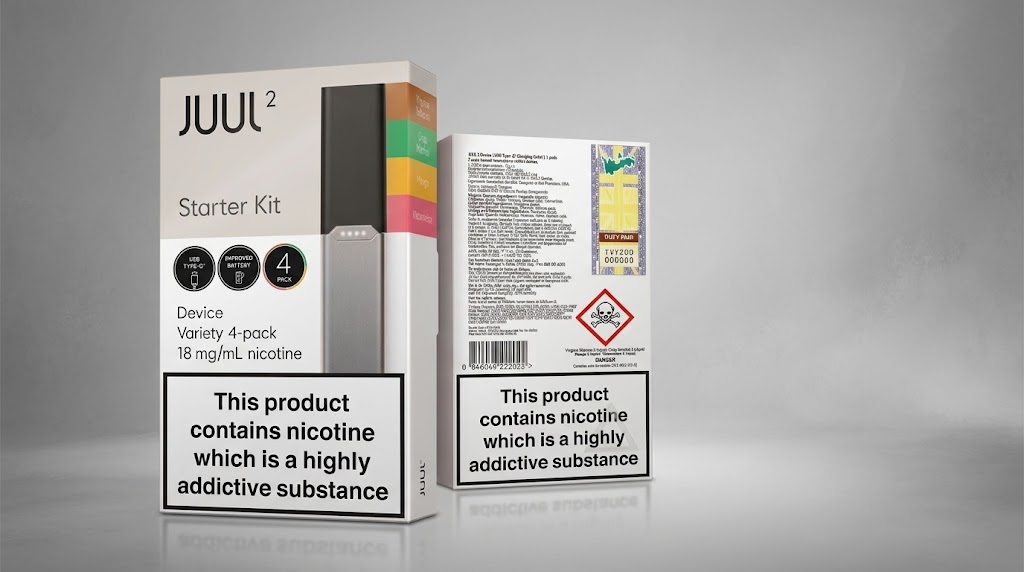
On August 15, according to a report by the Russian parliamentary newspaper, the Chairman of the Youth Policy Committee of the State Duma, Artem Metelev, made an appeal to Prime Minister Mikhail Mishustin and Prosecutor General Igor Krasnov. He called for a large-scale inspection of e-cigarette sales before September 1, with violators facing fines.
During a recent television interview, Mechelev expressed his concern regarding the issue of e-cigarettes in Russia.
He expressed that the newly implemented regulations apply not only to e-cigarettes but also encompass any nicotine-containing devices, including hookahs. They not only prohibit the sale of these products to minors but also forbid public display or promotion of related products, treating e-cigarettes on par with traditional cigarettes. However, investigations reveal that this regulation is not being fully complied with in some areas.
Our committee's surprise inspections conducted in 42 regions have revealed a disregard for the law, with hundreds of instances of illegal activities exposed.
Meiyelev has stated that he has lodged appeals to Prime Minister Mikhail Mishustin and Prosecutor General Igor Krasnov. A large-scale inspection is planned to be carried out before September 1, with offenders facing fines. Additionally, campaigns regarding the dangers of e-cigarettes will be conducted in schools and colleges at the beginning of the new academic year.
If companies fail to comply with regulations and regulatory agencies do not take action by September 1st, further legislative proposals will be made, and even the implementation of an e-cigarette sales permit system may be considered.
In addition, the discussion also touched upon the possibility of conducting surprise inspections on e-cigarette shops, with the aim of ensuring that businesses comply with current regulations.
Reference: [1] Trash-streams want to be considered as aggravating circumstances of crimes. Trash-streams are an emerging form of online content where individuals live-stream reckless or offensive behaviors for entertainment purposes. This trend has sparked a debate on whether these streams should be considered as aggravating circumstances in criminal cases. Currently, the law does not specifically address the status of trash-streams in relation to criminal activities. However, there is a growing concern among the public and legal experts regarding the potential harm caused by these streams and their influence on society. Advocates argue that trash-streams can contribute to the commission of crimes by normalizing and glorifying destructive behaviors. They believe that individuals who partake in such streams should face harsher penalties due to their active participation in promoting unlawful acts. Opponents, on the other hand, question the extent to which trash-streams can be directly linked to criminal behavior. They argue that criminal liability should be determined based on established legal principles, asserting that the influence of trash-streams on individuals' actions may be difficult to prove beyond reasonable doubt. As the debate continues, it remains to be seen whether trash-streams will be recognized as aggravating circumstances in criminal cases. Policymakers and legal authorities must carefully evaluate the potential societal harm caused by these streams and consider implementing appropriate measures to address this rapidly growing phenomenon.
Disclaimer
This article is provided solely for professional research, industry discussion, and informational purposes. Any references to brands, companies, products, technologies, or policies are made for factual reporting and analytical purposes only, and do not constitute endorsement, recommendation, promotion, or advertising by 2Firsts.
Nicotine-containing products, including but not limited to cigarettes, e-cigarettes, heated tobacco products, and nicotine pouches, carry significant health risks. Readers are responsible for complying with all applicable laws and regulations in their respective jurisdictions, including age restrictions and access limitations.
The information contained in this article should not be regarded as investment, legal, medical, regulatory, or commercial advice. While 2Firsts strives to ensure the accuracy and reliability of its content, it does not assume liability for any direct or indirect loss arising from errors, omissions, inaccuracies, or reliance on the information contained herein.
This article is not intended for individuals below the legal age for accessing tobacco or nicotine-related information in their jurisdiction.
Copyright Notice
This article is either original content produced by 2Firsts or content reproduced, translated, summarized, or adapted from third-party sources with attribution where applicable. The intellectual property rights of the original content remain with 2Firsts or the respective original rights holders.
No individual or organization may copy, reproduce, distribute, republish, modify, translate, or otherwise use this content without prior authorization. Any unauthorized use may result in legal action.
For copyright-related inquiries, corrections, or removal requests, please contact: info@2firsts.com.
AI-Assisted Translation and Editing Notice
Portions of this article may have been translated, edited, or reviewed with the assistance of artificial intelligence tools to improve efficiency and readability. Due to the limitations of AI-assisted translation and editing, discrepancies, omissions, or inaccuracies may exist when compared with the original source.
Where applicable, readers are advised to refer to the original source for the most complete and accurate information. If you identify any errors or believe that any content infringes upon your rights, please contact us at info@2firsts.com, and we will review and address the matter promptly.