Call for Stricter Penalties on Nicotine and E-Liquid Use in Malaysia

Regulations by 2FIRSTS.ai
Nov.21.2023
Call for Stricter Penalties on Nicotine and E-Liquid Use in Malaysia
Several Malaysian groups urge stricter punishments for smoking in schools, while others advocate for nicotine and e-liquid to be classified as poisons.

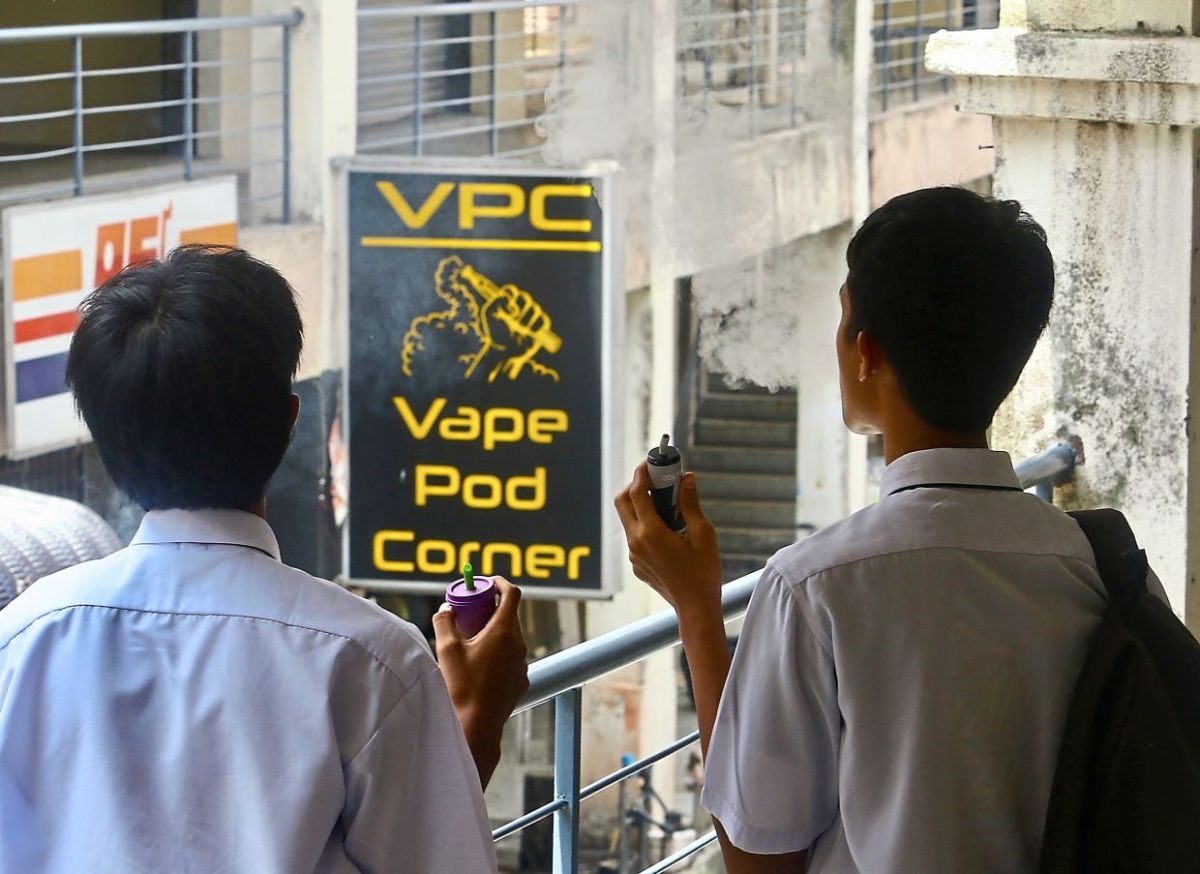
In recent news, as reported by The Star, several organizations in Malaysia are calling on the Ministry of Health to reclassify nicotine and e-liquid as toxic substances, and impose stricter penalties on students caught smoking on school premises.


On the other hand, the Minister of Health, Dr Zaliha Mustafa, revealed in parliament that the removal of these two substances from the list of controlled drugs is a step towards taxing e-cigarettes and nicotine-containing e-liquids.


According to the President of educational group PAGE, Noor Azimah, schools should treat smokers and e-cigarette users equally and impose strict community service penalties on those who smoke on school grounds. Parents and retailers should also be subject to the same penalties. Numerous organizations, including the Malaysian Medical Association, have been urging for nicotine and e-liquid to be reclassified as poison under the Poison Act as soon as possible.


Meanwhile, the "Smoke Control Products Act" pertaining to public health has been postponed in parliament due to the need to handle government affairs.


We welcome news tips, article submissions, interview requests, or comments on this piece.

Please contact us at info@2firsts.com, or reach out to Alan Zhao, CEO of 2Firsts, on LinkedIn


Notice

1.  This article is intended solely for professional research purposes related to industry, technology, and policy. Any references to brands or products are made purely for objective description and do not constitute any form of endorsement, recommendation, or promotion by 2Firsts.

2.  The use of nicotine-containing products — including, but not limited to, cigarettes, e-cigarettes, nicotine pouchand heated tobacco products — carries significant health risks. Users are responsible for complying with all applicable laws and regulations in their respective jurisdictions.

3.  This article is not intended to serve as the basis for any investment decisions or financial advice. 2Firsts assumes no direct or indirect liability for any inaccuracies or errors in the content.

4.  Access to this article is strictly prohibited for individuals below the legal age in their jurisdiction.


Copyright


This article is either an original work created by 2Firsts or a reproduction from third-party sources with proper attribution. All copyrights and usage rights belong to 2Firsts or the original content provider. Unauthorized reproduction, distribution, or any other form of unauthorized use by any individual or organization is strictly prohibited. Violators will be held legally accountable.

For copyright-related inquiries, please contact: info@2firsts.com


AI Assistance Disclaimer


This article may have been enhanced using AI tools to improve translation and editorial efficiency. However, due to technical limitations, inaccuracies may occur. Readers are encouraged to refer to the cited sources for the most accurate information.

We welcome any corrections or feedback. Please contact us at: info@2firsts.com

Small ENDS Manufacturers Press FDA on Abuse Liability Standards as Agency Defines Pharmacological Review Framework
At the third session of its PMTA roundtable, the FDA outlined its framework for assessing abuse liability in ENDS products, emphasizing the role of nicotine pharmacokinetics and product-specific data in APPH determinations. Small manufacturers questioned the high cost of clinical PK studies and the absence of defined numeric thresholds, while raising bridging strategies and PBPK modeling as potential alternatives.
Feb.11
From Tamarind’s AI Shift to Industry Restructuring, The ‘Amazon Moment’ for Nicotine Is Approaching
Tamarind Intelligence’s decision to appoint a technology-sector executive as chief executive officer signals more than a leadership reshuffle at a specialist data firm. It reflects a broader structural shift across the global nicotine industry, where companies, regulators and intelligence providers are embedding artificial intelligence into core operations.
Special Report
Feb.18
BAT FY2025 Results Review Series by 2Firsts
Feb.12
Thai police arrest 23-year-old woman linked to major vape-smuggling network in the South
Thai police said officers expanded an investigation into a major e-cigarette smuggling network in the South and arrested a 23-year-old woman at Hat Yai Junction railway station on Jan. 6, 2026.
Jan.08 by 2FIRSTS.ai
UK vape firm Plxsur sold for £76,500 after touting $1 billion revenue target
London-based vaping company Plxsur, which had claimed in fundraising materials it could reach $1 billion in annual revenue and capture about 10% of the global vaping market, has been sold out of administration for £76,500. Administrators said the figures were aspirational and depended on acquisitions that were never completed, as the company later ran out of cash and entered insolvency, with a shareholder ultimately buying the business.
Jan.22 by 2FIRSTS.ai
DTI drafts administrative order proposing an open-pod and e-liquid ban and opens it for public consultation
Department of Trade and Industry’s (DTI) proposed move to restrict harmful vape products to protect young people, but said only a total ban on all vaping and novel tobacco products would effectively safeguard public health. The group warned that limiting rules to certain products such as open pods and e-liquids could create a “dangerous behavioral loophole,” leading users—especially youth—to switch to disposable or closed-system alternatives instead of quitting.
Feb.10 by 2FIRSTS.ai