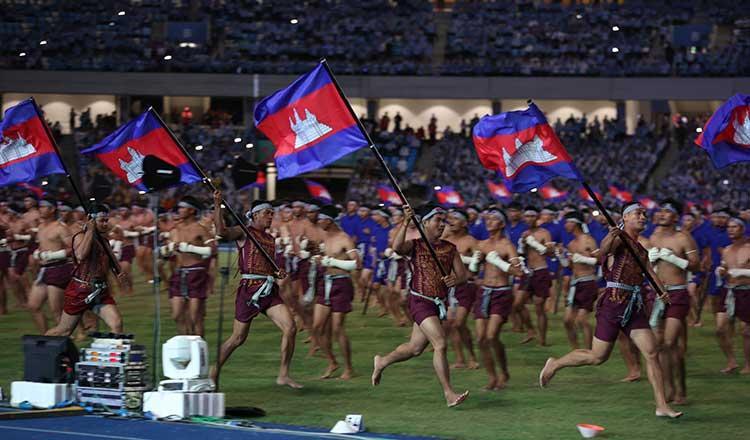
Recently, according to a report by the Khmer Times, Cambodia will promote the principle of a smoke-free sports event at the 32nd Southeast Asian Games and the 12th ASEAN Para Games. Officials from the Cambodian Ministry of Tourism announced that the use, sponsorship, distribution and promotion of cigarettes and electronic cigarettes will be prohibited at the upcoming Southeast Asian Games.
Cigarettes and electronic cigarettes are both prohibited from entering event venues.
The upcoming Southeast Asian Games will be hosted by Cambodia from May 5th to 17th. The authorities in Cambodia have implemented several bans, including prohibiting tobacco products and electronic cigarettes in all dining areas within the national sports stadium, sports arenas, and sports delegation premises.
The Southeast Asian Games Organizing Committee and the ASEAN Para Games Organizing Committee in Cambodia have stated that they will not accept any sponsorship from tobacco or e-cigarette companies.
The statement reads that smoke-free sports venues are implemented to protect players, coaches, spectators, and volunteers from the harmful effects of secondhand smoke.
The ban ensures a high-quality environment for all participants. It also encourages smokers to quit, prevents non-smokers, especially young people, from smoking, and advocates for a widespread culture of no tobacco.
Smoking ban has a 20-year history.
The implementation of the smoke-free policy first began in 2003 at the 22nd Southeast Asian Games hosted by Vietnam.
Since then, the Southeast Asian Games and other major international sporting events have adhered to the same principle of promoting a smoke-free environment.
The statement also indicated that the host country adhered to a smoke-free sports policy.
Cambodia's Smoking Ban Regulations.
According to 2FIRSTS, Cambodia has maintained a crackdown on new tobacco products such as e-cigarettes. The Cambodian authorities issued bans on e-cigarettes in 2014 and 2021.
In February 2014, the National Authority for Combating Drugs (NACD) in Cambodia issued an immediate ban on the import, use, and sale of hookah tobacco, pipes, and e-cigarette products nationwide.
However, the ban did not meet the government's expectations. In March 2022, the Cambodian National Anti-Drug Authority issued another ban, prohibiting the delivery and use of electronic nicotine delivery systems (ENDS), e-cigarettes, and heated tobacco products (HTP) across the country.
Related Reading:
The smoking rate among Cambodian youth has decreased from 32% to 28%. The authorities have twice issued bans on e-cigarettes.
Cambodian police increase regulation of electronic cigarettes.
Reference:
Cambodia has announced that it will provide tobacco-free sports facilities during the upcoming Southeast Asian (SEA) Games. The move is part of the country's efforts to promote healthy lifestyles and prevent tobacco-related diseases among athletes and spectators. The SEA Games will be held in Phnom Penh, Cambodia, in May 2023, and will feature various sports events contested by athletes from Southeast Asian countries.
Disclaimer
This article is provided solely for professional research, industry discussion, and informational purposes. Any references to brands, companies, products, technologies, or policies are made for factual reporting and analytical purposes only, and do not constitute endorsement, recommendation, promotion, or advertising by 2Firsts.
Nicotine-containing products, including but not limited to cigarettes, e-cigarettes, heated tobacco products, and nicotine pouches, carry significant health risks. Readers are responsible for complying with all applicable laws and regulations in their respective jurisdictions, including age restrictions and access limitations.
The information contained in this article should not be regarded as investment, legal, medical, regulatory, or commercial advice. While 2Firsts strives to ensure the accuracy and reliability of its content, it does not assume liability for any direct or indirect loss arising from errors, omissions, inaccuracies, or reliance on the information contained herein.
This article is not intended for individuals below the legal age for accessing tobacco or nicotine-related information in their jurisdiction.
Copyright Notice
This article is either original content produced by 2Firsts or content reproduced, translated, summarized, or adapted from third-party sources with attribution where applicable. The intellectual property rights of the original content remain with 2Firsts or the respective original rights holders.
No individual or organization may copy, reproduce, distribute, republish, modify, translate, or otherwise use this content without prior authorization. Any unauthorized use may result in legal action.
For copyright-related inquiries, corrections, or removal requests, please contact: info@2firsts.com.
AI-Assisted Translation and Editing Notice
Portions of this article may have been translated, edited, or reviewed with the assistance of artificial intelligence tools to improve efficiency and readability. Due to the limitations of AI-assisted translation and editing, discrepancies, omissions, or inaccuracies may exist when compared with the original source.
Where applicable, readers are advised to refer to the original source for the most complete and accurate information. If you identify any errors or believe that any content infringes upon your rights, please contact us at info@2firsts.com, and we will review and address the matter promptly.