Campaign Urges Media Giants to Stop Promoting Tobacco to Teens

Dec.20.2024
Campaign Urges Media Giants to Stop Promoting Tobacco to Teens
Tobacco-Free Kids calls on Hearst and Condé Nast to stop promoting tobacco and nicotine products to teens online.

According to a report by the Associated Press on December 19, The Campaign for Tobacco-Free Kids, along with more than 50 public health advocates from 10 countries, is calling on the two major media companies, Hearst Communications Inc. and Condé Nast, to stop promoting tobacco and nicotine products to teenagers online.


Two companies, the publishers of magazines such as "Seventeen," "Cosmopolitan," "Vogue," and "Glamour," have teamed up with Philip Morris International (PMI) to promote products like IQOS and ZYN nicotine pouches to young people.


This kind of promotion is being online published in multiple countries and regions including Spain, Eastern Europe, Mexico, Latin America, and the United States. In the United States, paid advertisements for ZYN nicotine pouches appear on websites such as "Seventeen" and "Cosmopolitan," paired with articles like "34 Best Gifts for Teenage Girls" and "Top Christmas Movies for Teens.


The youth anti-smoking movement and five other organizations earlier this year sent letters to these two companies urging them to immediately terminate their partnership with PMI. However, these two companies continue to promote their products to young people through online channels. Last week, advocates from around the world participated in a global social media action week, calling on publishers to cease advertising campaigns targeting young people.


According to evidence collected by the Youth Smoke-Free Movement, magazines such as Vogue, GQ, Glamour, ELLE, and Esquire are partnering with PMI in multiple countries to promote IQOS as a fashionable lifestyle accessory on social media. Based on Meta's advertising policies for Facebook and Instagram, paid content promoting tobacco and nicotine products is prohibited. In Spain, online advertising for IQOS and other tobacco products is illegal. These findings suggest that both companies are helping PMI circumvent Meta's tobacco advertising policies and violating advertising laws in at least one country.


Smita Baruah, Vice President of Tobacco Control at the Global Youth Tobacco-Free Movement, stated:


Magazines like "Seventeen" are helping one of the world's largest tobacco companies reach out to teenagers and young people online, which is simply shocking. Hirst and Condé Nast allow PMI to advertise IQOS and ZYN in popular lifestyle magazines, exposing readers to harmful and addictive products.


PMI, a tobacco company, continues to seek new ways to target teenagers. It is now time for Hearst and Condé Nast to stop allowing tobacco companies to use their readers and end their partnerships with major tobacco companies.


We welcome news tips, article submissions, interview requests, or comments on this piece.

Please contact us at info@2firsts.com, or reach out to Alan Zhao, CEO of 2Firsts, on LinkedIn


Notice

1.  This article is intended solely for professional research purposes related to industry, technology, and policy. Any references to brands or products are made purely for objective description and do not constitute any form of endorsement, recommendation, or promotion by 2Firsts.

2.  The use of nicotine-containing products — including, but not limited to, cigarettes, e-cigarettes, nicotine pouchand heated tobacco products — carries significant health risks. Users are responsible for complying with all applicable laws and regulations in their respective jurisdictions.

3.  This article is not intended to serve as the basis for any investment decisions or financial advice. 2Firsts assumes no direct or indirect liability for any inaccuracies or errors in the content.

4.  Access to this article is strictly prohibited for individuals below the legal age in their jurisdiction.


Copyright


This article is either an original work created by 2Firsts or a reproduction from third-party sources with proper attribution. All copyrights and usage rights belong to 2Firsts or the original content provider. Unauthorized reproduction, distribution, or any other form of unauthorized use by any individual or organization is strictly prohibited. Violators will be held legally accountable.

For copyright-related inquiries, please contact: info@2firsts.com


AI Assistance Disclaimer


This article may have been enhanced using AI tools to improve translation and editorial efficiency. However, due to technical limitations, inaccuracies may occur. Readers are encouraged to refer to the cited sources for the most accurate information.

We welcome any corrections or feedback. Please contact us at: info@2firsts.com

Russia's State Duma Passes Tobacco and Nicotine Ingredient Disclosure Bill, Targeting 2027 End to Trade-Secret Protection for Certain Harmful Ingredient Data
Russia's State Duma passed a government-sponsored amendment on November 11, 2026, by 414 votes to none, seeking to prevent businesses from classifying information on the presence and number of types of certain harmful ingredients in tobacco and nicotine-containing products as trade secrets. The measure covers ingredients capable of increasing nicotine dependence or exhibiting toxic, carcinogenic, mutagenic or reproductive toxicity, including substances that acquire such properties during heating or smoldering. Bill No. 1286415-8 would amend Article 5 of Federal Law No. 98-FZ on Commercial Secrets and is scheduled to take effect on January 1, 2027. The bill has cleared all three readings in the State Duma but has not completed the remaining legislative procedures.
Regulations
Nov.12 by 2Firsts Perspectives
Product | Four CrossBar 20K 13mL High-Puff Vapes Listed on Pennsylvania's ENDS Directory, Rated for Up to 20,000 Puffs
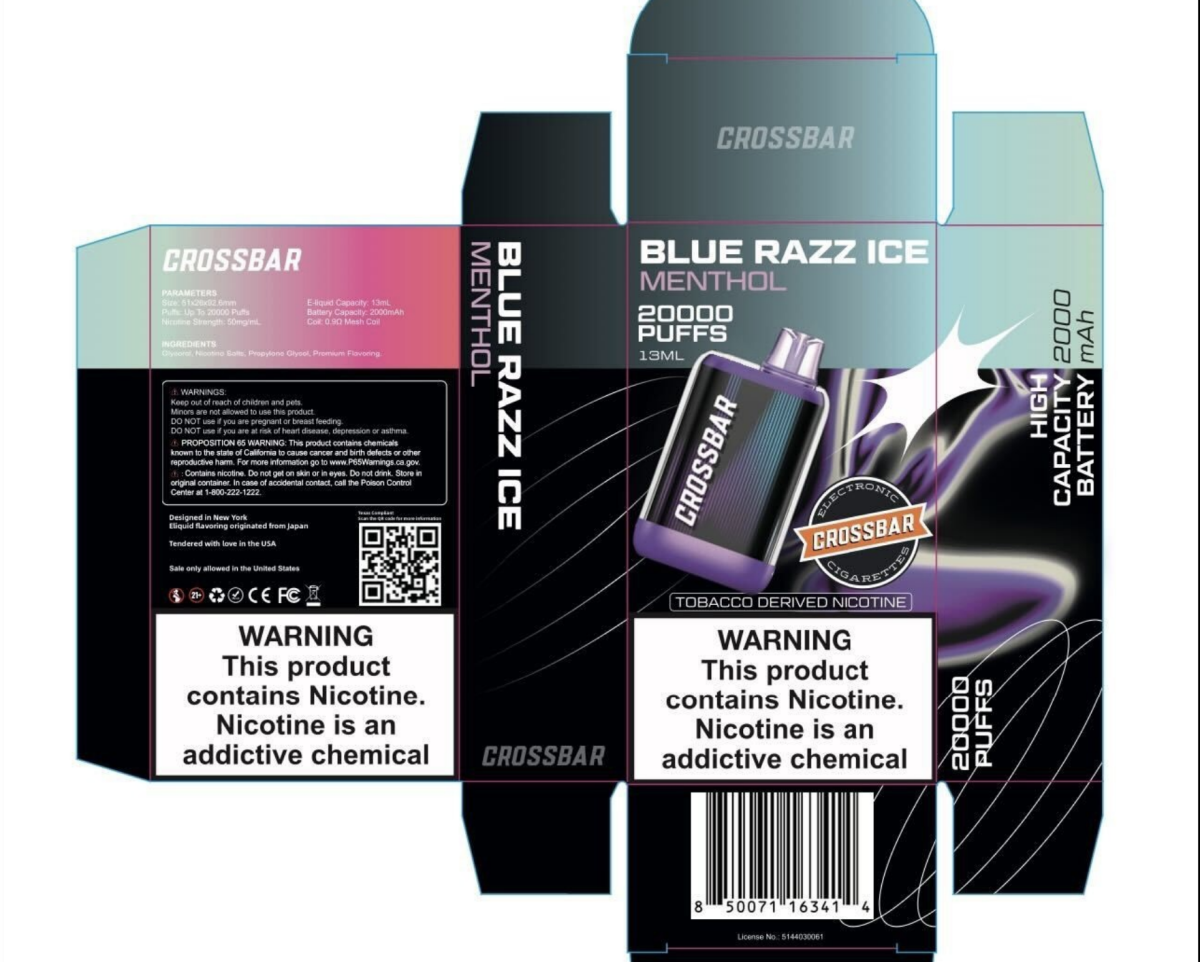
Four CrossBar 20K disposable e-cigarettes appeared on Pennsylvania's 163-entry ENDS directory ahead of enforcement beginning October 19, 2026. The devices feature 13mL e-liquid reservoirs, 50mg/mL nicotine, 2,000mAh batteries and 0.9Ω mesh coils, with advertised puff counts of up to 20,000. CrossBar was the only modern high-puff disposable series among the directory's 15 disposable entries. Its packaging emphasizes New York design and Japanese-origin flavoring, while historical CrossBar records identify a registered U.S. tobacco manufacturing-related establishment. The link between the newer 13mL devices and earlier 1.3mL PMTA filings remains unconfirmed.
product
Oct.26
Imperial Brands Sees Double-Digit NGP Growth as Sixth Year of Tobacco Revenue Gains Backs £1.5 Billion Buyback
Imperial Brands reaffirmed its FY26 guidance in its October 8 pre-close trading update, forecasting double-digit net revenue growth in next-generation products and share gains across heated tobacco, vape and modern oral. Tobacco net revenue is expected to grow at a low-single-digit rate, marking a sixth consecutive year of growth. The company has completed its £1.45 billion FY26 share repurchase and announced a £1.5 billion buyback for FY27. Group adjusted operating profit is expected to increase 3% to 5%, while free cash flow is forecast to exceed £2.2 billion.
Oct.09
Russia’s Vape Device Labeling Regime Enters Force: Registration Starts in September, Mandatory Coding in December
Russia's digital labeling regime for reusable e-cigarettes and similar personal vaping devices entered its first mandatory phase in September 2026. From September 1, manufacturers, importers and other market participants must register with the national Chestny ZNAK tracking system. From December 1, newly manufactured and imported covered devices will be required to carry digital identification codes and be reported as entering circulation. Russia has also issued new operational guidance for imports, marking the transition from a voluntary pilot to phased mandatory implementation.
Sep.15
As Regulators Focus on Nicotine Pouch Child Safety, Safeguard Pursues an External Packaging Route
As regulators pay closer attention to child safety in nicotine pouches, manufacturers face a practical challenge: how to strengthen child-resistant packaging without unnecessarily reworking products, production lines and regulatory submissions already in place. In a written interview with 2Firsts, Chemular detailed Safeguard’s external packaging approach, its customer-specific testing requirements and possible PMTA pathways. The model remains early-stage, but it offers a new way to think about an increasingly important regulatory and manufacturing issue.
Industry Insight
Sep.19
North Carolina Tightens Vape Product Directory Enforcement, Expands State and Local Powers as Violators Face Fines, Product Seizures and License Suspension or Revocation
North Carolina has expanded enforcement of its vapor product directory rules, authorizing more state and local law enforcement participation and establishing a task force led by the State Bureau of Investigation. The legislation requires at least one unannounced compliance inspection annually for retailers, distributors and wholesalers handling covered products. Penalties effective October 1, 2026, include civil fines of $500–$750 for a first violation and $1,000–$1,500 for repeated violations within 12 months, along with potential license suspension or revocation. Manufacturers may face penalties of $10,000 per unlisted product. The measures strengthen the product directory system established in 2024.
Regulations
Oct.28