PMI Aims to Increase Revenue from New Tobacco Products

Dec.12.2024
PMI Aims to Increase Revenue from New Tobacco Products
Philip Morris International (PMI) plans to increase revenue from new tobacco products to 66% by 2030, up from 38%.

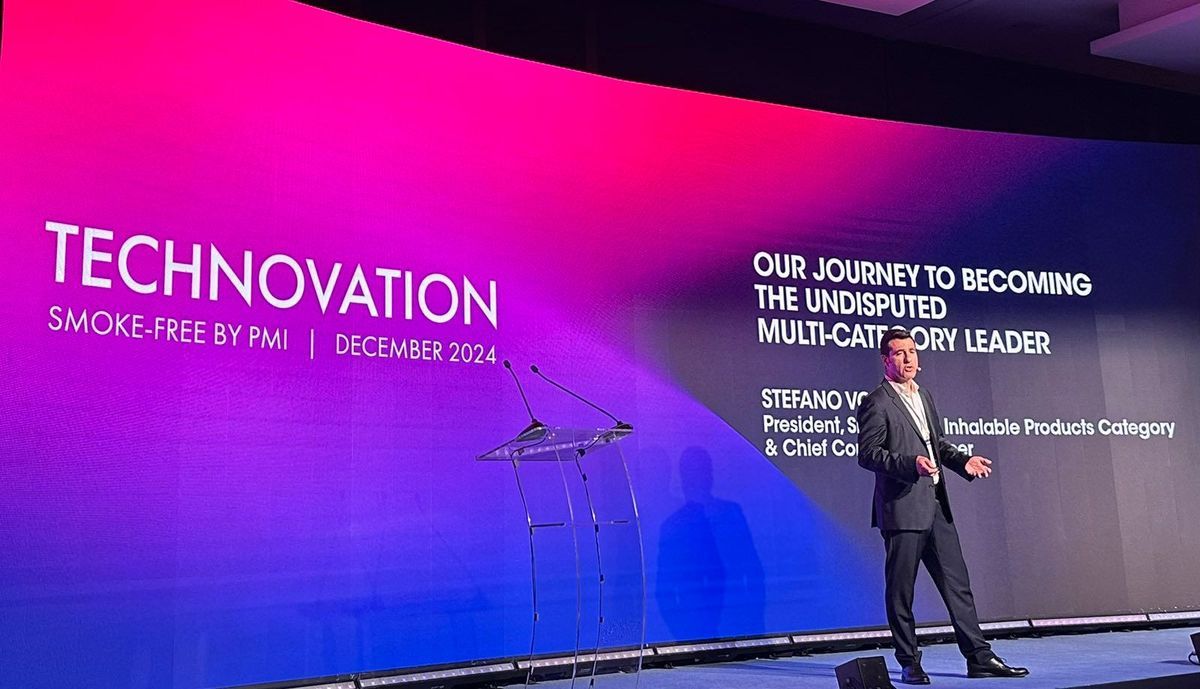
According to a report by the Manila Bulletin on December 12th, Philip Morris International (PMI) announced at its latest technology innovation summit that it plans to increase the revenue share of new tobacco products to 66% by 2030, up from the current 38%.


Stefano Volpetti, CEO and Chief Consumer Officer of PMI's smoke-free inhalable products category, stated in an interview with Filipino media that...


We aim to increase the revenue from new tobacco products to over 66% by 2030. Just five years ago, our non-smoking products accounted for only 12% of revenue, but has now increased to 38%.


Wolfgang Pfeifer revealed that currently in 25 countries, the revenue from smoke-free products has exceeded 50% of the total revenue, with some countries' percentage even exceeding 70%.


Frederic de Wilde, CEO of PMI South Asia and Southeast Asia, stated that the company holds a 45% market share in new tobacco products in emerging markets. The company's heated tobacco product IQOS holds a 75% market share globally, making it the top tobacco product in the world. Additionally, their oral nicotine brand holds a market share of 72% in the United States.


We welcome news tips, article submissions, interview requests, or comments on this piece.

Please contact us at info@2firsts.com, or reach out to Alan Zhao, CEO of 2Firsts, on LinkedIn


Notice

1.  This article is intended solely for professional research purposes related to industry, technology, and policy. Any references to brands or products are made purely for objective description and do not constitute any form of endorsement, recommendation, or promotion by 2Firsts.

2.  The use of nicotine-containing products — including, but not limited to, cigarettes, e-cigarettes, nicotine pouchand heated tobacco products — carries significant health risks. Users are responsible for complying with all applicable laws and regulations in their respective jurisdictions.

3.  This article is not intended to serve as the basis for any investment decisions or financial advice. 2Firsts assumes no direct or indirect liability for any inaccuracies or errors in the content.

4.  Access to this article is strictly prohibited for individuals below the legal age in their jurisdiction.


Copyright


This article is either an original work created by 2Firsts or a reproduction from third-party sources with proper attribution. All copyrights and usage rights belong to 2Firsts or the original content provider. Unauthorized reproduction, distribution, or any other form of unauthorized use by any individual or organization is strictly prohibited. Violators will be held legally accountable.

For copyright-related inquiries, please contact: info@2firsts.com


AI Assistance Disclaimer


This article may have been enhanced using AI tools to improve translation and editorial efficiency. However, due to technical limitations, inaccuracies may occur. Readers are encouraged to refer to the cited sources for the most accurate information.

We welcome any corrections or feedback. Please contact us at: info@2firsts.com

Philippines Weighs Unified Vape Tax as Lawmakers Back Risk-Based Rates and Government Seeks to Fill ₱66 Billion Revenue Gap
Philippine lawmakers are considering an overhaul of the country's vape excise-tax regime to eliminate the wide gap between taxes on nicotine salt and freebase nicotine liquids and reduce incentives for misdeclaration. House Bill 5364, filed by Rep. Rufus Rodriguez and Rep. Maximo Rodriguez Jr., would impose a unified ₱10-per-milliliter tax on vapor products, with 5% annual increases beginning in 2027. Rodriguez says the proposal could generate an average ₱6 billion in annual collections from 2027 through 2030. The debate comes as the Philippine government considers tobacco, vape and other health-tax reforms to help offset around ₱66 billion in revenue expected to be forgone under a proposed tax-relief package.
Aug.18
FTC Scrutinizes Fifty Bar’s “Made in America” Claims as Vape Marketing Faces New Compliance Risk
The Federal Trade Commission sent a warning letter to Lucky Bar Holdings LLC over “Made in the USA” claims tied to Fifty Bar vape products, saying staff had reason to believe the products may be imported in whole or in significant part despite unqualified U.S.-origin marketing claims.
Jul.20
BAT Calls for Retailer Input in Future Nicotine Regulations
British American Tobacco (BAT) has called for stronger retailer involvement in shaping future nicotine product regulations in the UK, arguing that frontline market feedback should be considered during policy development. BAT said retailers provide direct insight into consumer behavior, market changes and regulatory implementation challenges. The comments come as the UK nicotine market undergoes regulatory changes, including the disposable vape ban, Vaping Products Duty and efforts to address illicit vape sales.
Jul.29
Australia’s Daily Smoking Rate Falls to Record Low of 5.8% as Nicotine Use Patterns Shift
According to the Australian Institute of Health and Welfare’s National Drug Strategy Household Survey, daily smoking among Australians aged 18 and over fell to a record low of 5.8% in 2025. Health Minister Mark Butler said Australia now has around 500,000 fewer daily smokers than three years ago and credited the government’s vaping reforms as part of broader progress. Among people aged 14 and over, daily smoking declined from 8.3% in 2022-23 to 5.6% in 2025. Daily vaping rates stabilised at 3.6%, while the government also moved to further restrict access to nicotine pouches through unapproved therapeutic import pathways.
Jul.21
JT Plans ¥800 Billion Investment in Heated Tobacco Over Three Years, Betting on Ploom as Second Growth Engine
Japan Tobacco Inc. (JT) CEO Takehiko Tsutsui said the company plans to invest about ¥800 billion (approximately US$5.4 billion) in heated tobacco products over three years through 2028, aiming to establish Ploom as a second growth engine after combustible cigarettes. Tsutsui said Ploom AURA helped JT increase its share of Japan’s heated tobacco market to 15.8% in the first quarter of 2026. Ploom products are now available in 29 markets, with Ploom AURA sold in 25 markets including Japan. JT also plans to continue its cigarette business while positioning its food operations, particularly frozen noodle products in North America, as another growth opportunity.
Jul.23
From Nicotine Pouches to Soft Candy Forms: China Tobacco Hubei explores adjustable-release oral nicotine products
China-based China Tobacco Hubei Industrial Co., Ltd. has filed a patent application covering an oral nicotine product and its preparation method. The patent proposes a soft candy-shaped oral nicotine product containing nicotine ingredients, gelling agents, sweeteners and alkaline pH regulators. Through formulation adjustments and homogeneous or dual-layer structures, the technology aims to achieve different nicotine release profiles. The filing reflects exploration of new oral nicotine product formats and controlled nicotine delivery approaches.
Aug.06