PMI Advertising in Germany Banned for Indirect Tobacco Promotion

Nov.22.2024
PMI Advertising in Germany Banned for Indirect Tobacco Promotion
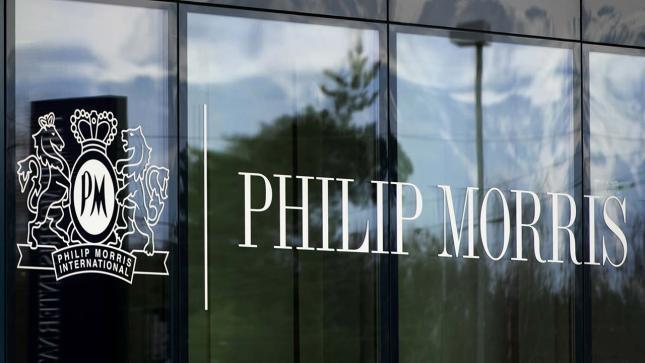
A German state court has rejected PMI's lawsuit over its campaign on tobacco harm information, ruling that the campaign violates the tobacco advertising ban as indirect promotion. PMI now faces significant fines.

According to Boerse Frankfurt on November 21, a court in Bavaria, Germany, rejected Philip Morris International's lawsuit against the ban on its tobacco harm information campaign, ruling that the company's advertising activities were considered illegal.


During this week's trial on Wednesday (20th), the Administrative Court of Munich clearly stated that the law also prohibits indirect tobacco product advertising.


The company stated in its advertisement that cigarette smoke contains over 90 carcinogens and that quitting smoking is the best choice. While the harms of nicotine pouches, e-cigarettes, or heated tobacco products may be smaller, they are not without toxicity and are equally addictive. Bavaria has therefore banned this advertising campaign, deeming it unauthorized tobacco advertisement, and warned the company that it could face hefty fines.


The key issue facing the court is whether the information campaigns by tobacco manufacturers promoting less harmful alternatives are considered wise marketing strategies, which fall under the scope of the tobacco advertising ban. The presiding judge noted during the trial that, according to common legal practice, any form of tobacco advertising, including indirect advertising or image promotion activities, is subject to a comprehensive ban.


We welcome news tips, article submissions, interview requests, or comments on this piece.

Please contact us at info@2firsts.com, or reach out to Alan Zhao, CEO of 2Firsts, on LinkedIn


Notice

1.  This article is intended solely for professional research purposes related to industry, technology, and policy. Any references to brands or products are made purely for objective description and do not constitute any form of endorsement, recommendation, or promotion by 2Firsts.

2.  The use of nicotine-containing products — including, but not limited to, cigarettes, e-cigarettes, nicotine pouchand heated tobacco products — carries significant health risks. Users are responsible for complying with all applicable laws and regulations in their respective jurisdictions.

3.  This article is not intended to serve as the basis for any investment decisions or financial advice. 2Firsts assumes no direct or indirect liability for any inaccuracies or errors in the content.

4.  Access to this article is strictly prohibited for individuals below the legal age in their jurisdiction.


Copyright


This article is either an original work created by 2Firsts or a reproduction from third-party sources with proper attribution. All copyrights and usage rights belong to 2Firsts or the original content provider. Unauthorized reproduction, distribution, or any other form of unauthorized use by any individual or organization is strictly prohibited. Violators will be held legally accountable.

For copyright-related inquiries, please contact: info@2firsts.com


AI Assistance Disclaimer


This article may have been enhanced using AI tools to improve translation and editorial efficiency. However, due to technical limitations, inaccuracies may occur. Readers are encouraged to refer to the cited sources for the most accurate information.

We welcome any corrections or feedback. Please contact us at: info@2firsts.com

Italy and Greece Oppose Ireland’s Nicotine Product Bill, Raising EU Regulatory Concerns
Italy and Greece have opposed Ireland’s proposed nicotine product regulations, arguing that the measures could affect EU market coordination and the free movement of products. Ireland plans to introduce stricter rules covering nicotine products including vapes and nicotine pouches, with measures involving packaging, marketing and sales controls. The dispute highlights differences among EU member states between stronger public health protections and maintaining regulatory consistency within the bloc’s single market.
Jul.29
CCPIT Says Trade Friction Index for China-Related Electronics Sector Remains High, With Vape Products Among Areas of Focus
China Council for the Promotion of International Trade (CCPIT) held its July regular press conference on July 31, 2026, releasing the May 2026 Global Economic and Trade Friction Index. CCPIT spokesperson Yang Fan said the global trade friction index stood at 95 in May, remaining at a medium-to-high level. By industry, the electronics sector recorded the highest trade friction index among 13 monitored industries. In China-related trade frictions, the index stood at 93, with electronics products including drones, chips and vape products among areas where friction remained elevated.
Aug.03
2Firsts Interview | InterTabac 2026 Adapts to a More Complex Tobacco and Nicotine Market
As InterTabac 2026 approaches, Sabine Loos, Managing Director of Westfalenhallen Unternehmensgruppe, tells 2Firsts that global tobacco trade fairs are evolving beyond product display. With new nicotine categories, shifting regulation and more complex supply chains reshaping the industry, InterTabac is positioning itself as a platform for market insight, regulatory discussion and global business connection.
Special Report
Jul.02
Data|China’s January-May 2026 Device Exports Rise 13% While Nicotine Product Exports Decline 6.9%
According to China Customs export data analyzed by 2Firsts, China’s vape export mix continued to evolve during January-May 2026. Exports of electronic vaporisation devices (HS 85434000) increased 13.00% year on year, supported by growth in both shipment volume and average export prices. Meanwhile, exports of nicotine-containing non-combustible products (HS 24041200) declined 6.89%, with lower shipment volumes partly offset by higher average export prices.
Special Report
Jun.30
Illicit Vape and Nicotine Pouch Seizures Concentrated in UK Hotspots, New Data Shows
Freedom of Information (FOI) data from the UK shows that more than 3,000 seizures of illegal nicotine products were recorded in the 2024/25 financial year, with Hull, Liverpool and Bolton emerging as the most active enforcement hotspots — highlighting that the problem of illicit vapes, nicotine pouches and smokeless tobacco products persists across many parts of the country.
Jun.16
Malaysia Police Plan Saliva Tests at Roadblocks to Detect Synthetic Drugs Mixed Into Vape Liquids
Malaysian police plan to use saliva test kits at roadblocks to detect drivers using synthetic liquid drugs marketed as “Piu Piu” and “Magic Mushroom,” substances that authorities say are mixed into vape liquids and inhaled through e-cigarette devices, raising road-safety concerns and adding pressure on vape regulation.
Jun.29