Key Points
- In the fiscal third quarter ended January 31, 2026, nicotine pouches grew 31% and vapor products grew 12%.
- Cigarette sales continued to decline, but the pace of decline slowed versus prior quarters.
- Nicotine alternatives generate more than double the margin rate of combustible cigarettes.
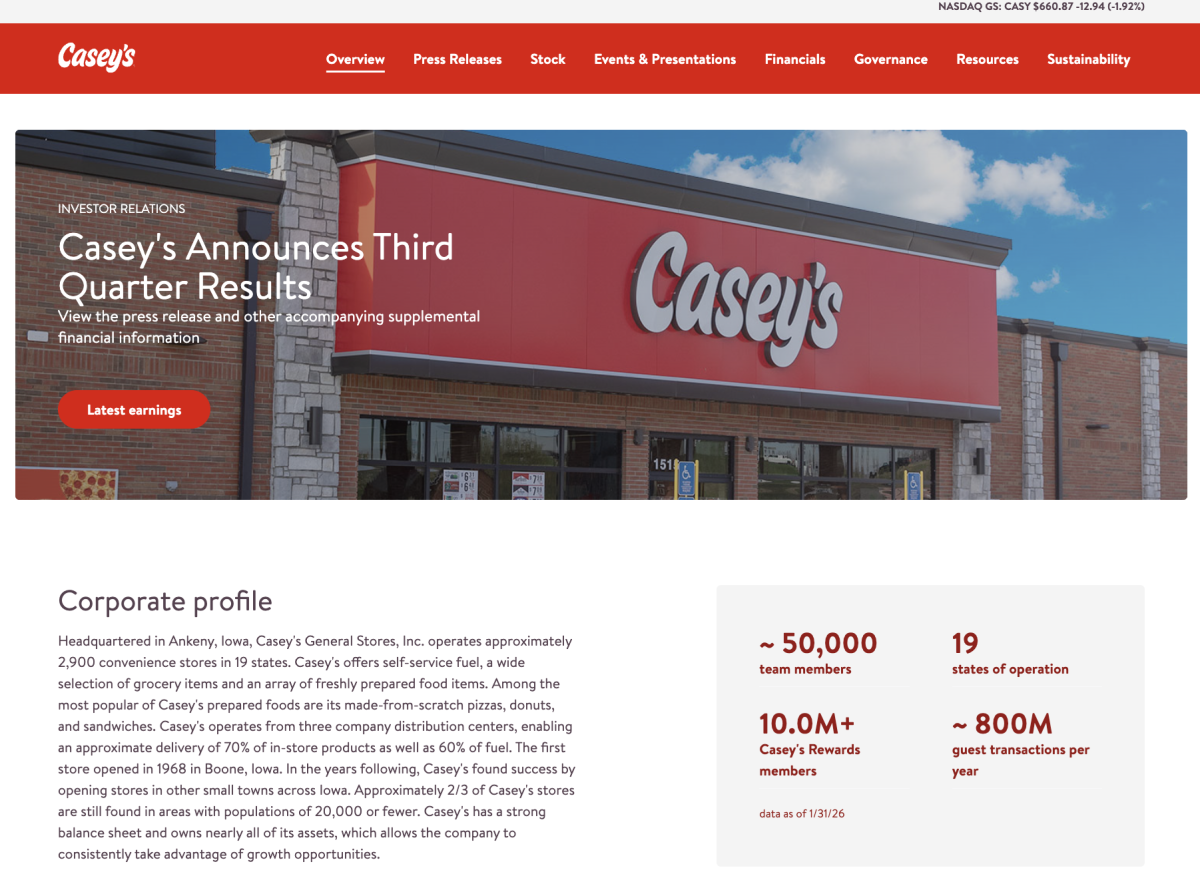
- Approximately 60% of Casey’s stores are located in towns with populations under 5,000.
- Casey’s is the fifth-largest pizza chain in the U.S. and operates a vertically integrated logistics network.
2Firsts
March 15, 2026
Casey’s General Stores (NASDAQ: CASY), ranked No. 3 among U.S. convenience-store chains by store count, reported notable shifts in its nicotine category during its fiscal third quarter ended January 31, 2026.
During the earnings call, management disclosed that nicotine pouch sales increased 31% year over year, while vapor products rose 12%. Although combustible cigarette volumes continued to decline, President and CEO Darren Rebelez stated that the rate of decline has moderated compared to previous quarters.
More significantly, nicotine alternatives are improving profitability. According to Rebelez, both pouches and vapor products carry more than double the margin rate of traditional combustible cigarettes, helping offset structural declines in the cigarette segment and supporting gross margin expansion in grocery and general merchandise.
Casey’s occupies a distinctive position in U.S. retail. While classified as a convenience store chain, its operating model resembles a hybrid of a pizza restaurant, fuel retailer, and logistics operator.
Approximately 60% of Casey’s stores are located in towns with populations under 5,000. In many of these rural markets, Casey’s functions as a 24-hour grocery store, restaurant, and fuel station — effectively serving as a community hub.
Less widely recognized is that Casey’s ranks as the fifth-largest pizza chain in the United States. Its made-from-scratch pizza program delivers significantly higher margins than traditional convenience merchandise or fuel sales.
The company also operates a vertically integrated supply chain, with three distribution centers and its own fleet delivering approximately 70% of in-store merchandise and 60% of fuel volumes. This structure enhances cost control and operational resilience, particularly in remote markets.
Against this operational backdrop, the acceleration of nicotine alternatives represents both a margin enhancement opportunity and a structural shift within the nicotine category. As cigarette volumes continue to decline nationally, convenience retailers are increasingly relying on higher-margin non-combustible products to stabilize overall category performance.
Cover Image:Screenshot from the official website of Casey’s General Stores