China's E-cigarette Export Data to Indonesia in May 2024

Industry Insight by 2FIRSTS
Jul.17.2024
China's E-cigarette Export Data to Indonesia in May 2024
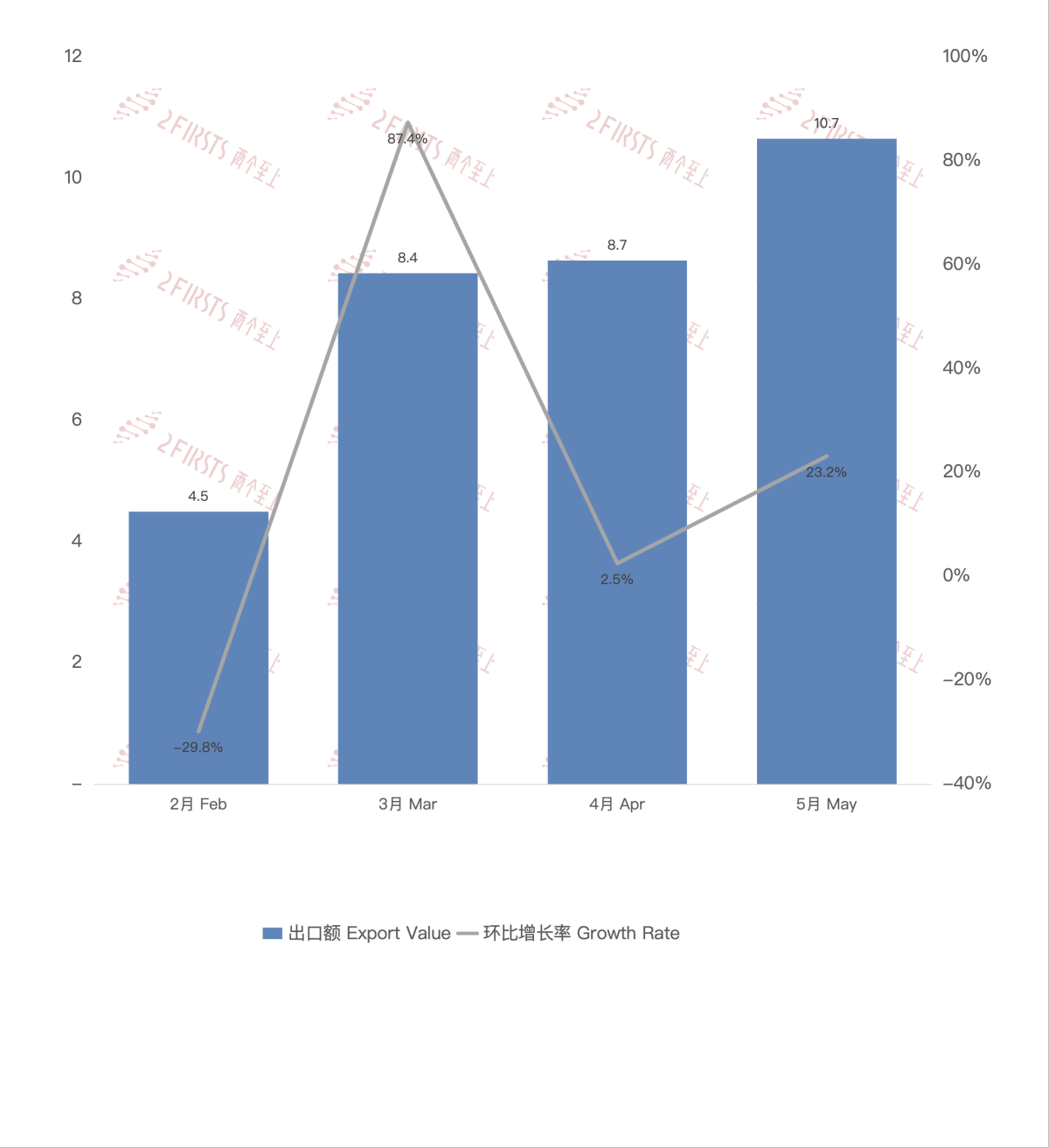
China's e-cigarette exports to Indonesia in May 2024 reached $10.65 million, with a 23.2% month-on-month increase.

According to updated trade data from the General Administration of Customs, 2FIRSTS has compiled e-cigarette export data from China to Indonesia in May 2024. The specifics are as follows:
China's E-cigarette Export Data to Indonesia in May 2024
Mapping: 2FIRSTS


The export volume reached approximately $10.65 million, increasing by 23.2% compared to the previous period, but decreasing by 18.1% compared to the same period last year.
China's E-cigarette Export Data to Indonesia in May 2024
Mapping: 2FIRSTS


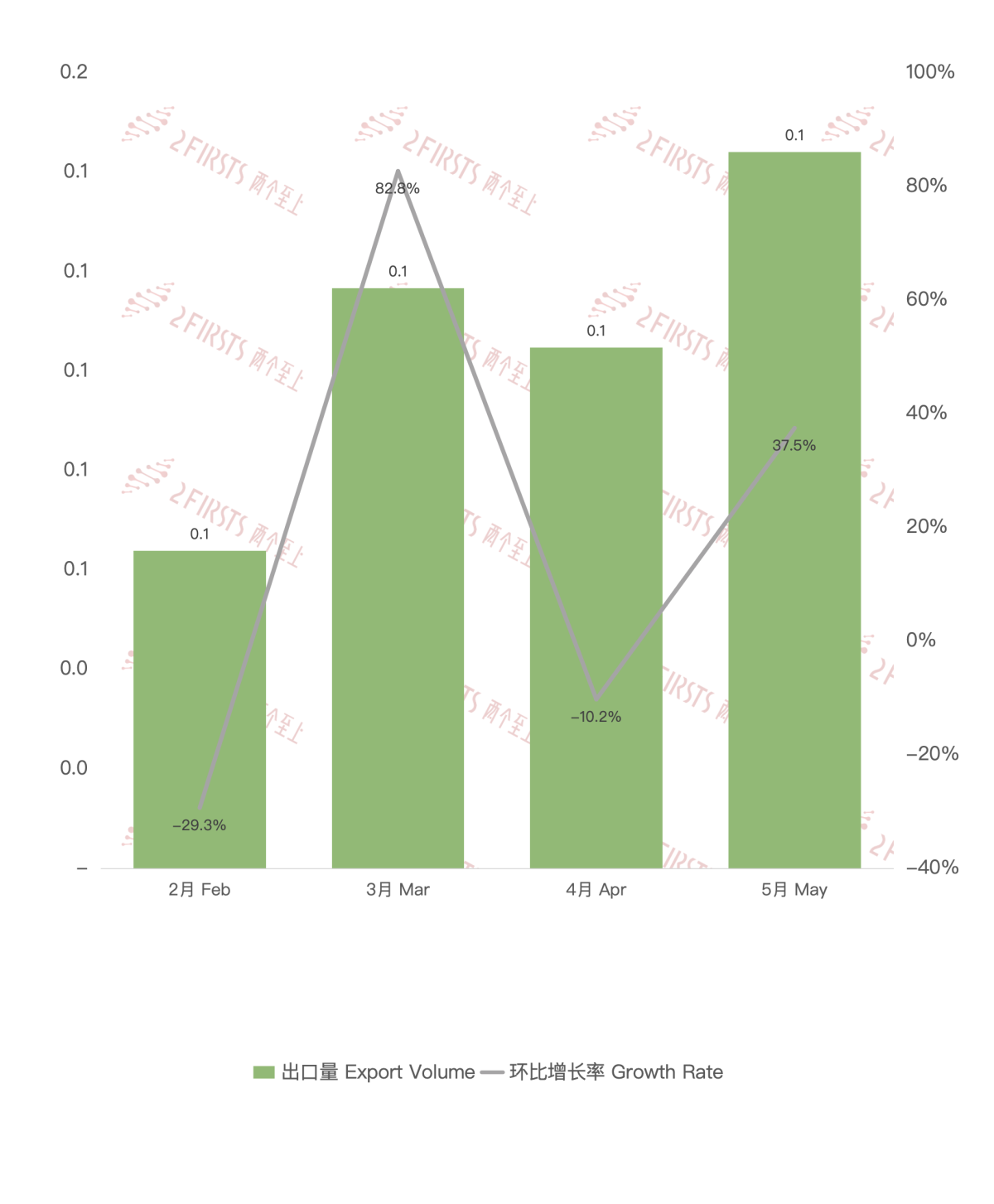
The export volume is approximately 144 tons, an increase of 37.54% compared to the previous period, and a decrease of 38.41% compared to the same period last year.
China's E-cigarette Export Data to Indonesia in May 2024
Mapping: 2FIRSTS


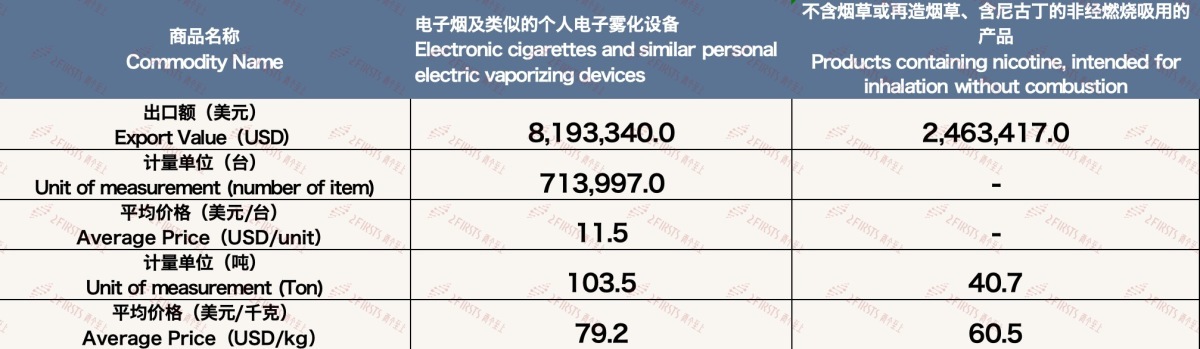
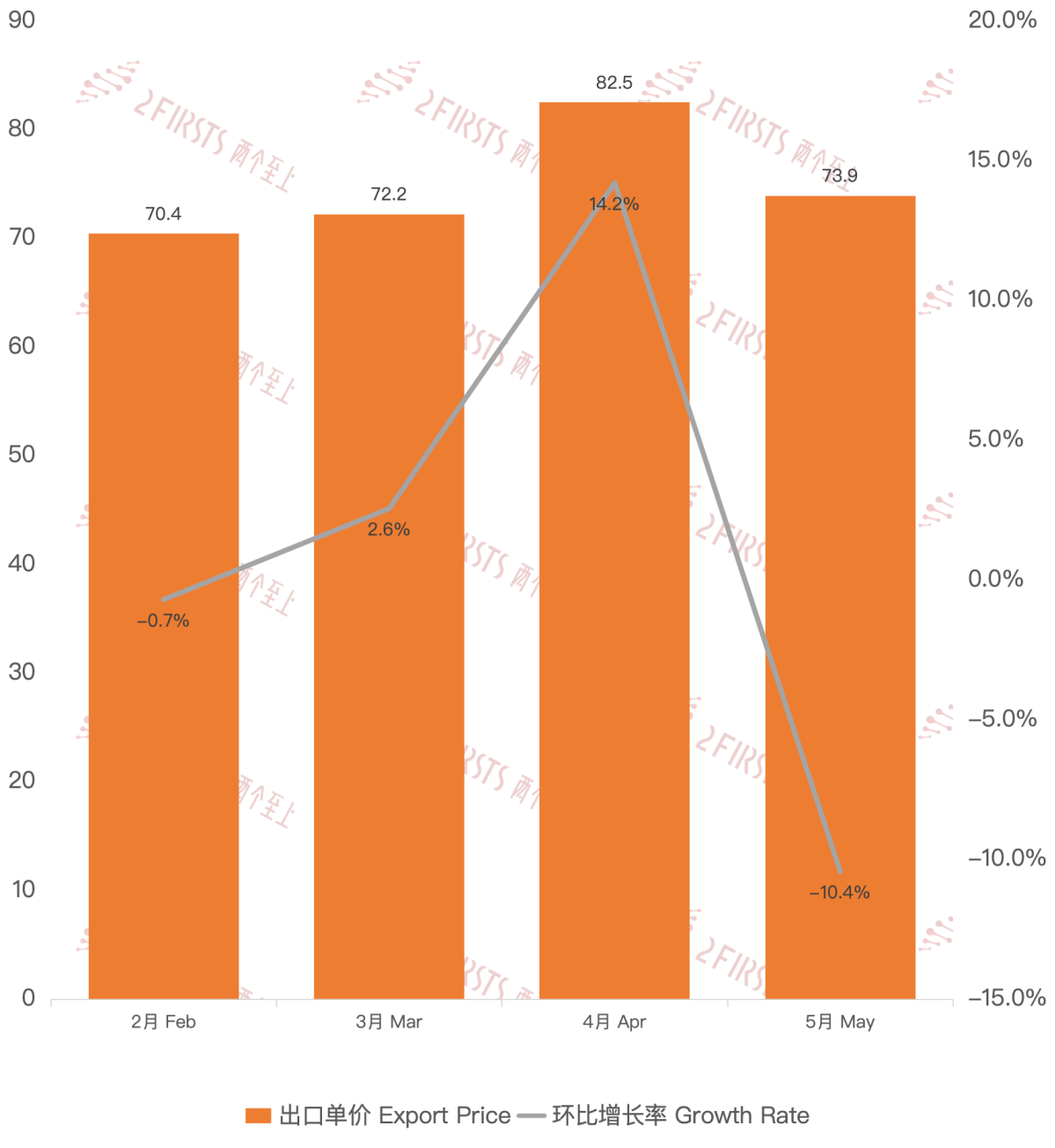
The export unit price is $73.91 per kilogram, a decrease of 10.4% on a monthly basis and an increase of 32.9% year-on-year; the average price of "e-cigarettes and similar personal electronic vaporizing devices" is $11.5 per unit.
China's E-cigarette Export Data to Indonesia in May 2024
Mapping: 2FIRSTS


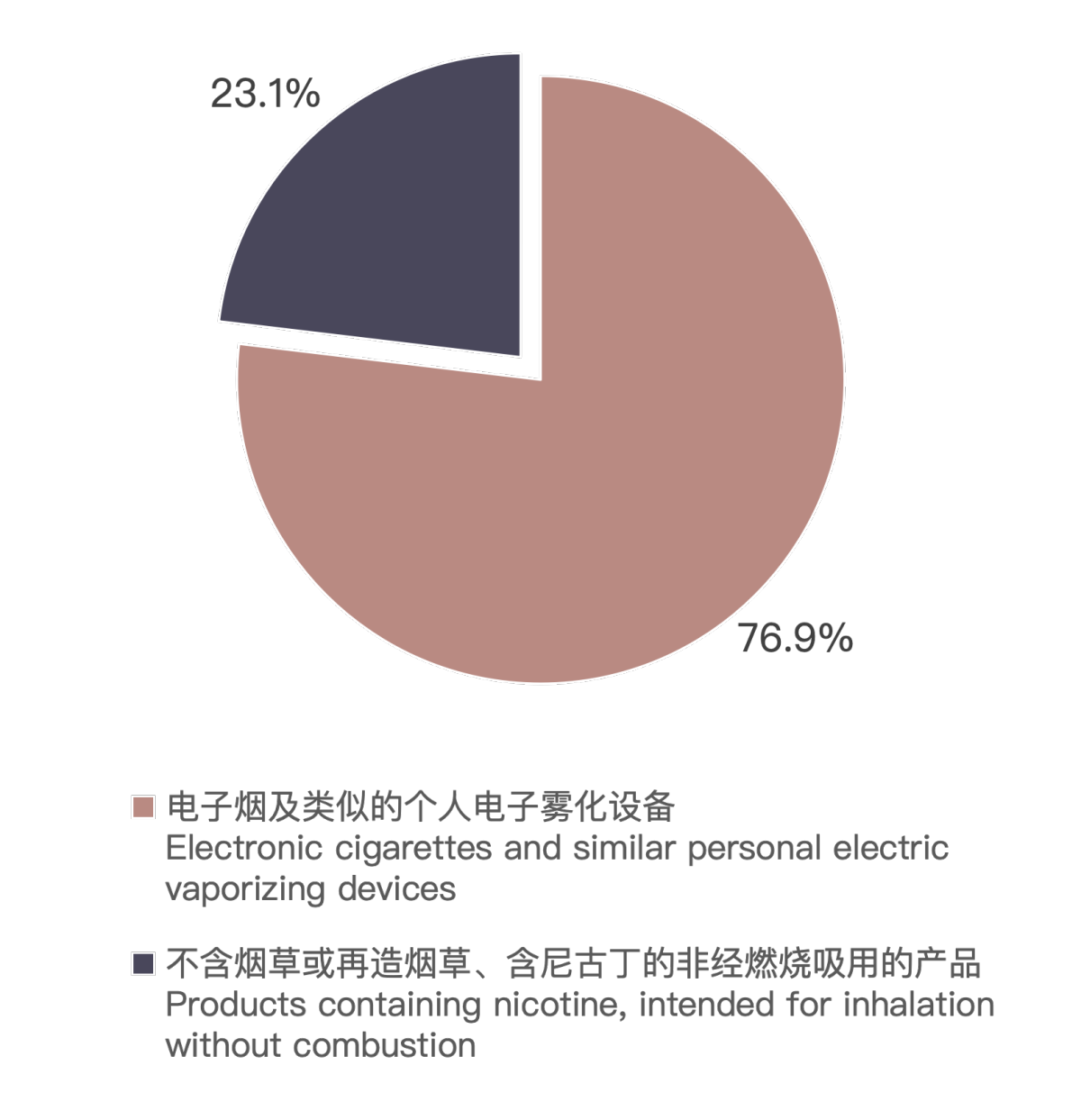
Among them, "e-cigarettes and similar personal electronic vaporizing devices" account for 76.9% of the export category, while "products containing nicotine that do not contain tobacco or reconstituted tobacco and are not intended for combustion" account for 23.1%.
China's E-cigarette Export Data to Indonesia in May 2024
Mapping: 2FIRSTS


We welcome news tips, article submissions, interview requests, or comments on this piece.

Please contact us at info@2firsts.com, or reach out to Alan Zhao, CEO of 2Firsts, on LinkedIn


Notice

1.  This article is intended solely for professional research purposes related to industry, technology, and policy. Any references to brands or products are made purely for objective description and do not constitute any form of endorsement, recommendation, or promotion by 2Firsts.

2.  The use of nicotine-containing products — including, but not limited to, cigarettes, e-cigarettes, nicotine pouchand heated tobacco products — carries significant health risks. Users are responsible for complying with all applicable laws and regulations in their respective jurisdictions.

3.  This article is not intended to serve as the basis for any investment decisions or financial advice. 2Firsts assumes no direct or indirect liability for any inaccuracies or errors in the content.

4.  Access to this article is strictly prohibited for individuals below the legal age in their jurisdiction.


Copyright


This article is either an original work created by 2Firsts or a reproduction from third-party sources with proper attribution. All copyrights and usage rights belong to 2Firsts or the original content provider. Unauthorized reproduction, distribution, or any other form of unauthorized use by any individual or organization is strictly prohibited. Violators will be held legally accountable.

For copyright-related inquiries, please contact: info@2firsts.com


AI Assistance Disclaimer


This article may have been enhanced using AI tools to improve translation and editorial efficiency. However, due to technical limitations, inaccuracies may occur. Readers are encouraged to refer to the cited sources for the most accurate information.

We welcome any corrections or feedback. Please contact us at: info@2firsts.com

Australia’s Victoria Steps Up Illegal Tobacco Enforcement With Store Closures and Penalties of Up to A$2.5 Million
Australia’s state of Victoria has activated new powers allowing Tobacco Licensing Victoria and police to shut premises suspected of selling, supplying or possessing illicit tobacco for up to 90 days. Longer closures can be ordered by a magistrates’ court. Businesses subject to closure orders must generally cease all trading and will be placed on a public list. Breaching a closure order can carry penalties of up to A$2.5 million and 20 years in prison.
Sep.10
Product | APUS Launches Chloe 50K, Bringing Purse-Inspired Design to the U.S. High-Puff Disposable Market
APUS has introduced the Chloe 50K disposable vape, which has appeared across U.S.-facing online retail channels including Element Vape and Vapesourcing. The device combines a purse-inspired body and chain attachment with a 20ml e-liquid capacity, 1,250mAh rechargeable battery, dual mesh coil, and battery and e-liquid indicators. It is rated for up to 50,000 puffs. The product does not appear on the FDA’s current list of authorized e-cigarettes, and U.S. retail availability does not indicate FDA marketing authorization.
Jul.15
FDA Authorizes Four More Nicotine Pouches as Review Pilot Expands Beyond Initial Decisions
The FDA has authorized four additional on! nicotine pouches, bringing the U.S. total to 30. The decision marks another outcome of the agency’s nicotine pouch review pilot, whose communication and review practices are now being applied more broadly across the category. It also extends Helix’s authorized portfolio from on! PLUS to the earlier on! line. Yet all FDA-authorized nicotine pouches still come from subsidiaries of PMI or Altria, underscoring how concentrated U.S. regulatory access remains.
Aug.05
PMI Q2 Call: ZYN Growth, IQOS Pricing and a Diverging Global Tobacco Market
Philip Morris International’s second-quarter earnings call offered new detail on its smoke-free strategy. Management said it would increase U.S. investment behind nicotine pouch brand ZYN, keep IQOS focused on volume before stronger pricing, and use SENTIA, DELIA, LEVIA, VEEV and ZYN to manage tax and regulatory pressure across Japan and Europe. Analysts from Goldman Sachs, Morgan Stanley, UBS and other firms also pressed PMI on profitability, market share, cigarette resilience and the durability of its global transformation over coming quarters.
Jul.24
Malaysia Liquid Nicotine Returns to Poisons List, Leaving Vape Retail and RM354 Million Tax Collection in Legal Uncertainty
Malaysia’s withdrawal of its appeal in a landmark liquid-nicotine case has left a High Court ruling that struck down the 2023 nicotine exemption in force, bringing liquid and gel nicotine used in vaping products back under the Poisons Act 1952. At the same time, the Control of Smoking Products for Public Health Act 2024 continues to provide a regulatory framework for vaping products, creating uncertainty over retail sales, taxation and existing inventory. MPs are calling for nicotine vape sales and excise collection to stop, including refunds of more than RM354 million collected since 2023, while industry and consumer groups are asking the government to clarify the current legal position.
Sep.04
China’s HTP Exports Fell 14.3% in H1 2026 as Russia and Belarus Accounted for 76% Lead
In H1 2026, China’s HS 24041100 exports stood at $1.32 million, down 14.3% YoY, with volume falling 17.2% to 55.33 tons. Market distribution shifted drastically amid overall export drops. Exports to Russia and Belarus totaled $1 million, taking 76.0% of all shipments versus 29.5% in H1 2025. Belarus became the top destination with export value jumping 177.5%, while the Philippines, Singapore and Indonesia’s combined share slumped from 49.3% to 11.2%.Domestically, Yunnan led exporter registrations; Jiangsu and Shanghai were key suppliers, yet Anhui and Sichuan had no exports. Heavy concentration means order or declaration changes for Russia/Belarus greatly affect national aggregate data. The data shows customs entry points (not end markets), covering tobacco consumables only, excluding heating equipment and the complete HTP supply chain.
Aug.11