China's E-Cigarette Export Data to Latvia in December 2023

Industry Insight by 2FIRSTS Mincy
Mar.18.2024
China's E-Cigarette Export Data to Latvia in December 2023
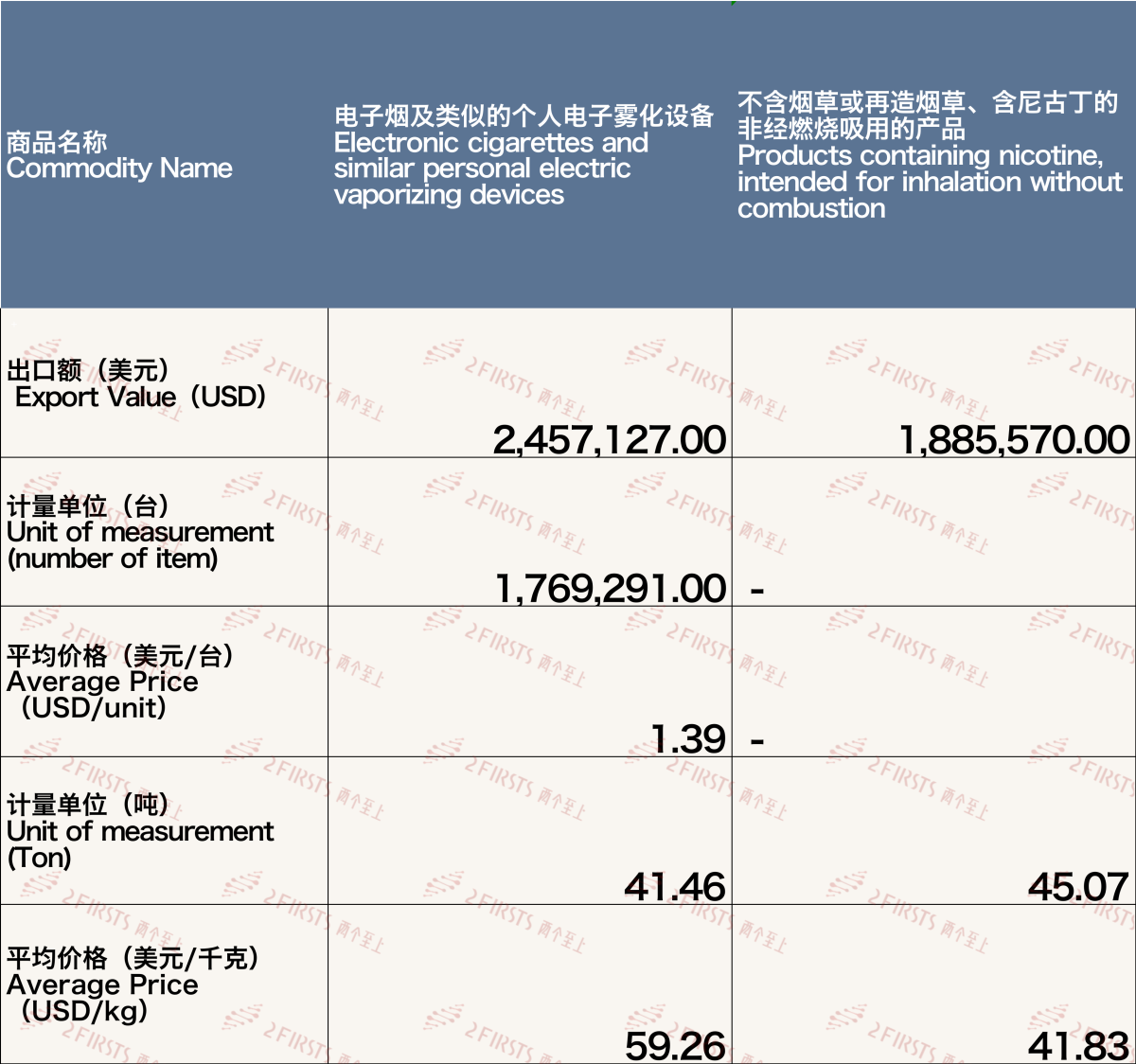
In December 2023, China's e-cigarette exports to Latvia reached $4.34 million, with a significant increase compared to last year.

According to updated trade data from the General Administration of Customs of the People's Republic of China, 2FIRSTS has compiled e-cigarette export data to Latvia in December 2023. The specifics are as follows:
China's E-Cigarette Export Data to Latvia in December 2023
Image source: 2FIRSTS (Mincy mapping)


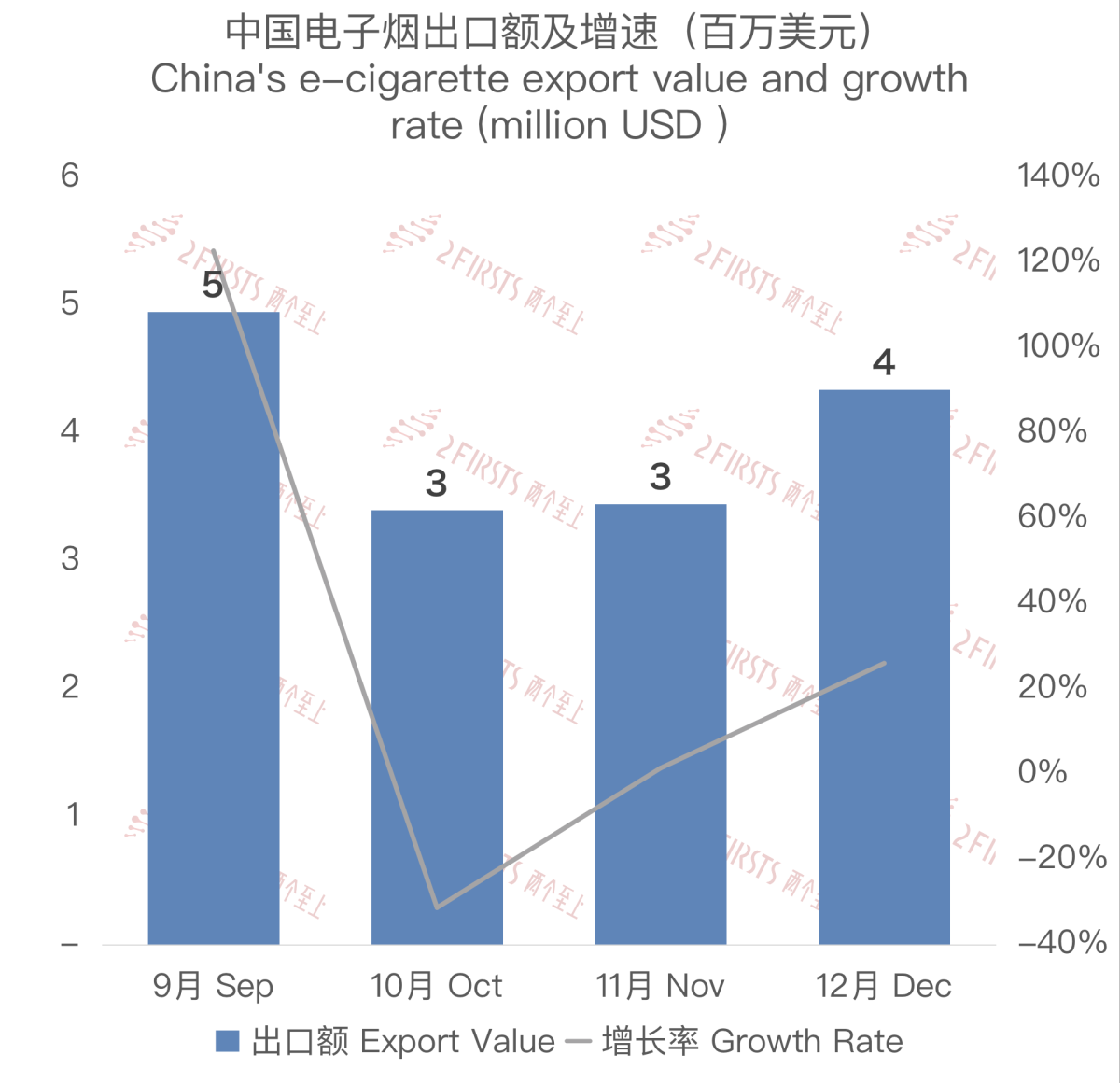
The export value was approximately $4.34 million, increasing by 26.02% month-on-month and 41.25% year-on-year.
China's E-Cigarette Export Data to Latvia in December 2023
Image source: 2FIRSTS (created by Mincy)


The export volume is approximately 86.5 tons, an increase of 30.94% compared to the previous period and an 80.95% increase year-on-year.
China's E-Cigarette Export Data to Latvia in December 2023
Image source: 2FIRSTS (created by Mincy)


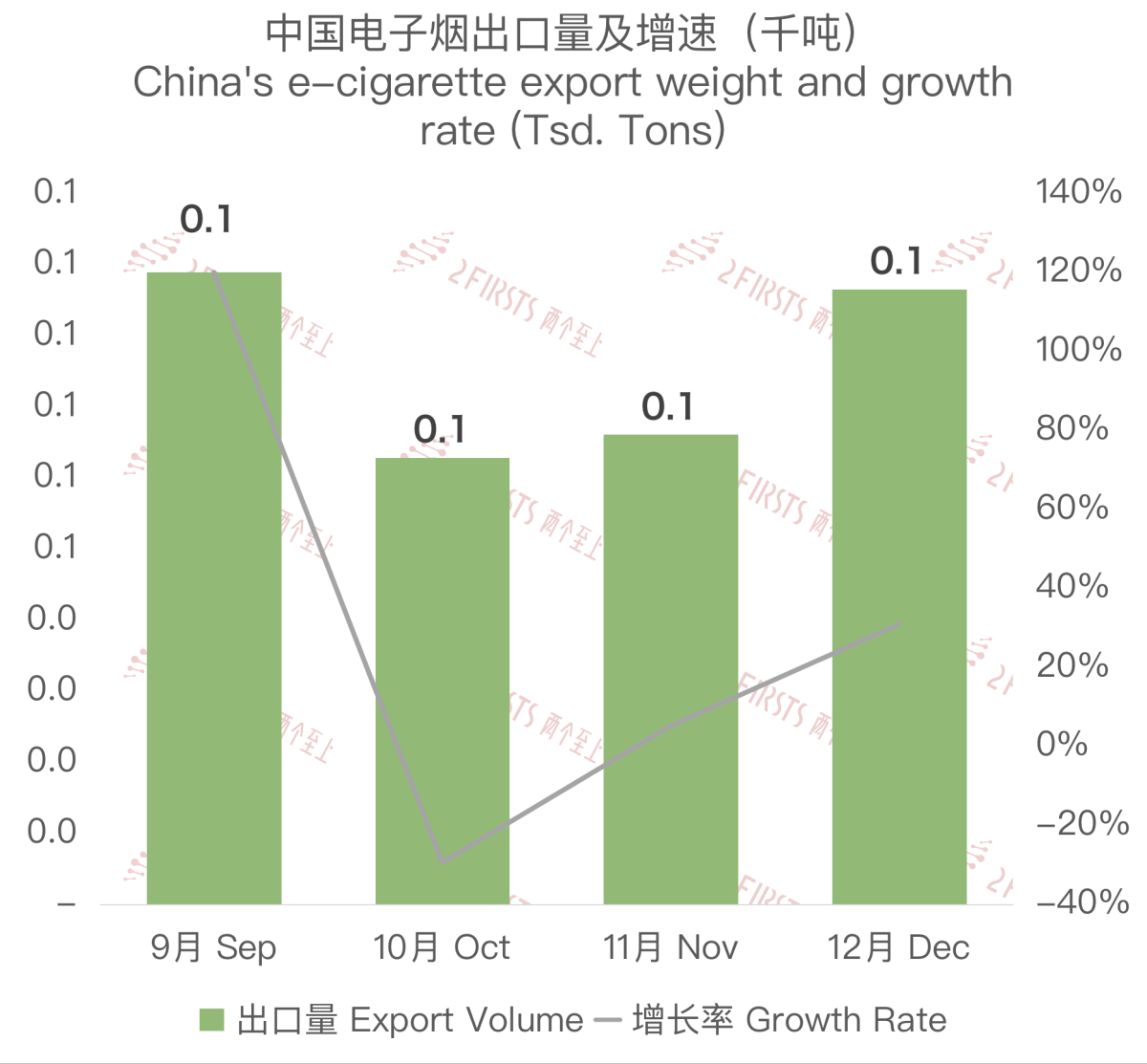
The export unit price is $50.18 per kilogram, a decrease of 3.76% month-on-month and 21.94% year-on-year; the average price for "e-cigarettes and similar personal electronic vapor devices" is $1.39 per unit.
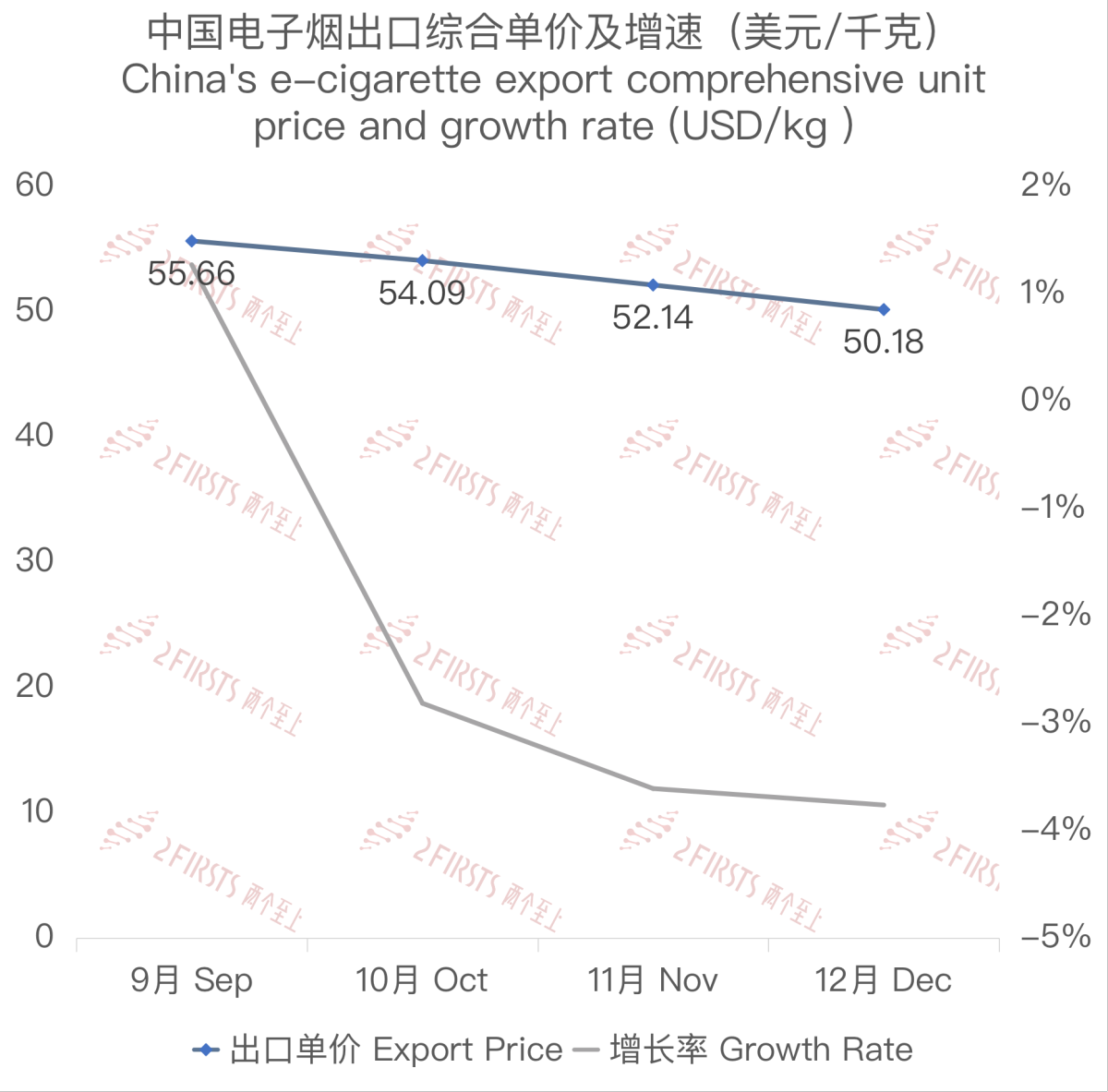
China's E-Cigarette Export Data to Latvia in December 2023
Image source: 2FIRSTS (Mincy design)


Among them, "e-cigarettes and similar personal electronic vaporizing devices" account for 56.58% of the export category, while "products containing nicotine that do not contain tobacco or reconstituted tobacco and are non-combustible for smoking use" account for 43.42%.
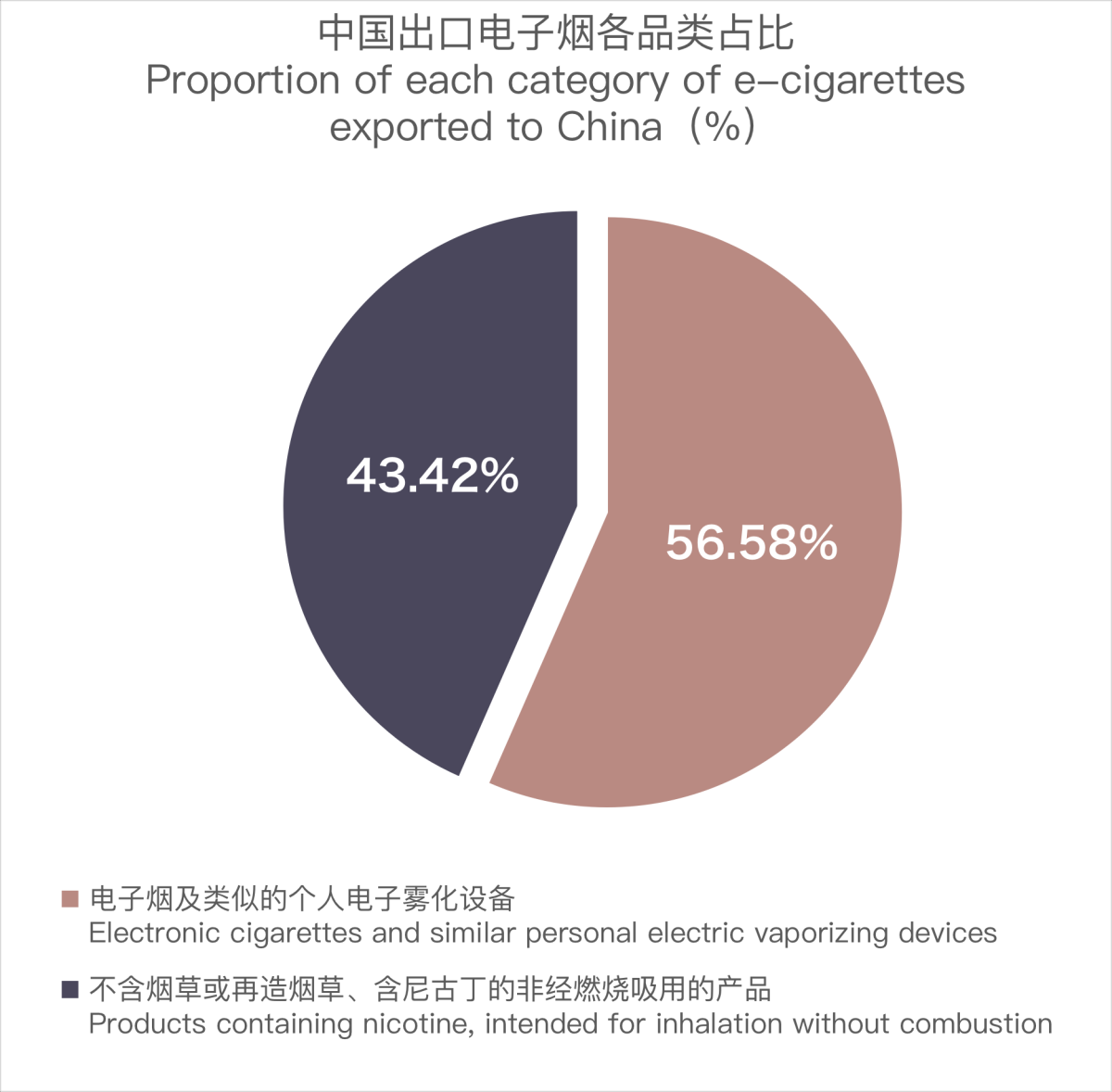
China's E-Cigarette Export Data to Latvia in December 2023
Image source: 2FIRSTS (Mincy Drawing)


We welcome news tips, article submissions, interview requests, or comments on this piece.

Please contact us at info@2firsts.com, or reach out to Alan Zhao, CEO of 2Firsts, on LinkedIn


Notice

1.  This article is intended solely for professional research purposes related to industry, technology, and policy. Any references to brands or products are made purely for objective description and do not constitute any form of endorsement, recommendation, or promotion by 2Firsts.

2.  The use of nicotine-containing products — including, but not limited to, cigarettes, e-cigarettes, nicotine pouchand heated tobacco products — carries significant health risks. Users are responsible for complying with all applicable laws and regulations in their respective jurisdictions.

3.  This article is not intended to serve as the basis for any investment decisions or financial advice. 2Firsts assumes no direct or indirect liability for any inaccuracies or errors in the content.

4.  Access to this article is strictly prohibited for individuals below the legal age in their jurisdiction.


Copyright


This article is either an original work created by 2Firsts or a reproduction from third-party sources with proper attribution. All copyrights and usage rights belong to 2Firsts or the original content provider. Unauthorized reproduction, distribution, or any other form of unauthorized use by any individual or organization is strictly prohibited. Violators will be held legally accountable.

For copyright-related inquiries, please contact: info@2firsts.com


AI Assistance Disclaimer


This article may have been enhanced using AI tools to improve translation and editorial efficiency. However, due to technical limitations, inaccuracies may occur. Readers are encouraged to refer to the cited sources for the most accurate information.

We welcome any corrections or feedback. Please contact us at: info@2firsts.com

South Korea Vape Strategies Diverge as BAT Reconsiders Exit and PMI Takes VEEV to About 14,000 Stores
BAT Rothmans says it previously considered exiting South Korea's vaping market because of competitive pressure from unregulated products, but is now reassessing conditions following changes to the country's nicotine regulatory framework. Vuse and other BAT vaping products remain available through existing distribution channels. The statement followed a South Korean media report that interpreted BAT's broader withdrawal from selected Vapour markets as a full exit from South Korea. Meanwhile, Philip Morris International launched VEEV inPRIME in the country in June and began expanding distribution to around 14,000 convenience stores and other retail channels in July. The contrasting moves highlight differing investment strategies as South Korea's regulated vaping market evolves.
Aug.14
Australia’s Victoria Steps Up Illegal Tobacco Enforcement With Store Closures and Penalties of Up to A$2.5 Million
Australia’s state of Victoria has activated new powers allowing Tobacco Licensing Victoria and police to shut premises suspected of selling, supplying or possessing illicit tobacco for up to 90 days. Longer closures can be ordered by a magistrates’ court. Businesses subject to closure orders must generally cease all trading and will be placed on a public list. Breaching a closure order can carry penalties of up to A$2.5 million and 20 years in prison.
Sep.10
Scottish Vape Display Rules Could Cost Businesses £61 Million, Affecting More Than 11,000 Retail Outlets
A Scottish government impact assessment estimates that proposed vape display and packaging rules could create up to £61 million ($82 million) in compliance costs for businesses, affecting more than 11,000 retail outlets. The estimated costs are mainly linked to inventory adjustments, retail storage changes and the resources required for businesses to understand and implement the new requirements. The measures form part of the UK’s broader efforts to tighten vape regulation, particularly around product displays, packaging and sales practices.
Aug.10
GSTHR Estimates 200 Million People Use Non-Combustible Nicotine Products as 28 Countries Show Rising Use Alongside Falling Smoking Rates
The Global State of Tobacco Harm Reduction, a project operated by Knowledge·Action·Change, estimates that about 200 million people worldwide use non-combustible nicotine products including vapes, heated tobacco, nicotine pouches and snus. Its 2026 report says use of these products rose alongside declining smoking rates in 28 countries it analyzed. The data do not establish that all 200 million users have quit smoking, nor do they prove a direct causal relationship. GSTHR also says regulatory restrictions on the products continue to expand in many markets.
Sep.10
Philippines BIR Steps Up Illicit Vape Enforcement Ahead of Christmas Shopping
The Philippines’ Bureau of Internal Revenue is intensifying enforcement against illicit vape and tobacco products ahead of the Christmas shopping season, directing regional and enforcement offices to strengthen monitoring of production sites, warehouses, distribution channels and retail outlets. The BIR destroyed 240,550 illicit vape products in August with an estimated tax liability of about PHP1.53 billion. A nationwide tax-compliance operation in July also inspected 3,590 businesses involved in tobacco and vapor products.
Regulations
Sep.17 by 2Firsts Perspectives
Russia Adds Vapes to “Strategic Goods” List, Illegal Cross-Border Trade Faces Up to Five Years in Prison
Russia will place e-cigarettes and related nicotine products under its “strategic goods” framework from August 20, 2026. According to TVP World’s report published on August 19, the newly listed items include e-cigarettes, electronic smoking devices, vape liquids and nicotine salts. Individuals who illegally move these products across Russia’s customs border or its state border with other Eurasian Economic Union (EAEU) members could face up to five years in prison if shipment values exceed 100,000 rubles (about €1,000), provided all elements of a criminal offence are established.
Aug.20