
China's E-Cigarette Export Data to UAE in February 2023

Industry Insight by 2FIRSTS
Apr.07.2024
China's E-Cigarette Export Data to UAE in February 2023
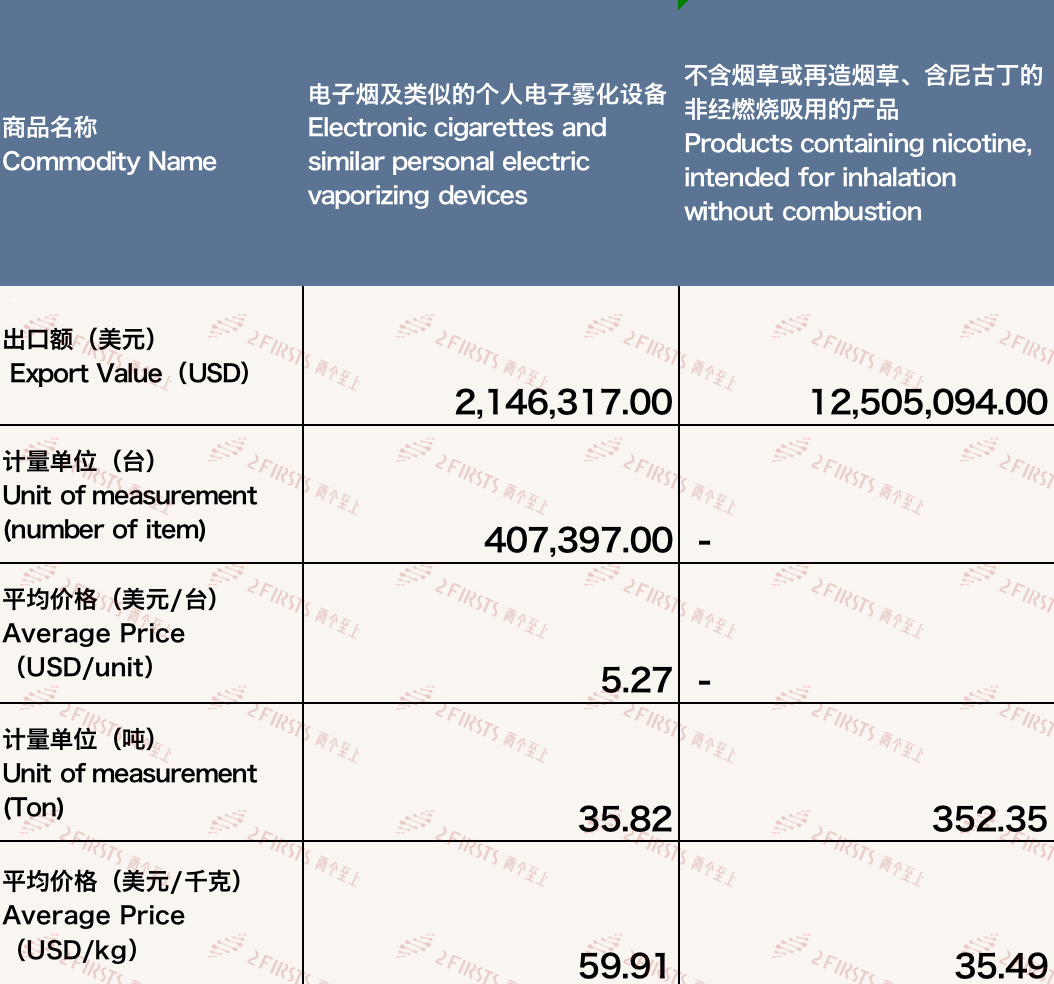
China's e-cigarette exports to the UAE in February 2023 reached approximately $14.65 million, with an increase of 30.40%.

According to the latest trade data released by the General Administration of Customs of the People's Republic of China, 2FIRSTS has compiled the e-cigarette export data from China to the United Arab Emirates in February 2023. The details are as follows:
China's E-Cigarette Export Data to UAE in February 2023
Image source: 2FIRSTS (created by Mincy)


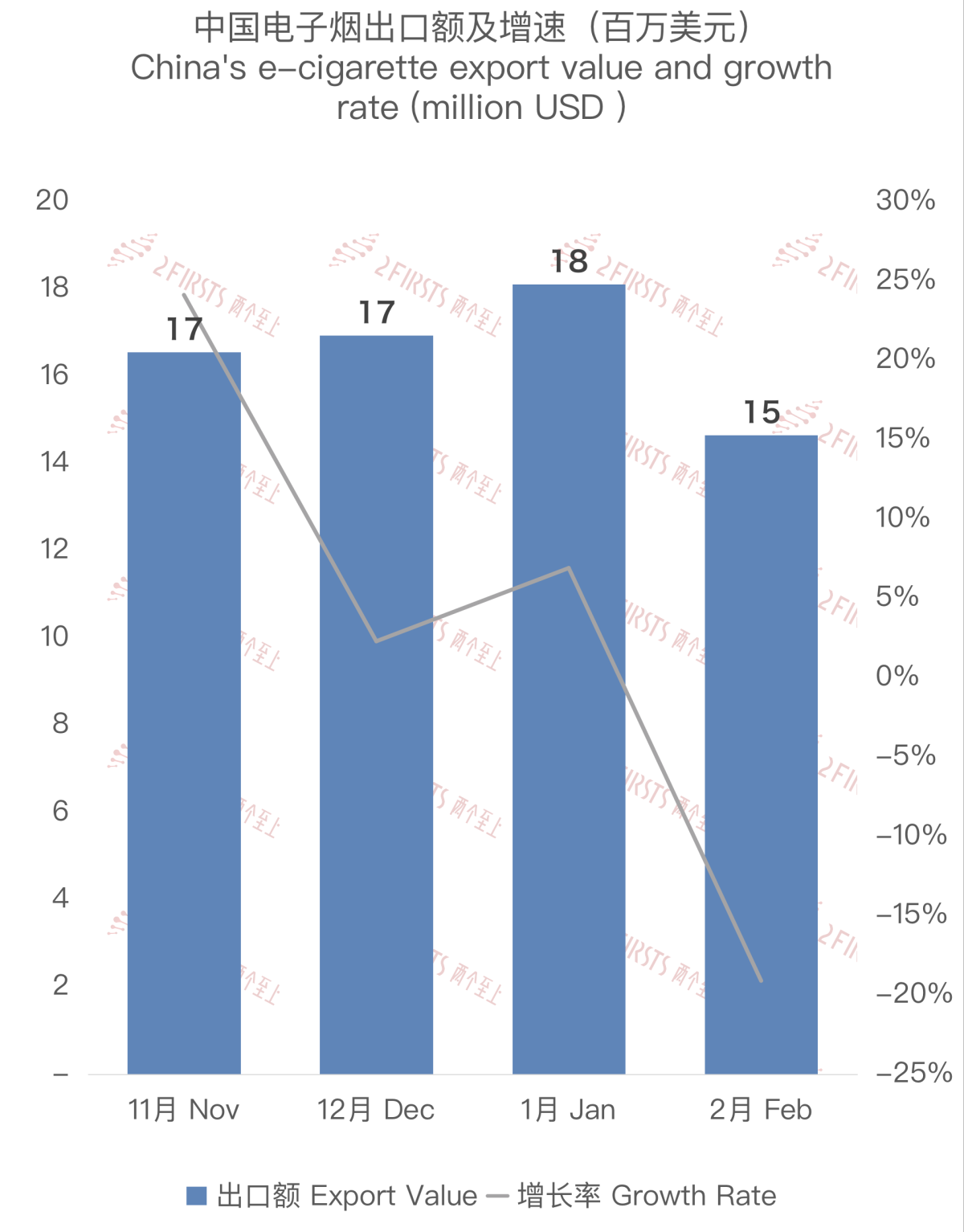
The export volume was approximately $14.65 million, showing a decrease of 19.10% compared to the previous period, but an increase of 30.40% compared to the same period last year.
China's E-Cigarette Export Data to UAE in February 2023
Image source: 2FIRSTS (created by Mincy)


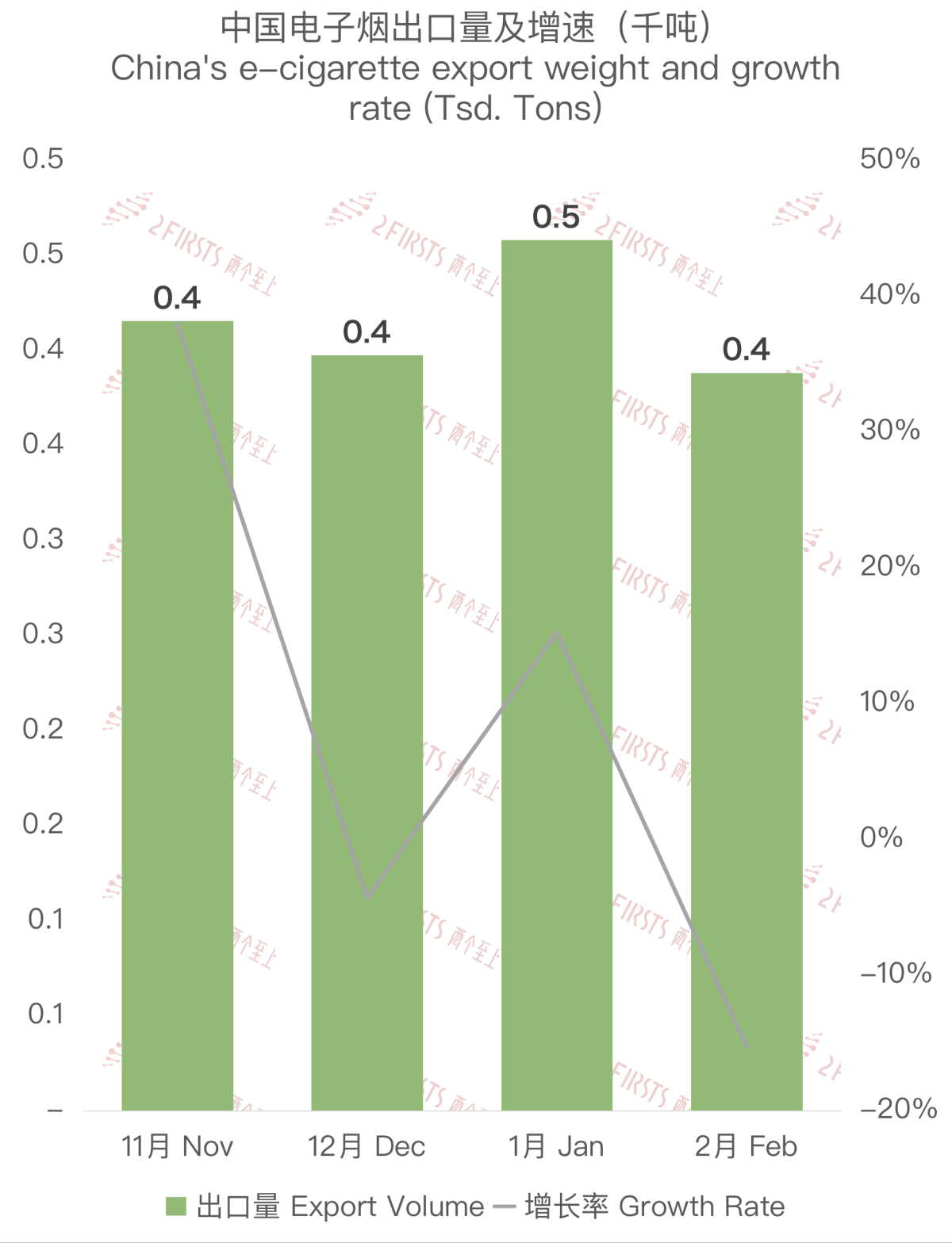
The export volume is approximately 388 tons, which is a decrease of 15.26% compared to the previous period, but an increase of 111.81% year-on-year.
China's E-Cigarette Export Data to UAE in February 2023
Image source: 2FIRSTS (Map by Mincy)


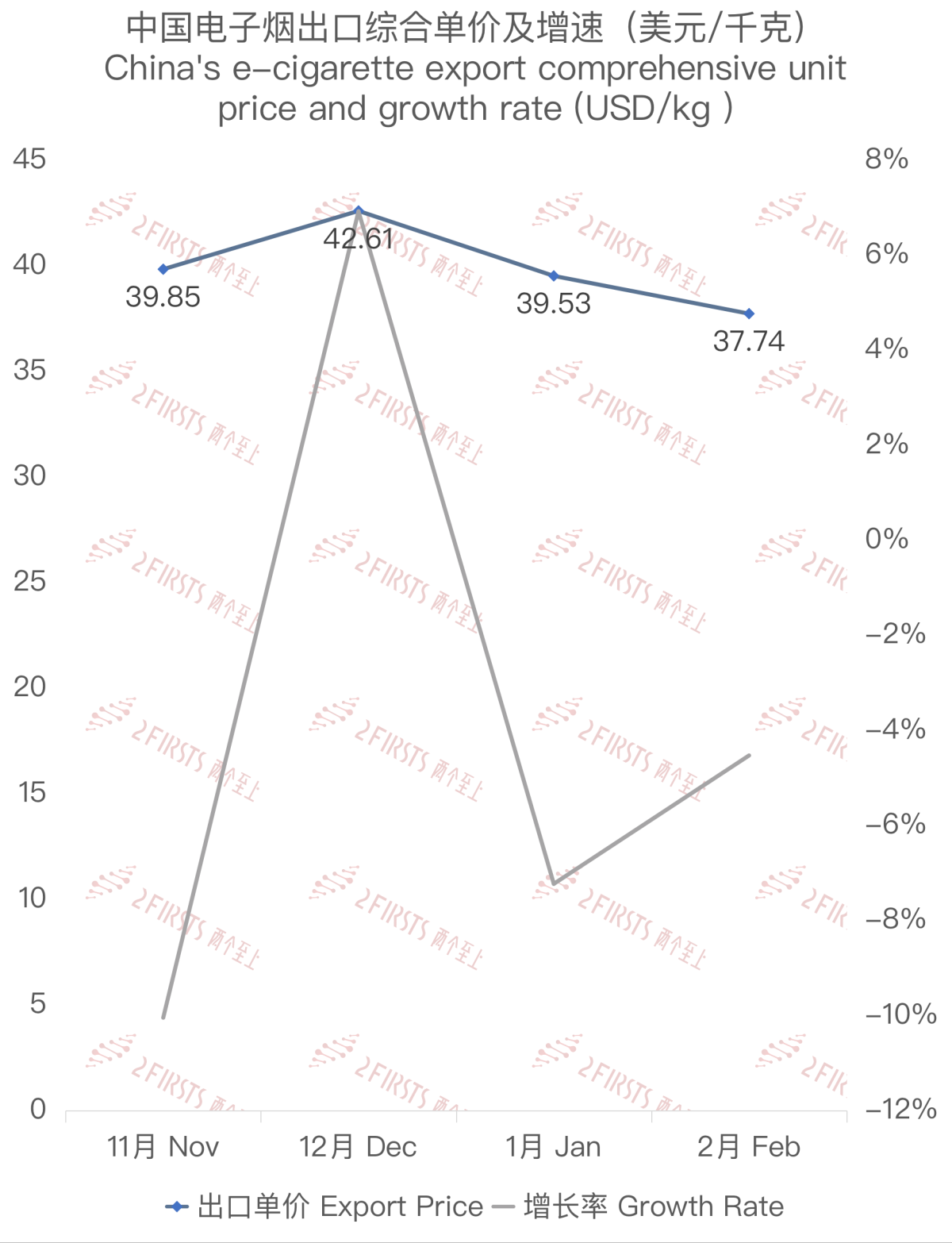
The export unit price is $37.74 per kilogram, a decrease of 4.52% from the previous period and a 38.44% year-on-year decrease. The average price for "e-cigarettes and similar personal electronic vaporization devices" is $5.27 per unit.
China's E-Cigarette Export Data to UAE in February 2023
Image source: 2FIRSTS (created by Mincy)


Among them, "e-cigarettes and similar personal electronic vaporizers" account for 14.65% of the export category, while "non-tobacco or reconstituted tobacco, nicotine-containing non-combustible consumable products" account for 85.35%.
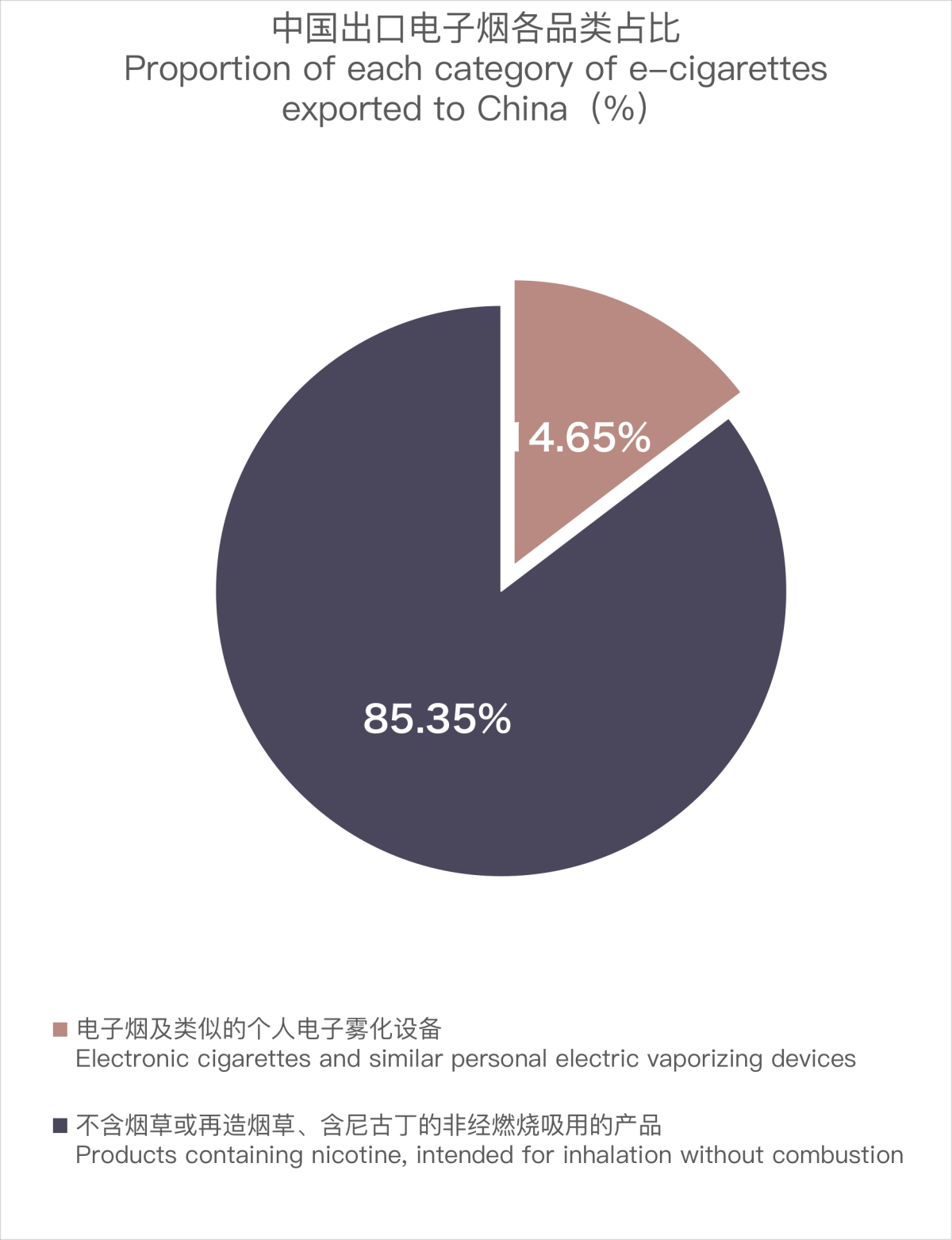
China's E-Cigarette Export Data to UAE in February 2023
Image source: 2FIRSTS (Mincy graphic)


We welcome news tips, article submissions, interview requests, or comments on this piece.

Please contact us at info@2firsts.com, or reach out to Alan Zhao, CEO of 2Firsts, on LinkedIn


Notice

1.  This article is intended solely for professional research purposes related to industry, technology, and policy. Any references to brands or products are made purely for objective description and do not constitute any form of endorsement, recommendation, or promotion by 2Firsts.

2.  The use of nicotine-containing products — including, but not limited to, cigarettes, e-cigarettes, nicotine pouchand heated tobacco products — carries significant health risks. Users are responsible for complying with all applicable laws and regulations in their respective jurisdictions.

3.  This article is not intended to serve as the basis for any investment decisions or financial advice. 2Firsts assumes no direct or indirect liability for any inaccuracies or errors in the content.

4.  Access to this article is strictly prohibited for individuals below the legal age in their jurisdiction.


Copyright


This article is either an original work created by 2Firsts or a reproduction from third-party sources with proper attribution. All copyrights and usage rights belong to 2Firsts or the original content provider. Unauthorized reproduction, distribution, or any other form of unauthorized use by any individual or organization is strictly prohibited. Violators will be held legally accountable.

For copyright-related inquiries, please contact: info@2firsts.com


AI Assistance Disclaimer


This article may have been enhanced using AI tools to improve translation and editorial efficiency. However, due to technical limitations, inaccuracies may occur. Readers are encouraged to refer to the cited sources for the most accurate information.

We welcome any corrections or feedback. Please contact us at: info@2firsts.com

WIRED Investigation: Chinese-Made Vapes Turn to 6-Methyl-Nicotine and Other Analogs, Challenging U.S. Regulation
U.S. technology and investigative publication WIRED has examined how nicotine analogs are emerging as a new challenge for the country’s vape regulatory framework. The article argues that after the U.S. expanded federal oversight of nicotine products in 2022, some manufacturers began using nicotine-like compounds such as 6-methyl-nicotine that may fall outside existing definitions. Researchers cited by WIRED said some nicotine analogs could be more potent than traditional nicotine, although human health impacts remain unclear. U.S. policymakers are considering broader definitions of nicotine to bring these compounds under federal oversight.
Jul.27
AP Questions FDA Rationale as Glas Fruit-Flavored Vapes Won Authorization Without Added Cessation Benefit
The U.S. Food and Drug Administration (FDA) recently authorized two fruit-flavored vaping products from Glas, but a newly released agency memo shows the products did not demonstrate greater smoking-cessation benefits than tobacco-flavored e-cigarettes. The Associated Press said the findings are likely to raise further questions about the FDA’s regulatory rationale and standards for flavored vaping products.
Jun.12
ATF Cancels Webloc Contract, Raising Questions Over Commercial Location Data in Enforcement
The U.S. Bureau of Alcohol, Tobacco, Firearms and Explosives (ATF) has stopped using Webloc, a commercial phone-tracking tool, after lawmakers, a prosecutor and a judge raised legal and privacy concerns over warrantless use of ad-tech location data, a development that may affect data-use boundaries in U.S. enforcement against illicit tobacco, nicotine products and cross-border distribution networks.
Jun.29
Bringing Tax and Insurance Into Nicotine Regulation: Insights From a Tobacco Harm-Reduction Report
A smoke-free nicotine policy report argues that tobacco harm reduction should move beyond product bans and health warnings into tax policy, insurance pricing and risk-based regulation. While some projections remain open to debate, the report highlights a wider challenge: nicotine products, technologies and consumer behavior have changed sharply over the past decade, and regulatory systems may need new tools to better align tobacco control with harm-reduction goals.
Jun.08
JT Plans ¥800 Billion Investment in Heated Tobacco Over Three Years, Betting on Ploom as Second Growth Engine
Japan Tobacco Inc. (JT) CEO Takehiko Tsutsui said the company plans to invest about ¥800 billion (approximately US$5.4 billion) in heated tobacco products over three years through 2028, aiming to establish Ploom as a second growth engine after combustible cigarettes. Tsutsui said Ploom AURA helped JT increase its share of Japan’s heated tobacco market to 15.8% in the first quarter of 2026. Ploom products are now available in 29 markets, with Ploom AURA sold in 25 markets including Japan. JT also plans to continue its cigarette business while positioning its food operations, particularly frozen noodle products in North America, as another growth opportunity.
Jul.23
UK Proposes Stricter Vape Packaging Rules as Retailers Warn of £330 Million Impact
The UK government has launched a nationwide consultation on vape packaging, appearance and retail displays, proposing tighter rules to reduce youth appeal while industry groups warn of significant compliance costs.
Innovation
Jul.20